IMG_9313

The Awakening of a New Generation | Día 7

🇬🇧 English

Day 7 – Recognising What We Learned, and Saying Goodbye 💙

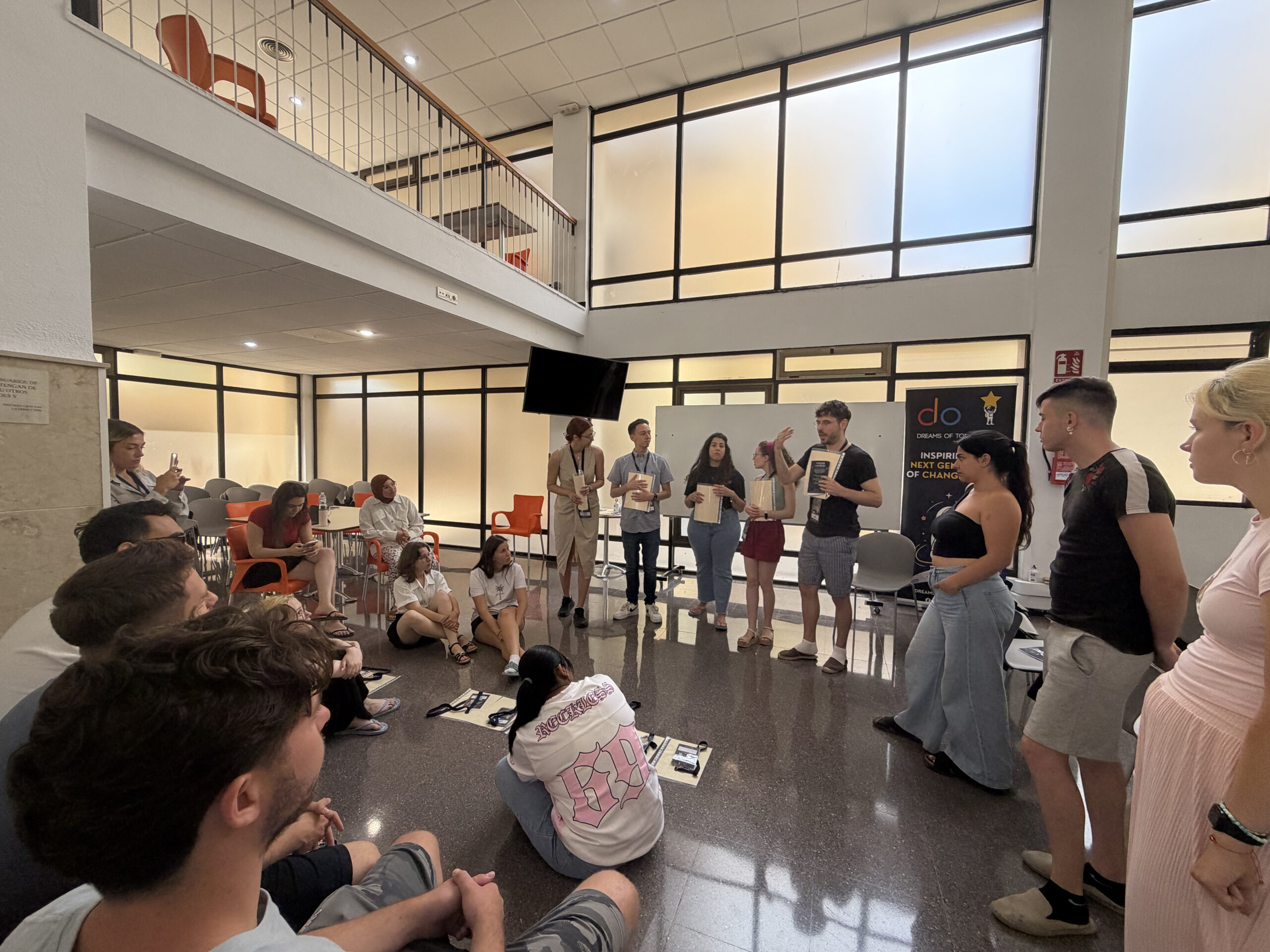
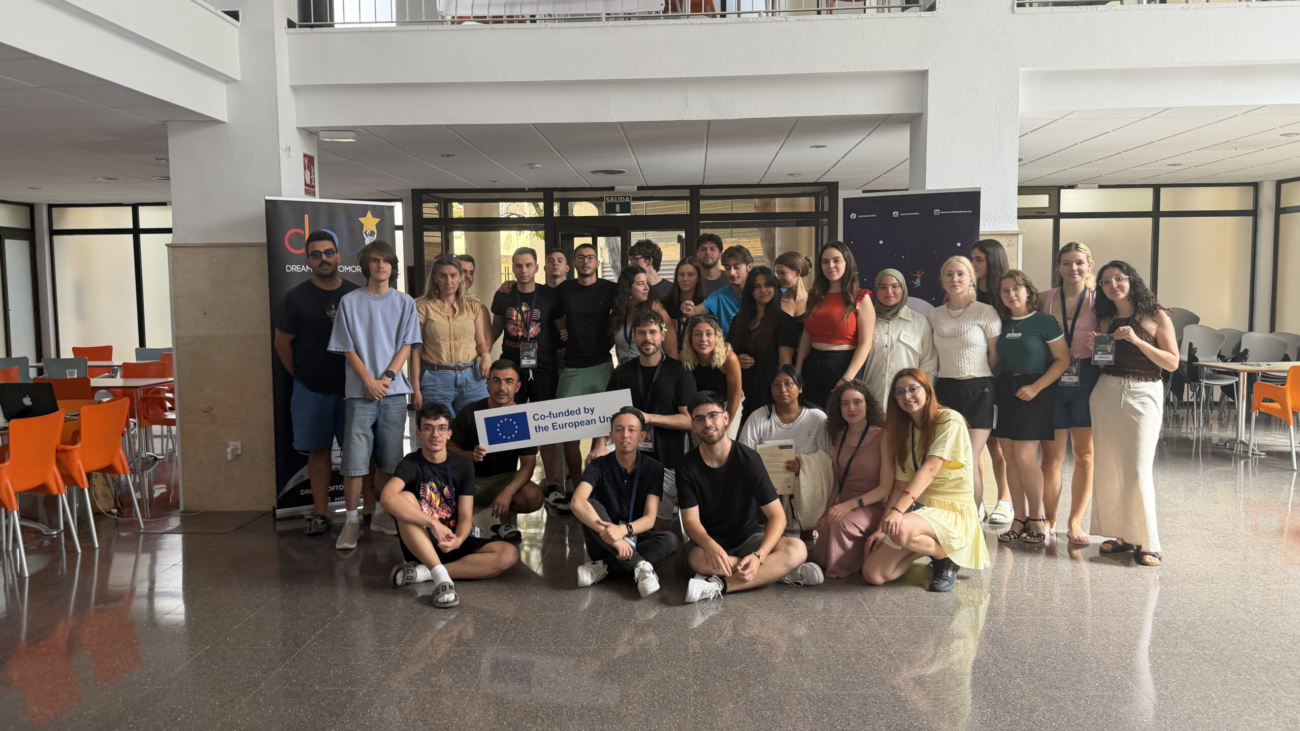
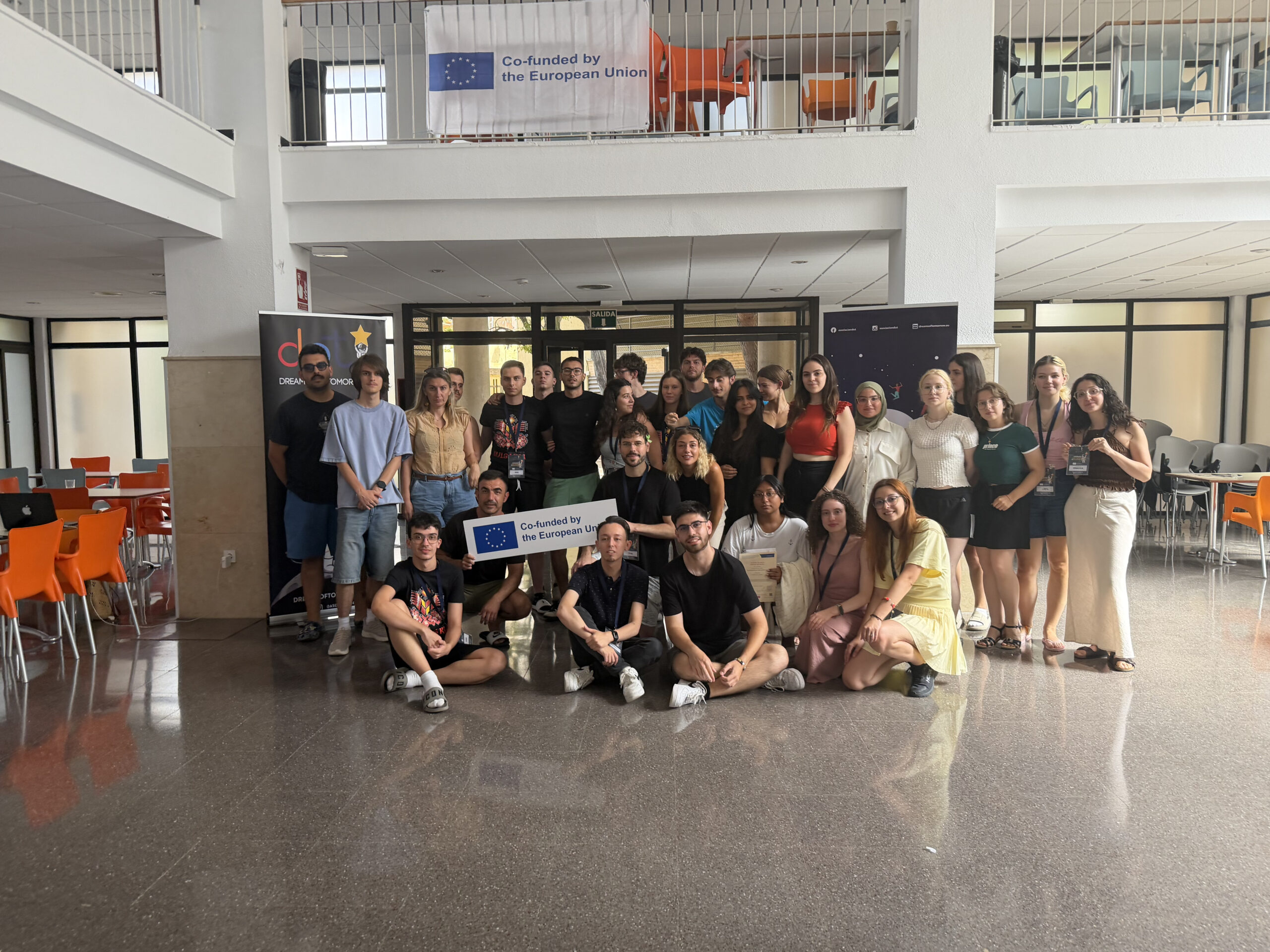
The seventh and last full day of the Erasmus+ youth exchange «The Awakening of a New Generation» was the perfect mix of learning and heartfelt emotions: a day dedicated to putting a name to everything the participants had gained during the week, to discovering how to keep going after the project, and to closing the experience together.

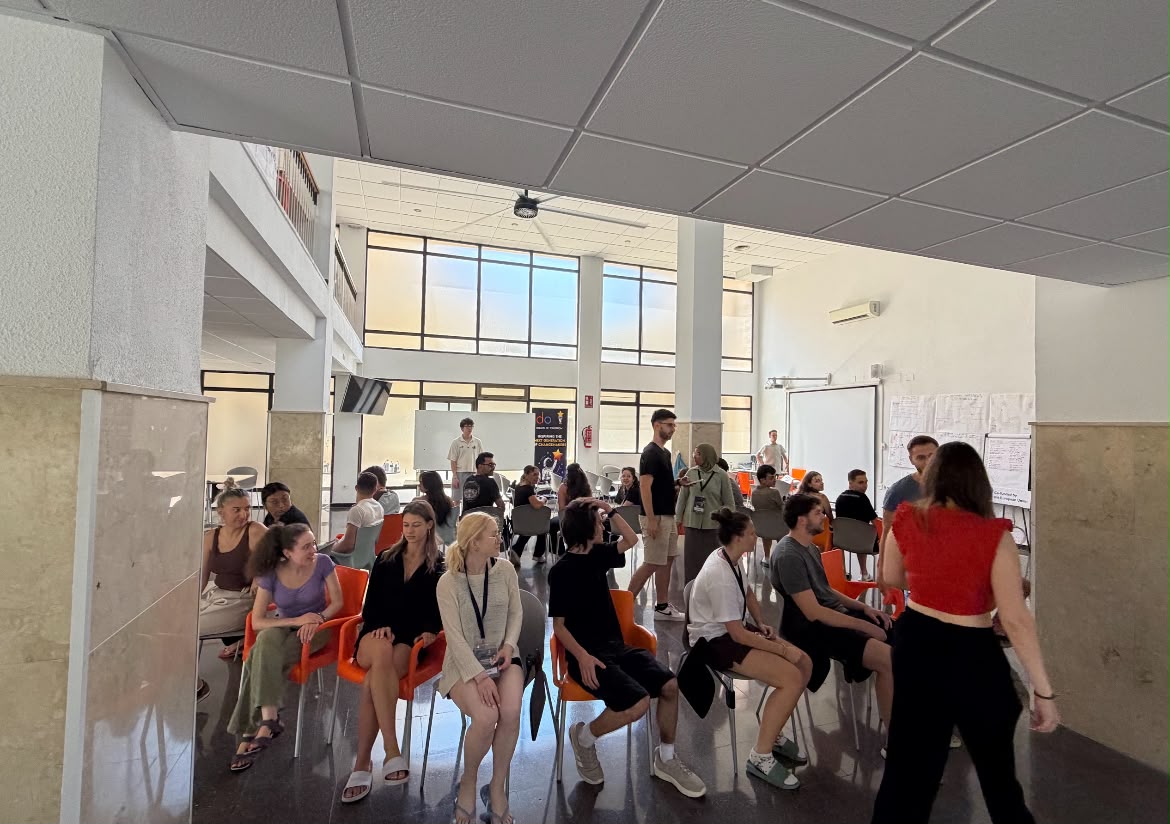
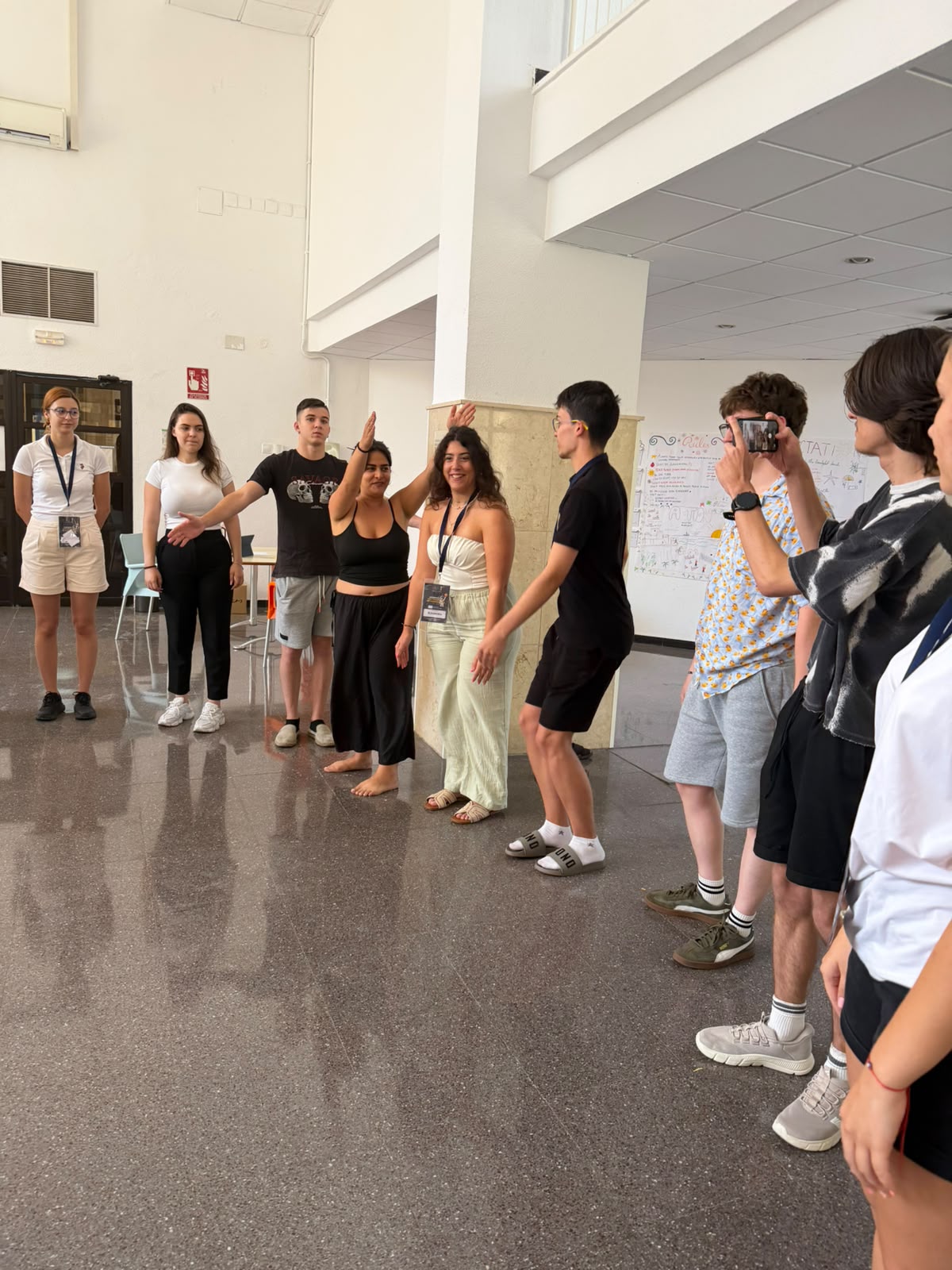
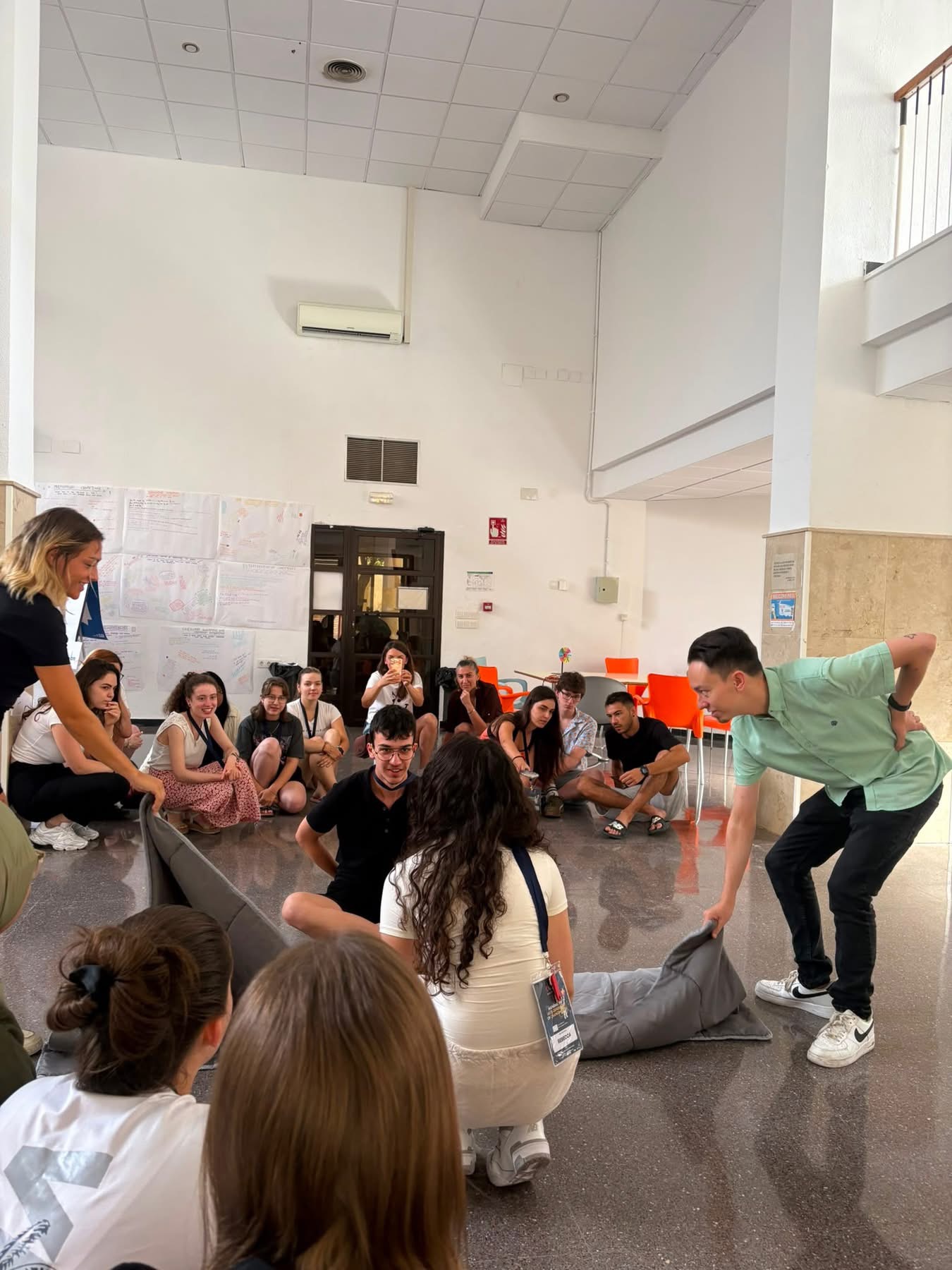
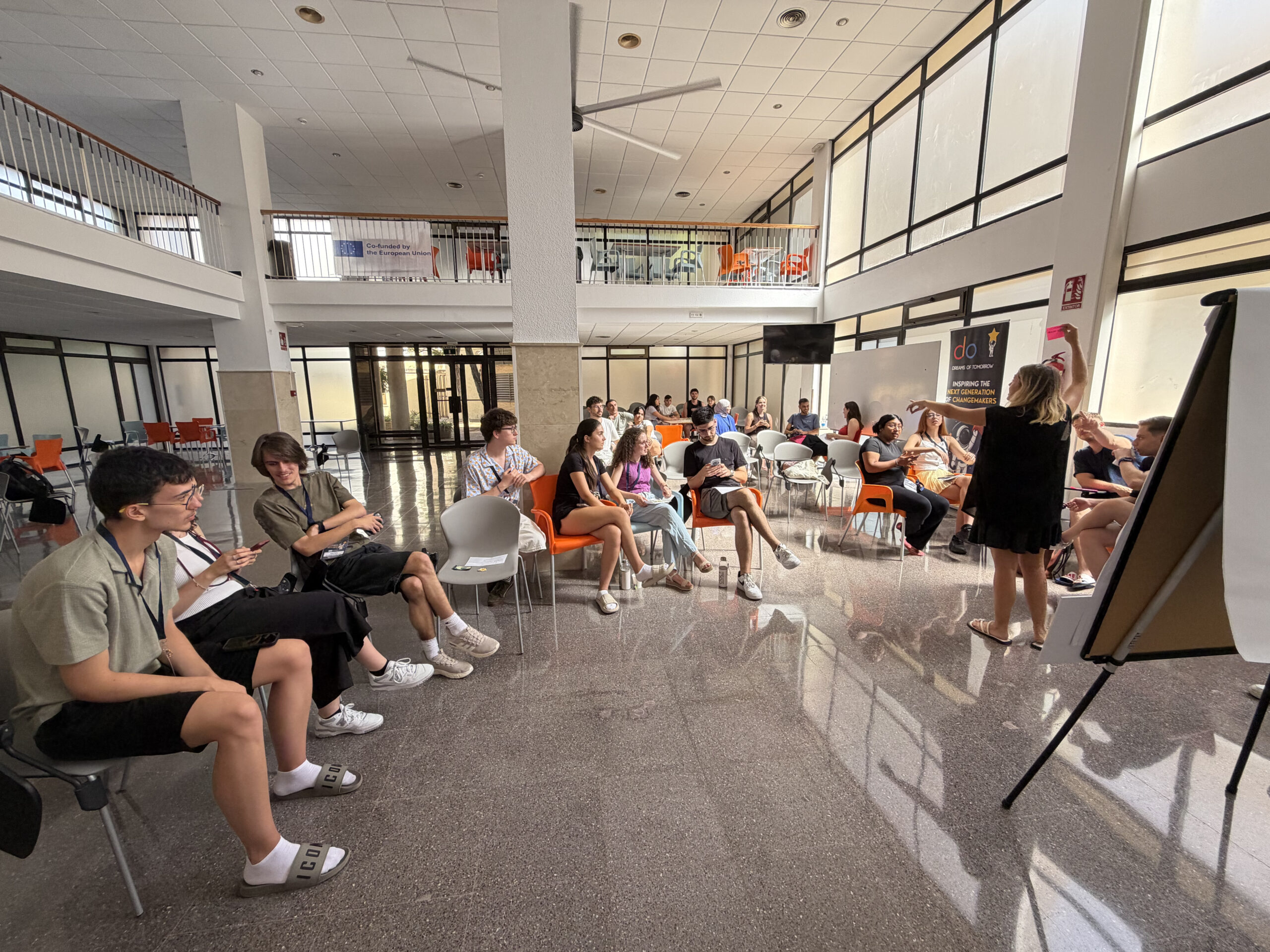
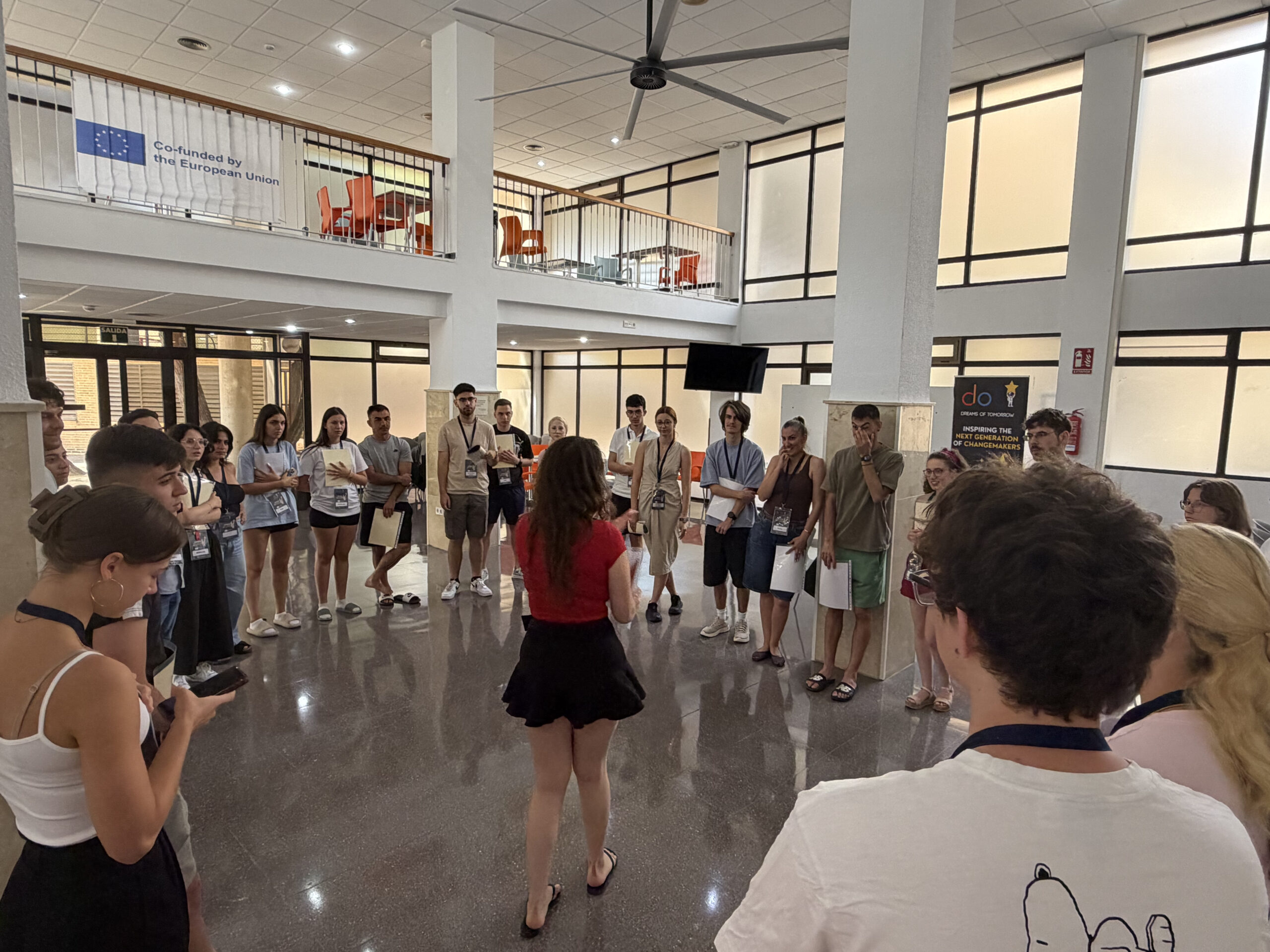
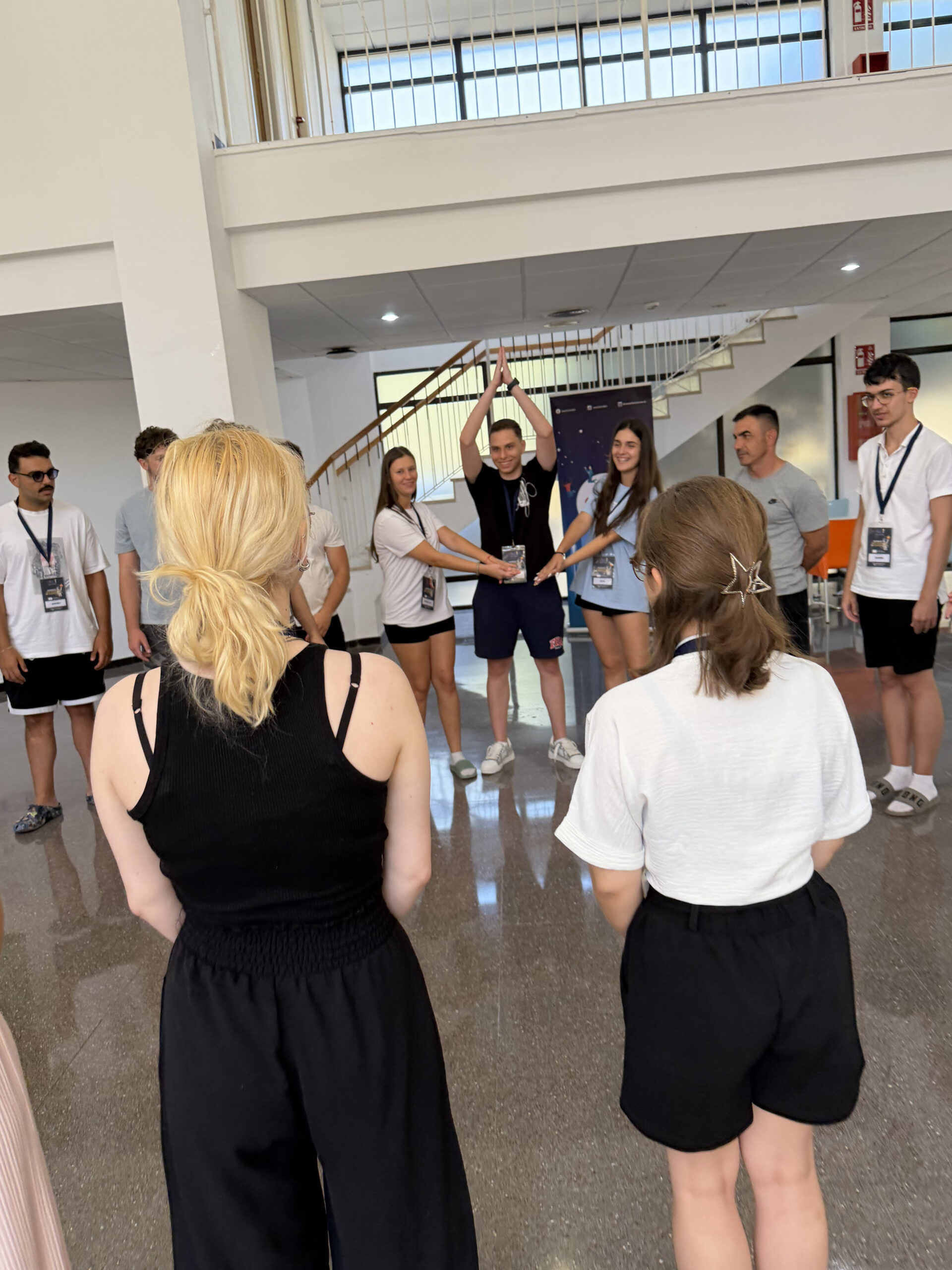
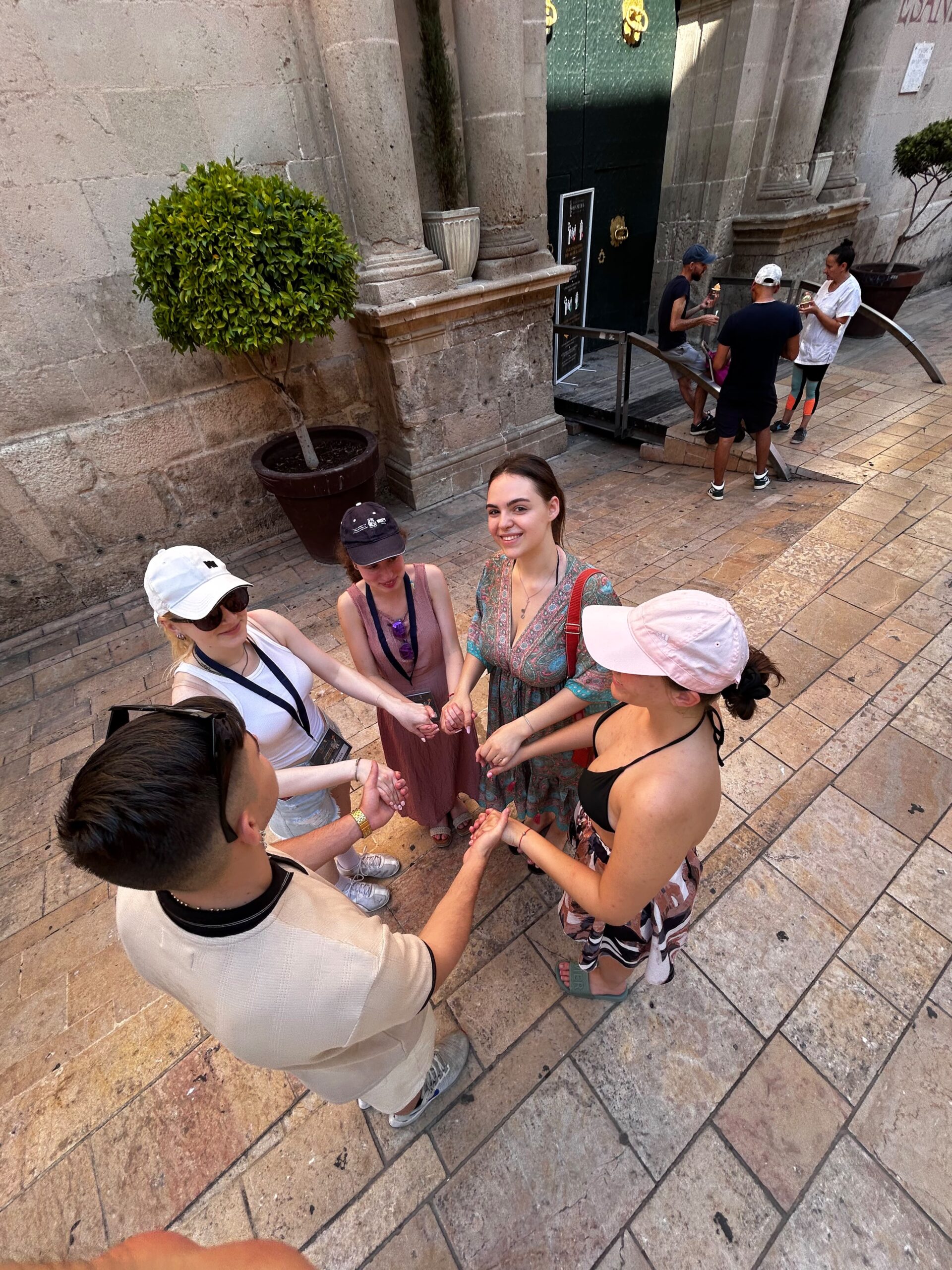
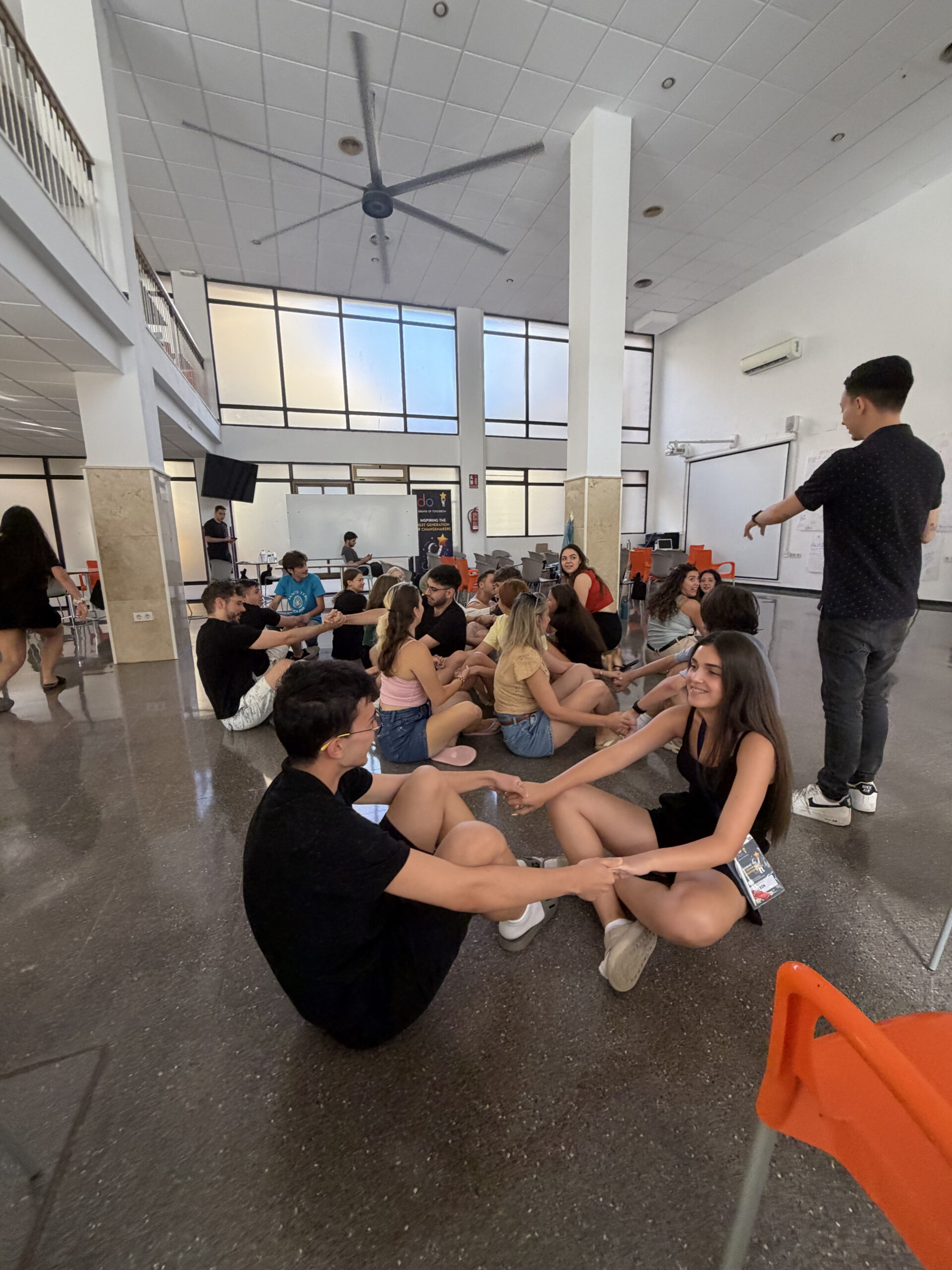
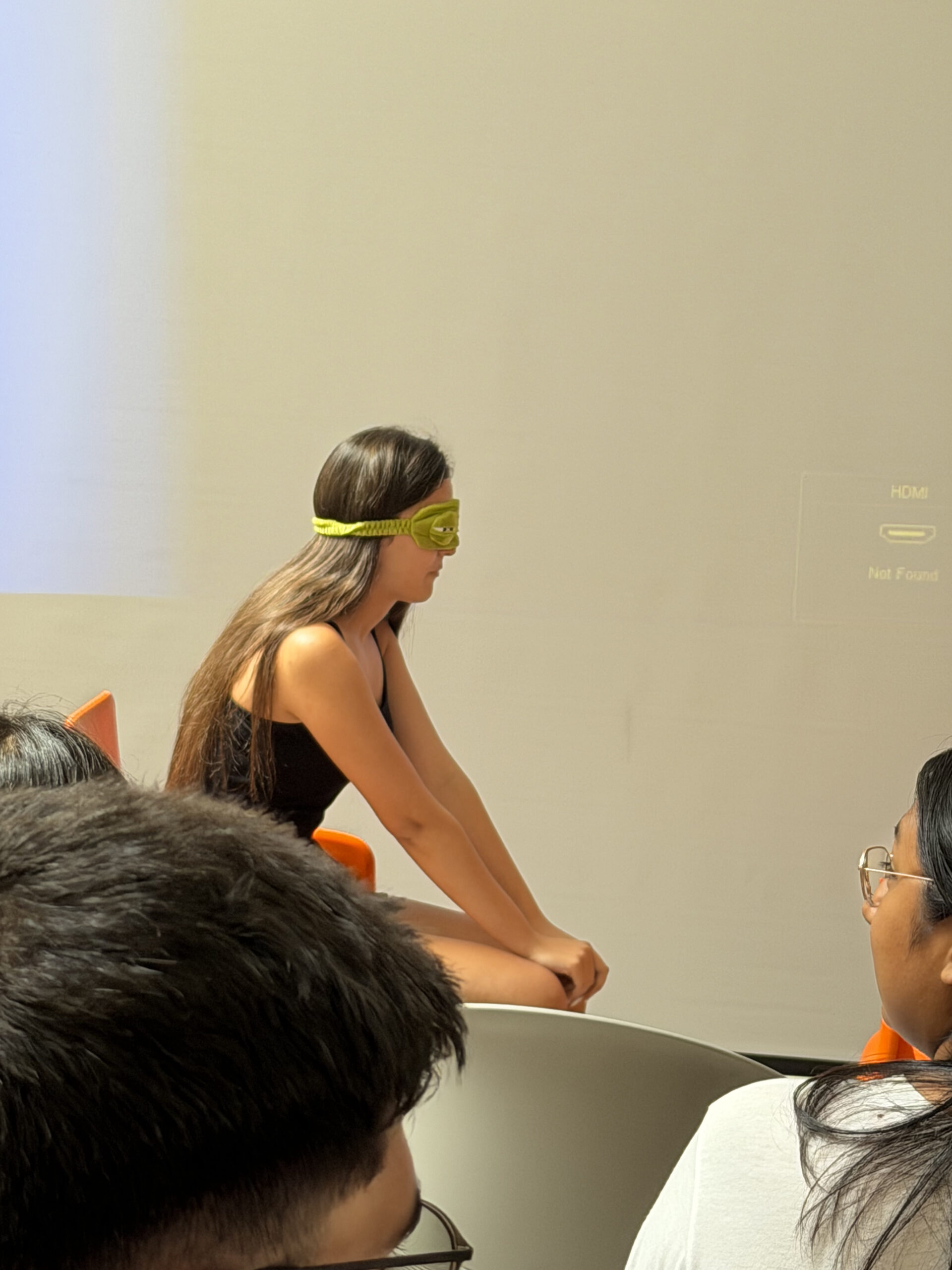
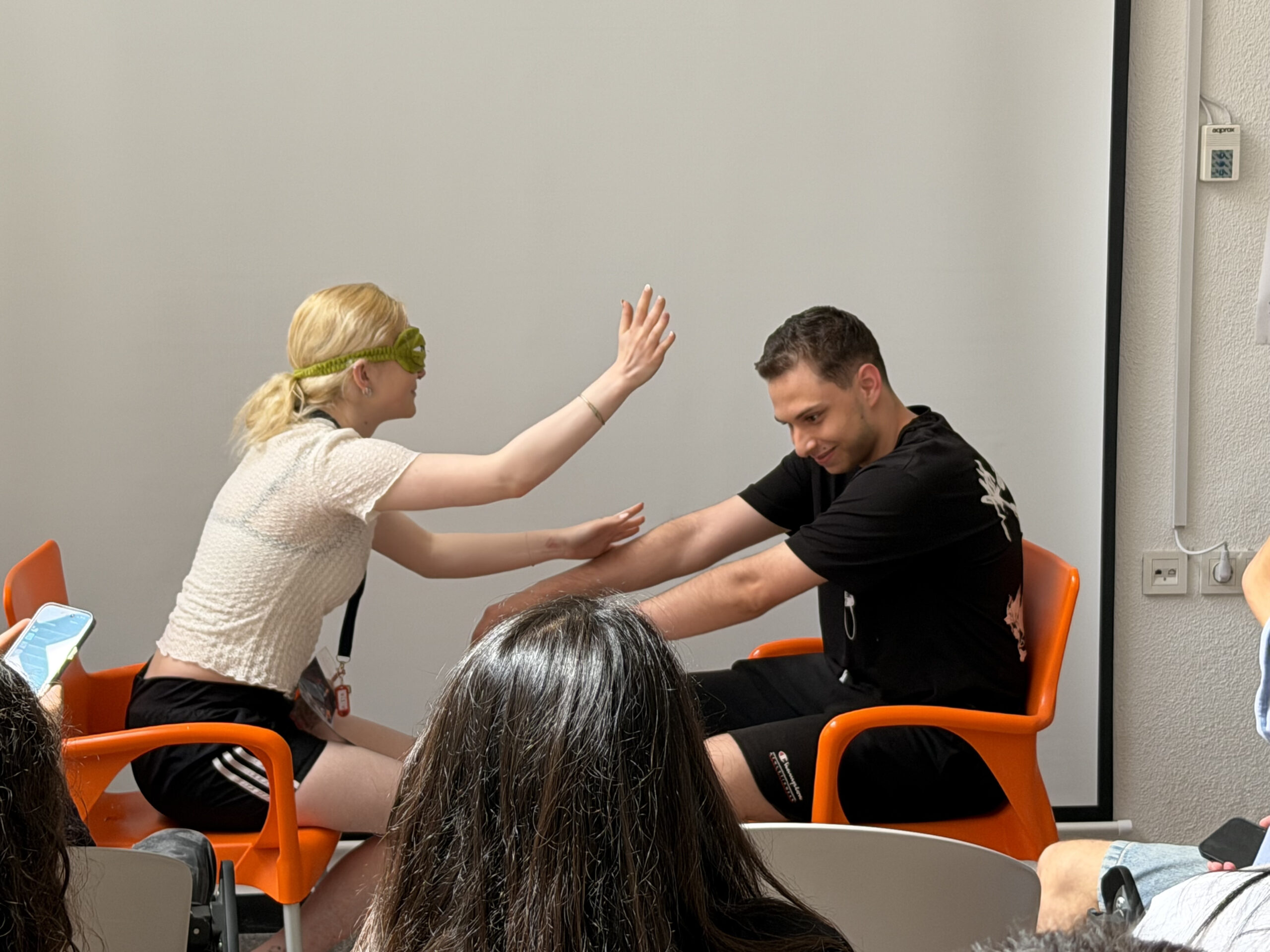
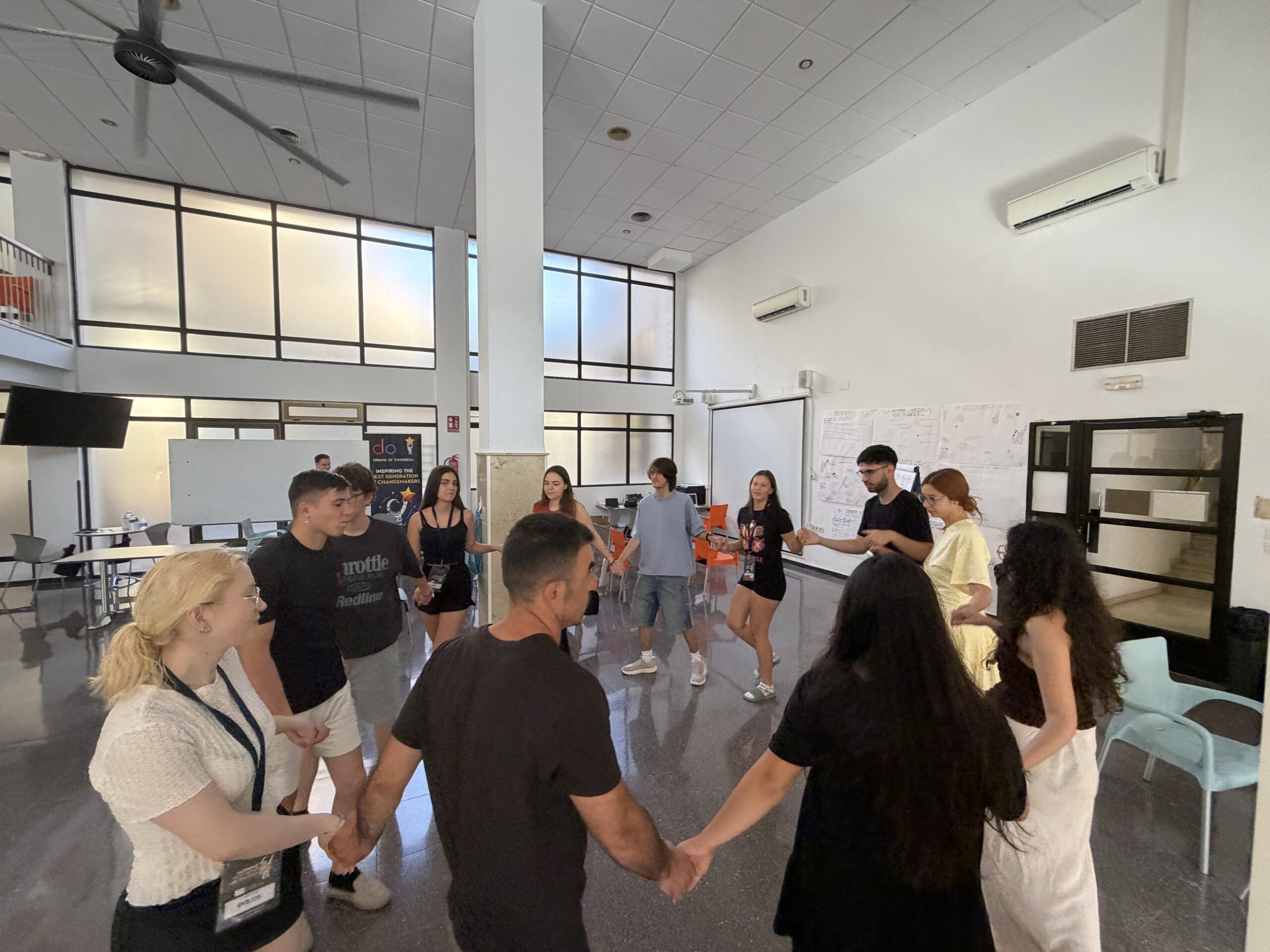
It began with the energizer «Who’s the Leader?». Standing in a circle, the group copied the movements of a hidden leader while one volunteer tried to work out who was actually directing the sequence — a playful way into a reflection on informal leadership and influence within groups, closing the work on roles that had started on the very first day.

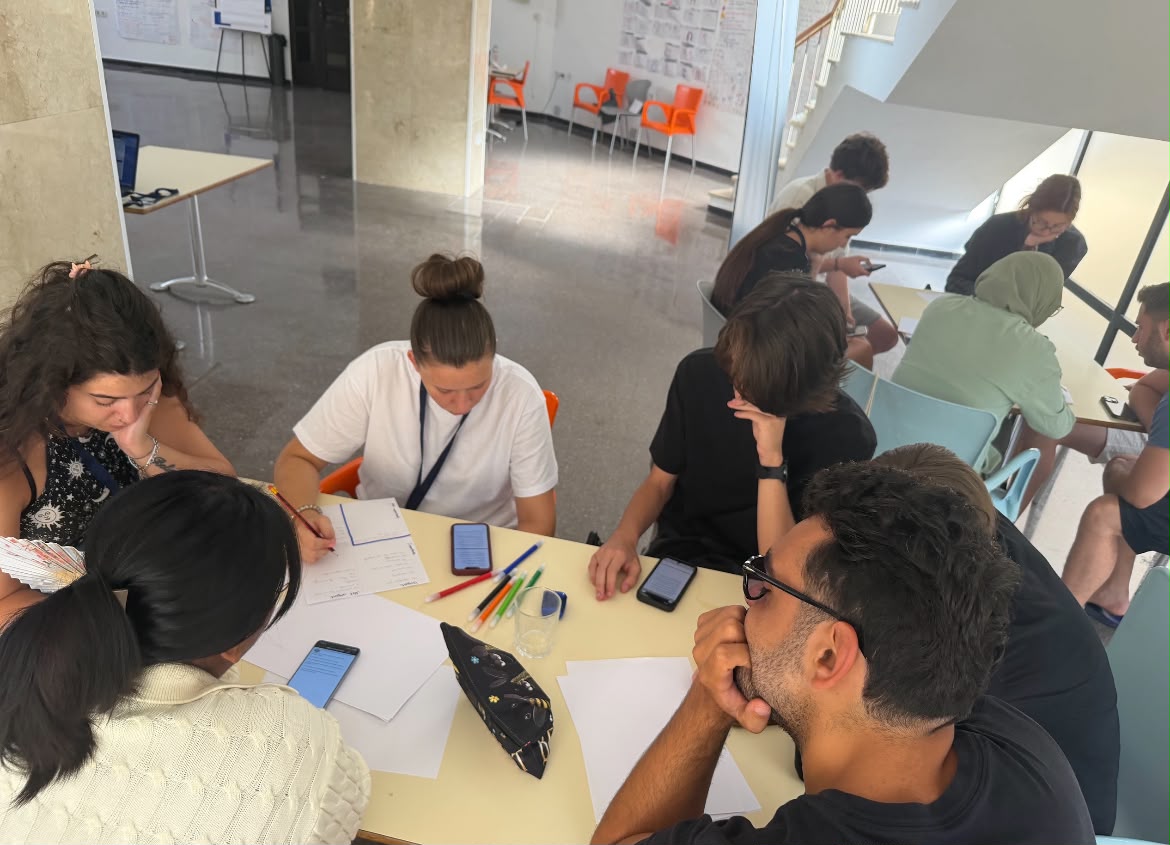
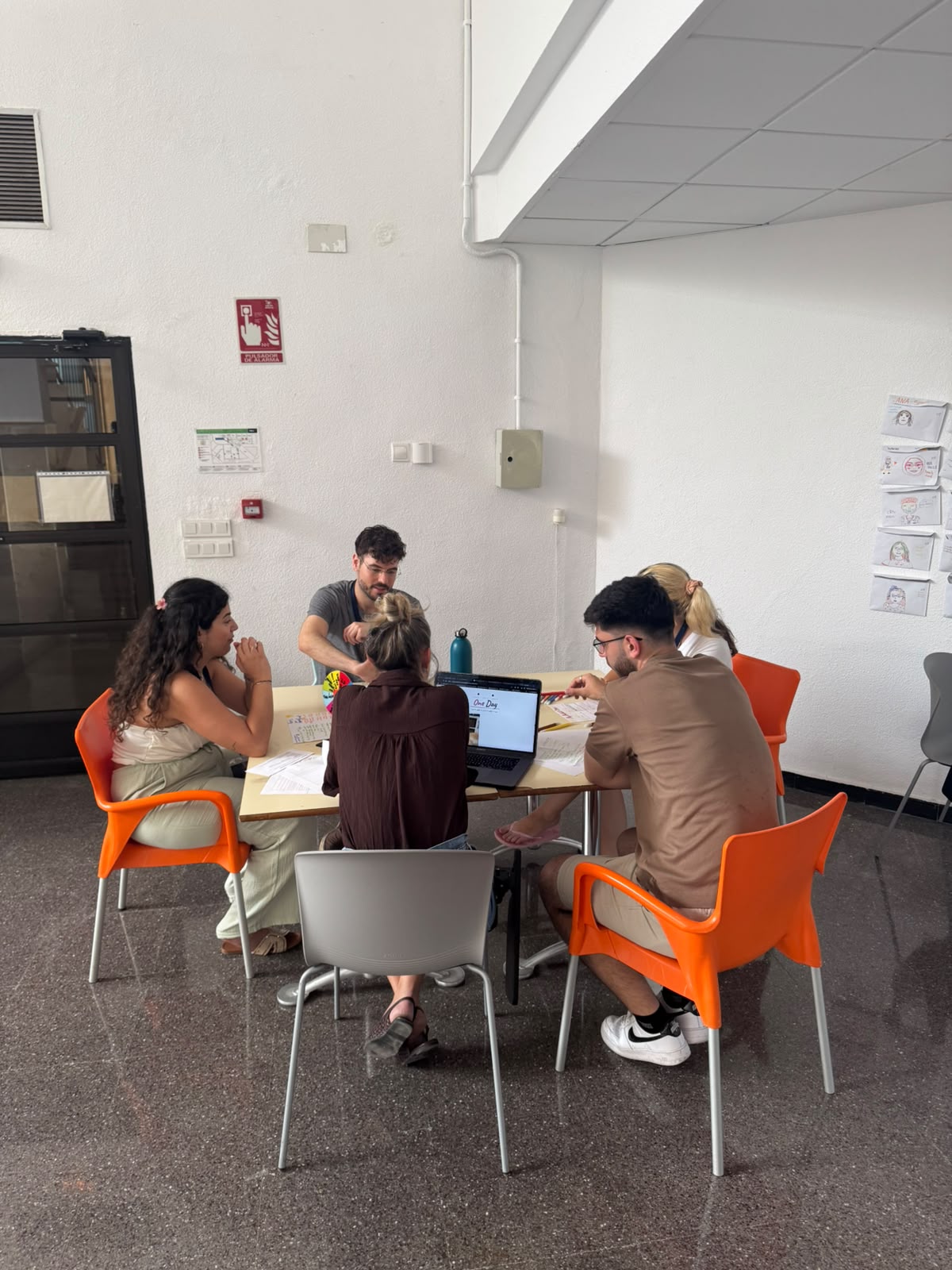
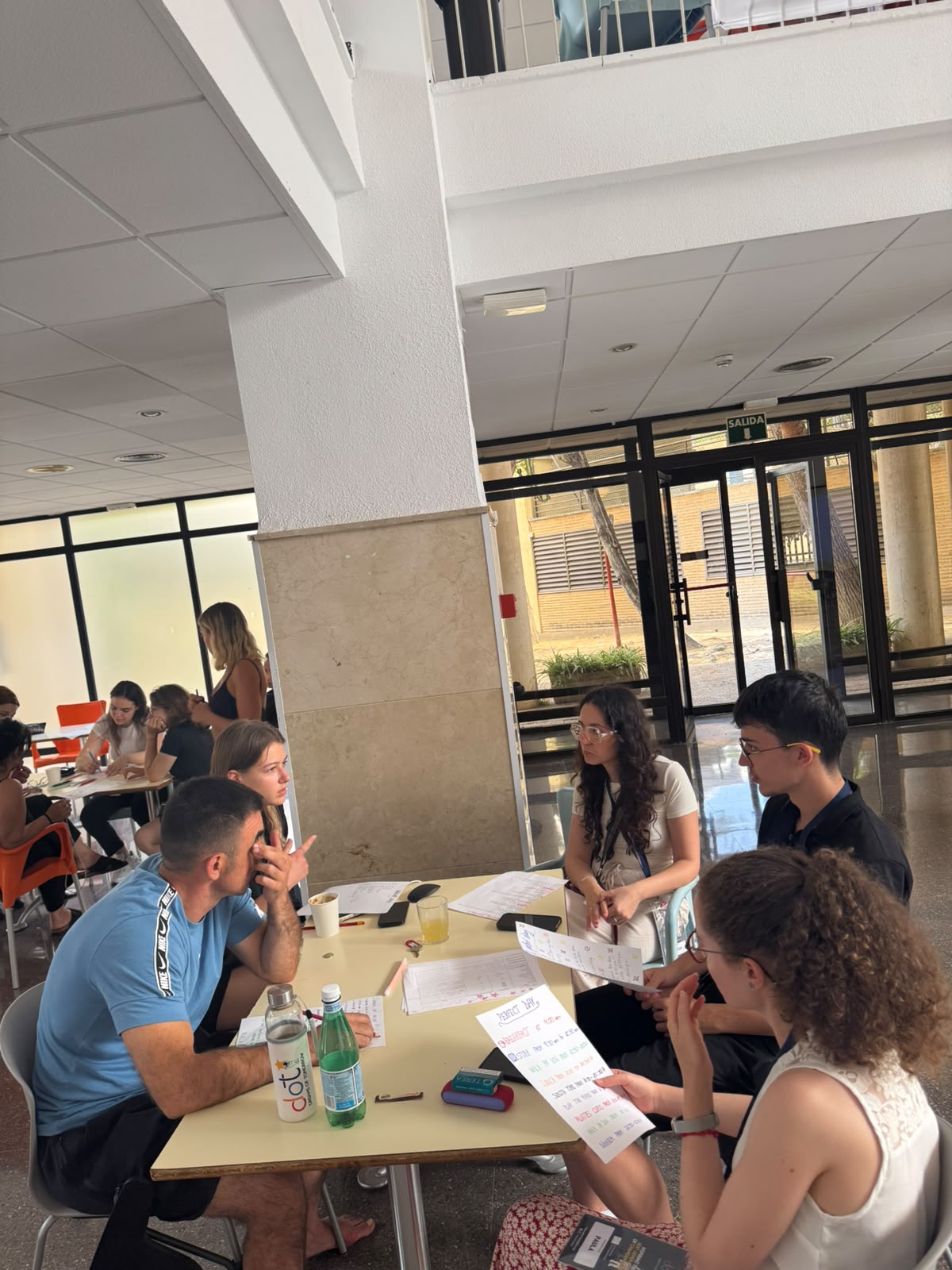
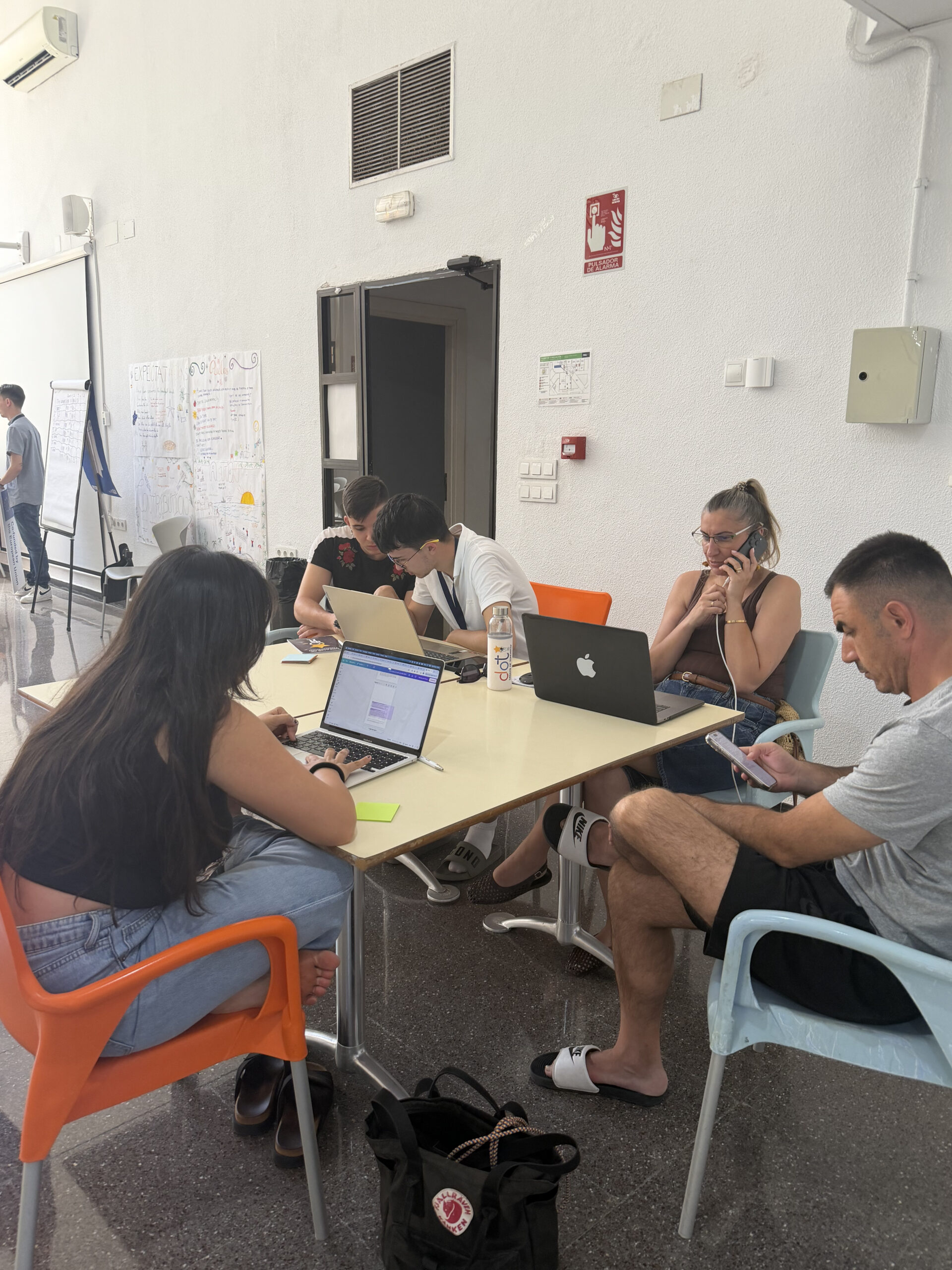
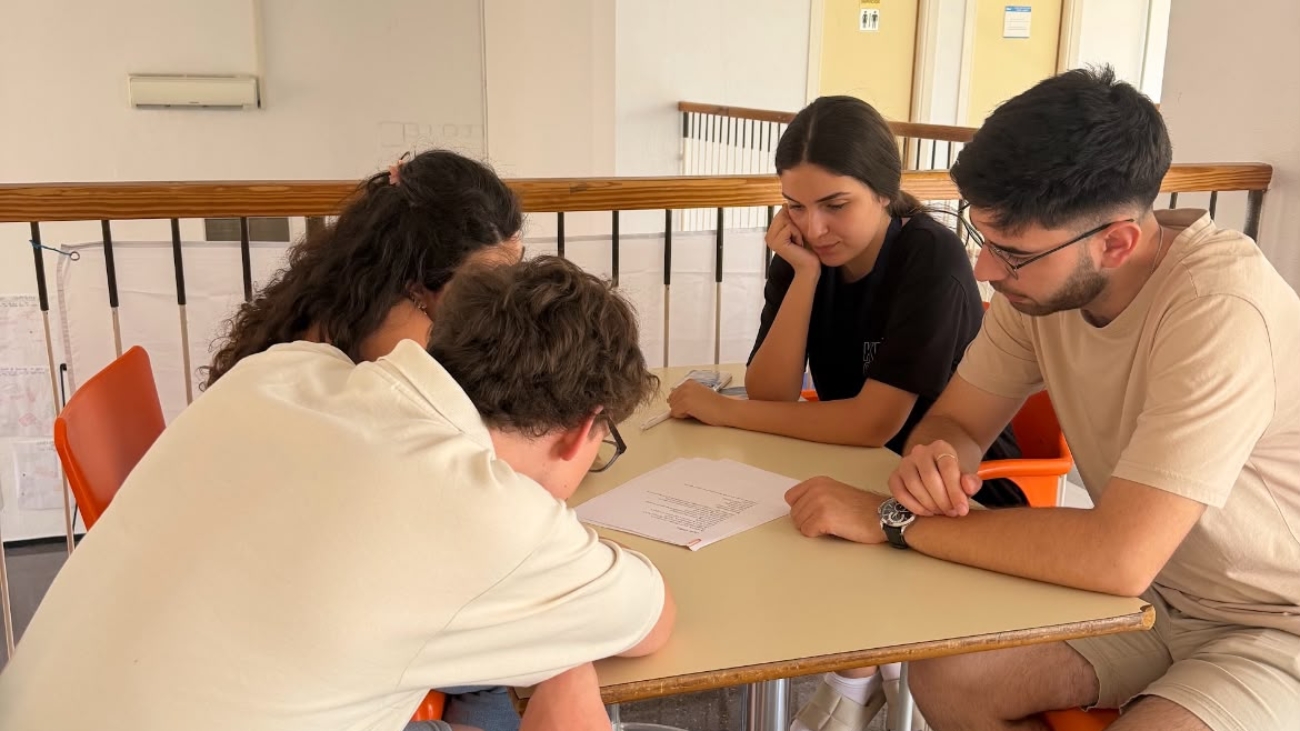
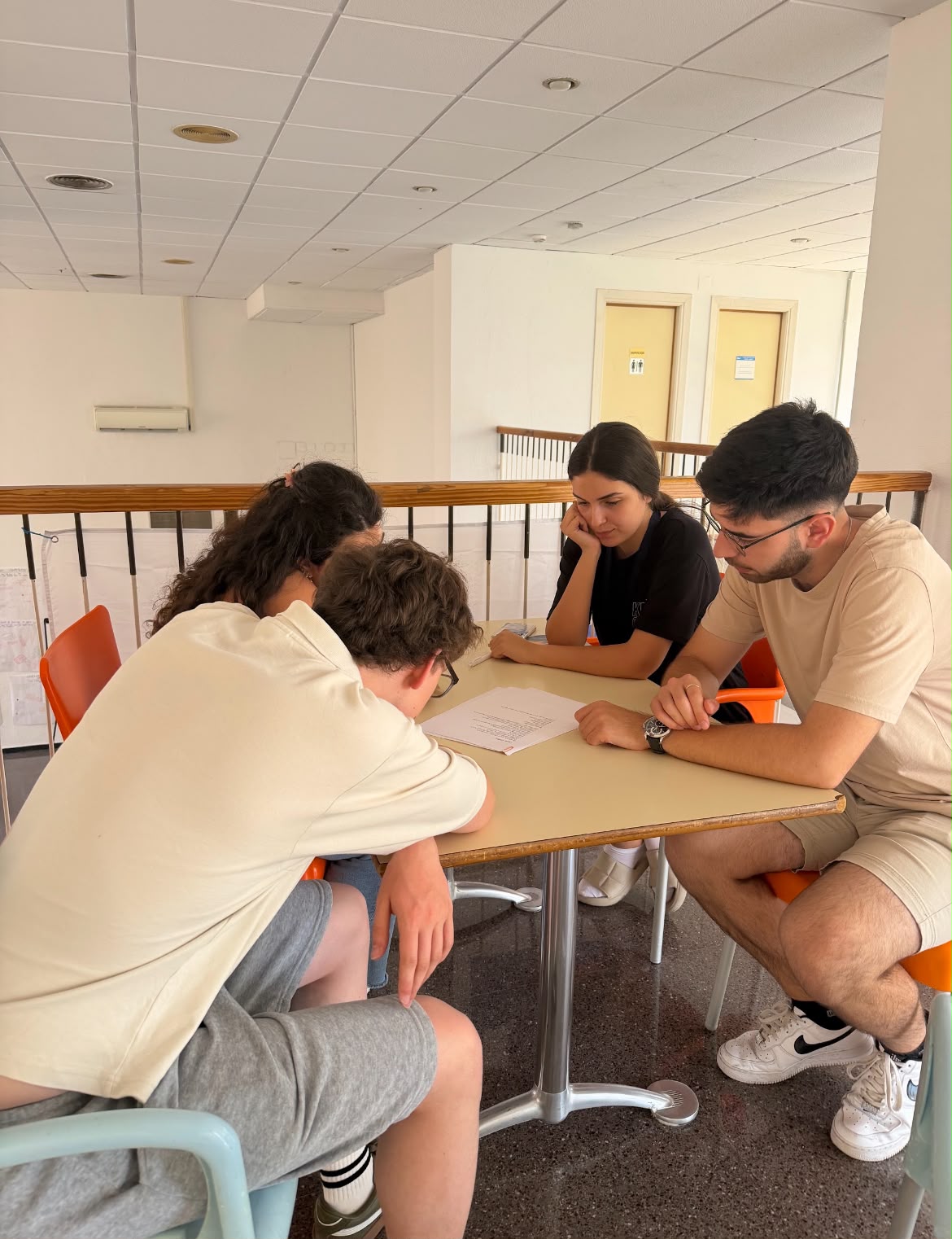
The morning was devoted to «My Passionate Motivational Letter» ✍️. Participants learned how to structure an effective motivation letter and how it differs from a CV: an opening that catches attention, an explicit connection between your own profile and what the organisation needs, concrete evidence instead of generic adjectives, and a proactive closing. Each person wrote a letter addressed to a real organisation or position they were interested in, incorporating the competences they had identified over the week, and then shared it in small groups to receive structured feedback from their peers before revising it.

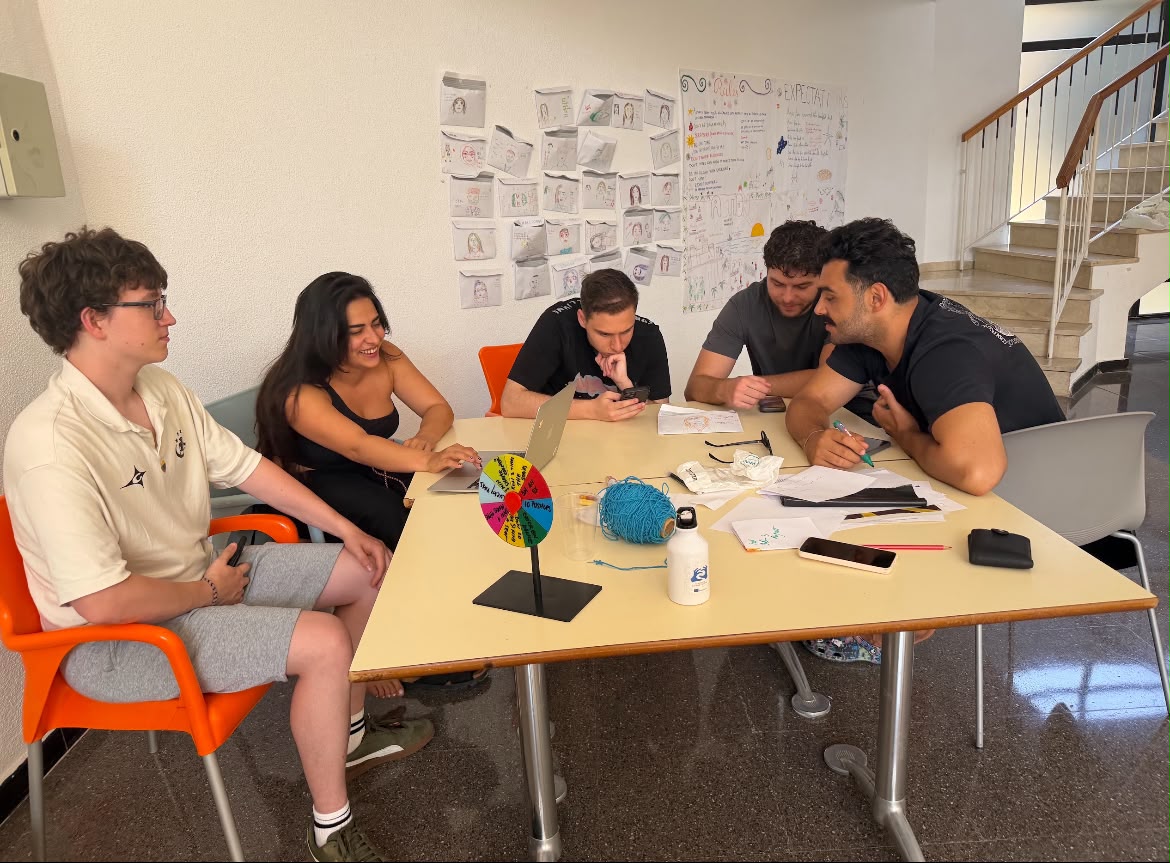
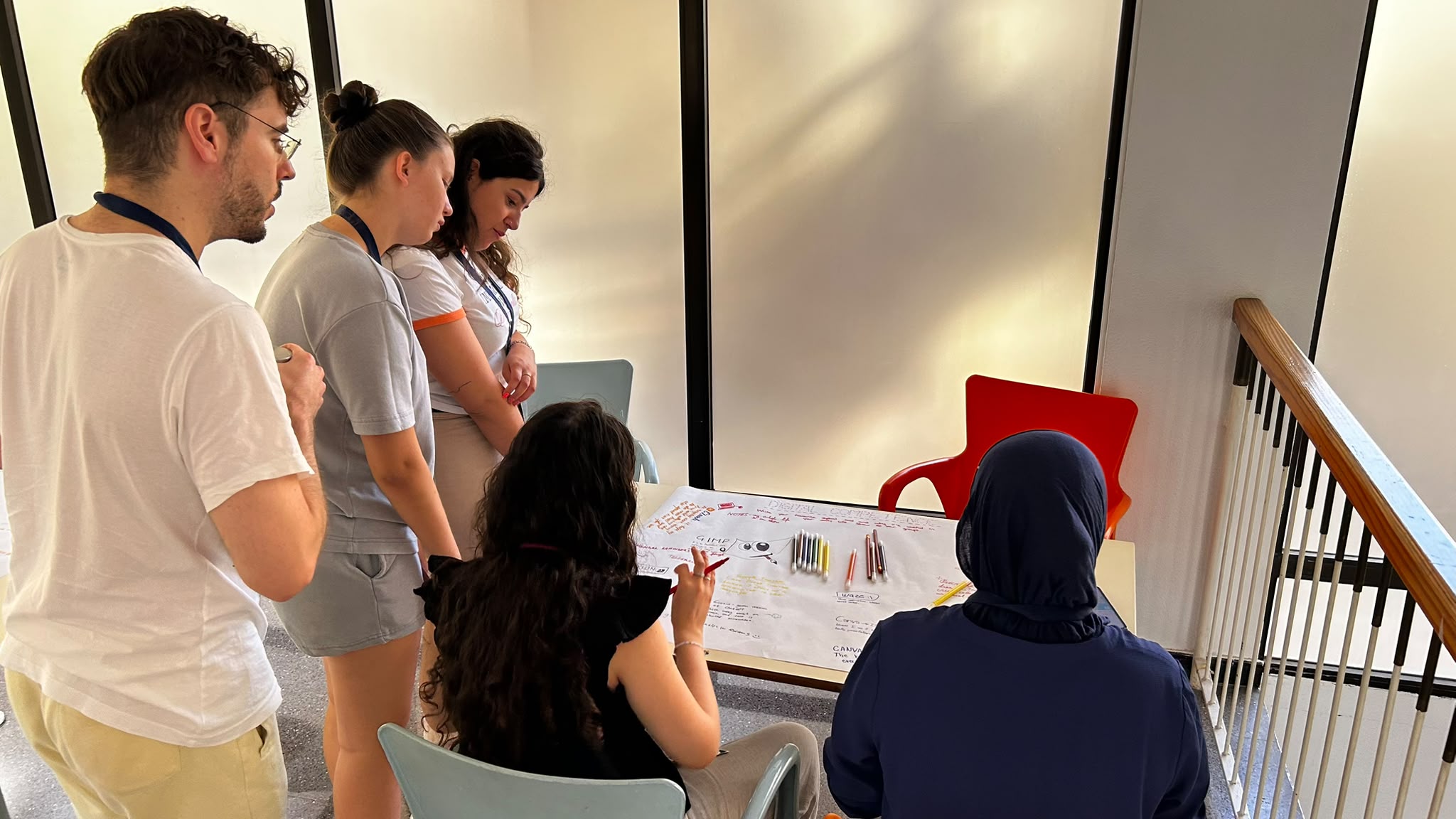
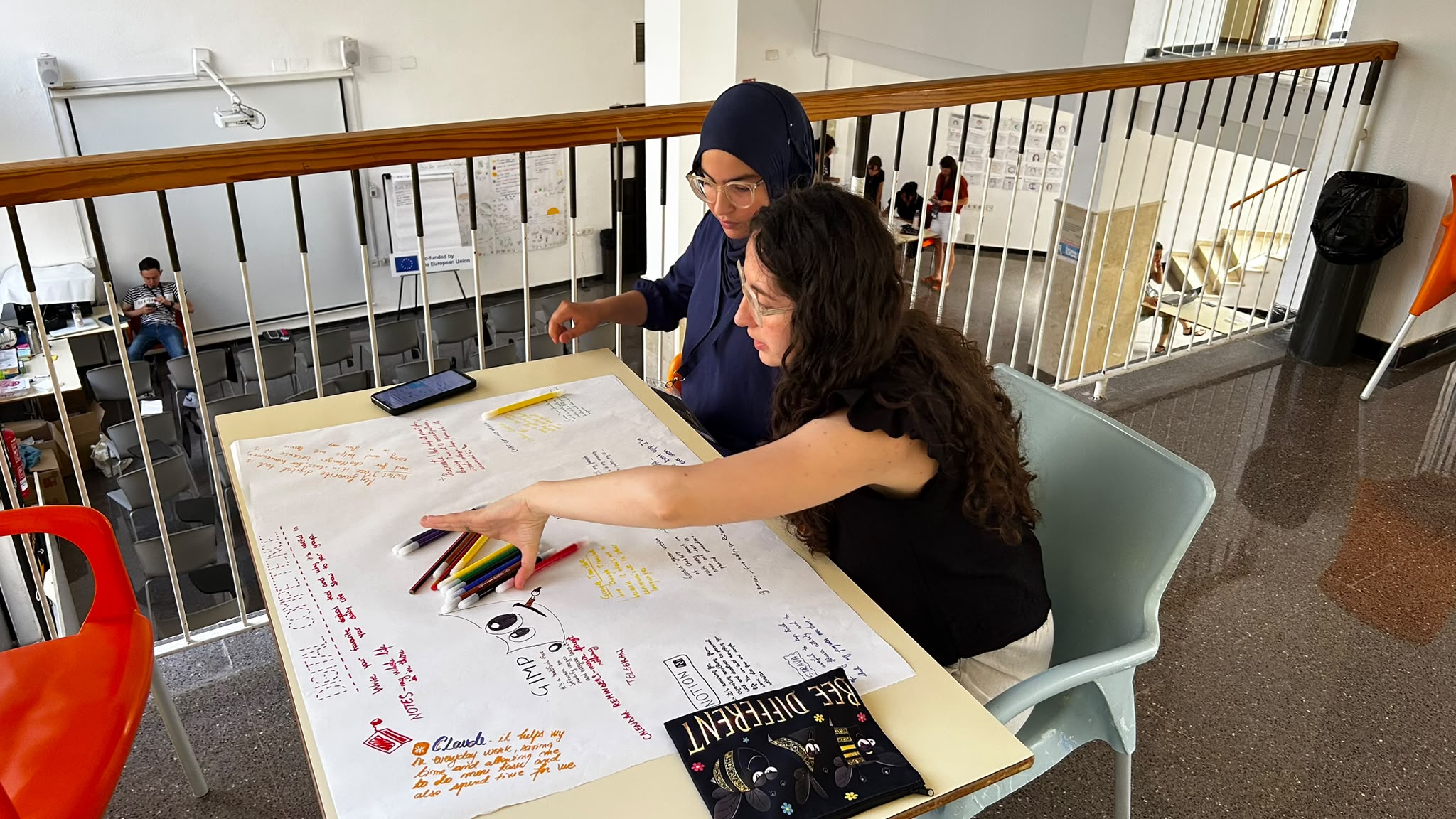
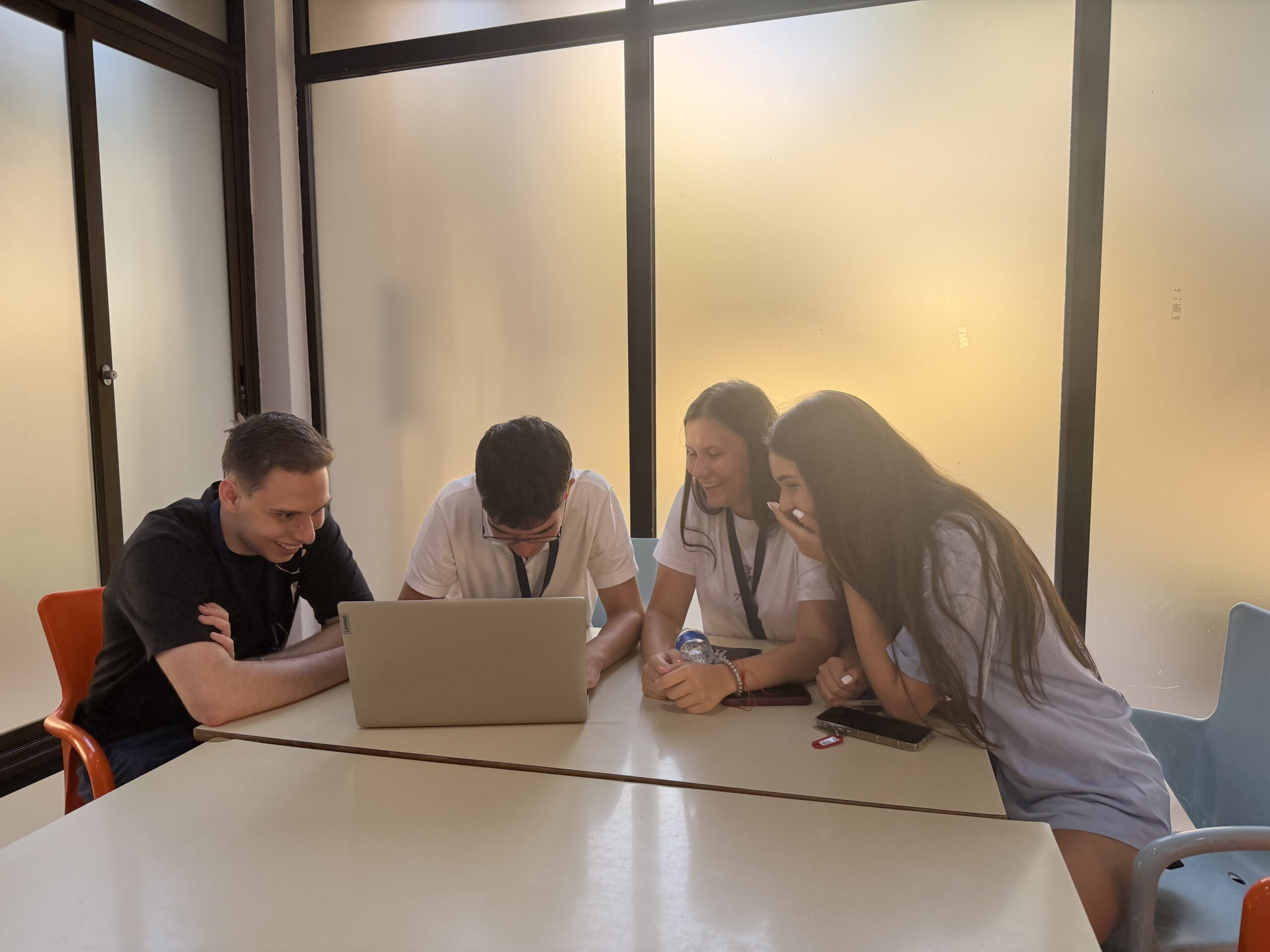
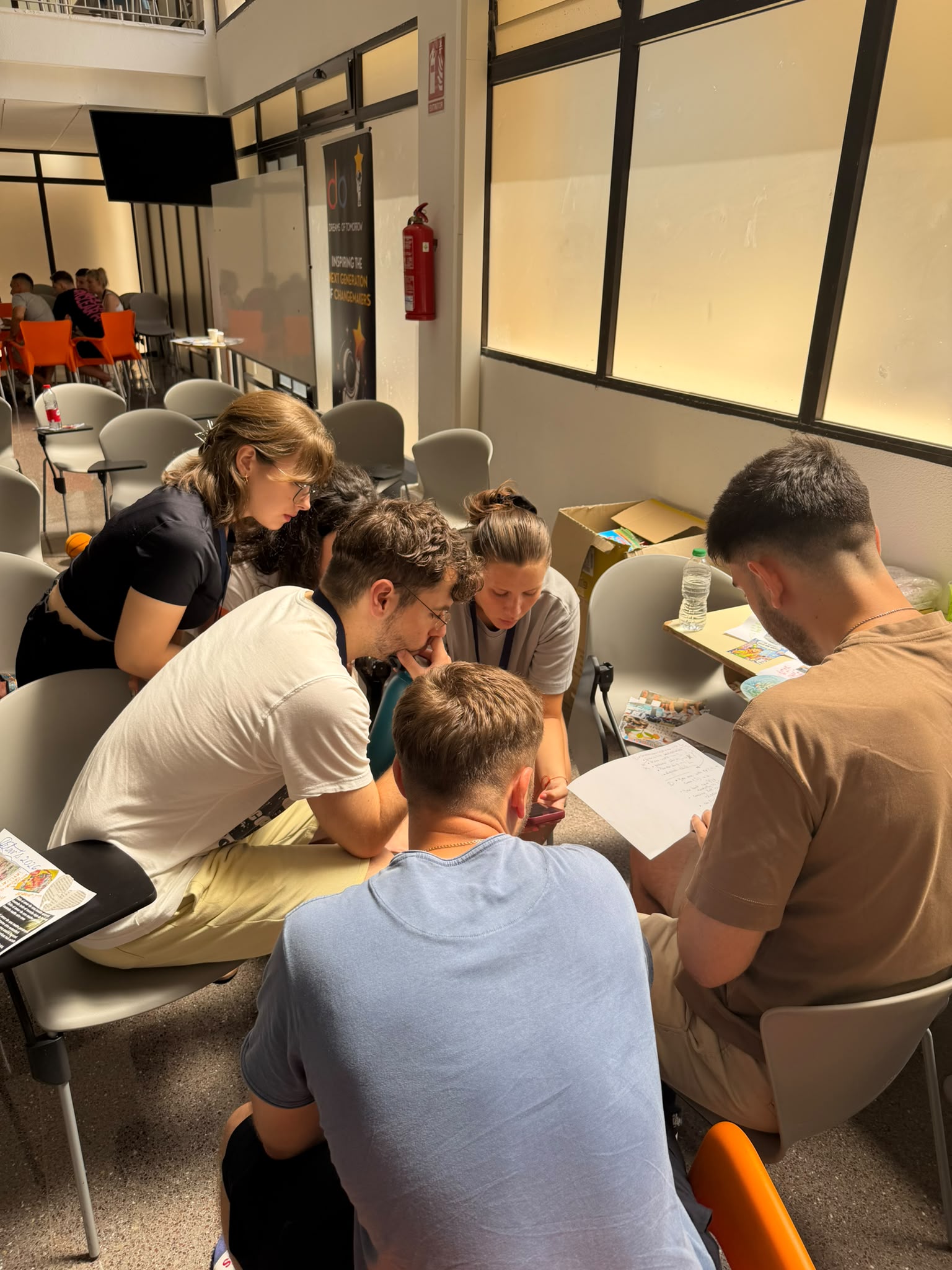
Before lunch came «Portfolio Creation – Canva Master» 🎨. Using Canva, participants built their own professional portfolio — as a PDF, a presentation or a web page — bringing together samples of their work, their competences, their training and their experiences, including the ones gained during this exchange. The session also covered designing content for professional networks, with LinkedIn and Instagram posts reflecting their profile and their learning, working on visual hierarchy, personal brand consistency and adapting the message to each platform. Finally, participants swapped portfolios to assess the clarity and impact of each other’s work. Everyone went home with a finished, reusable product of their own.

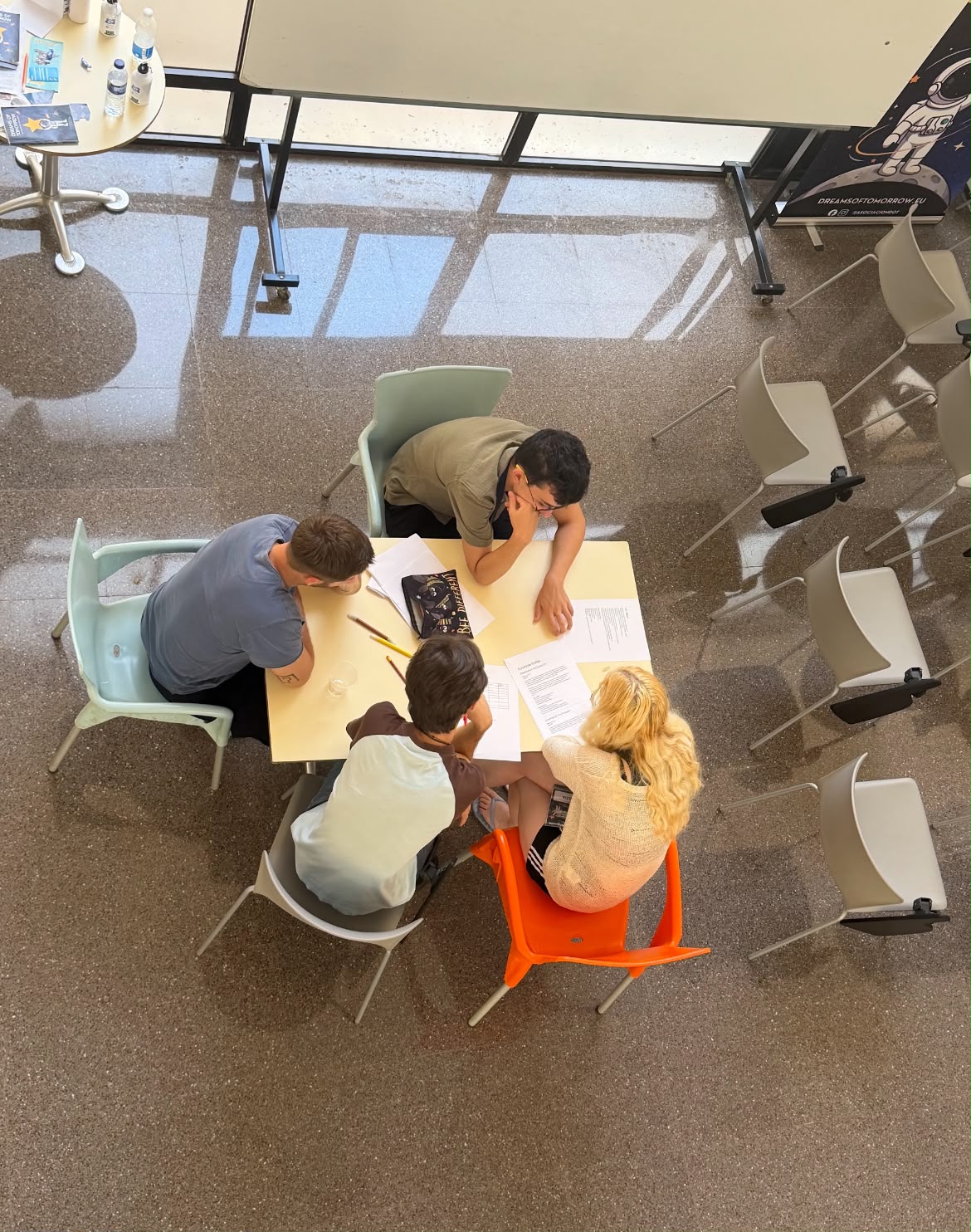
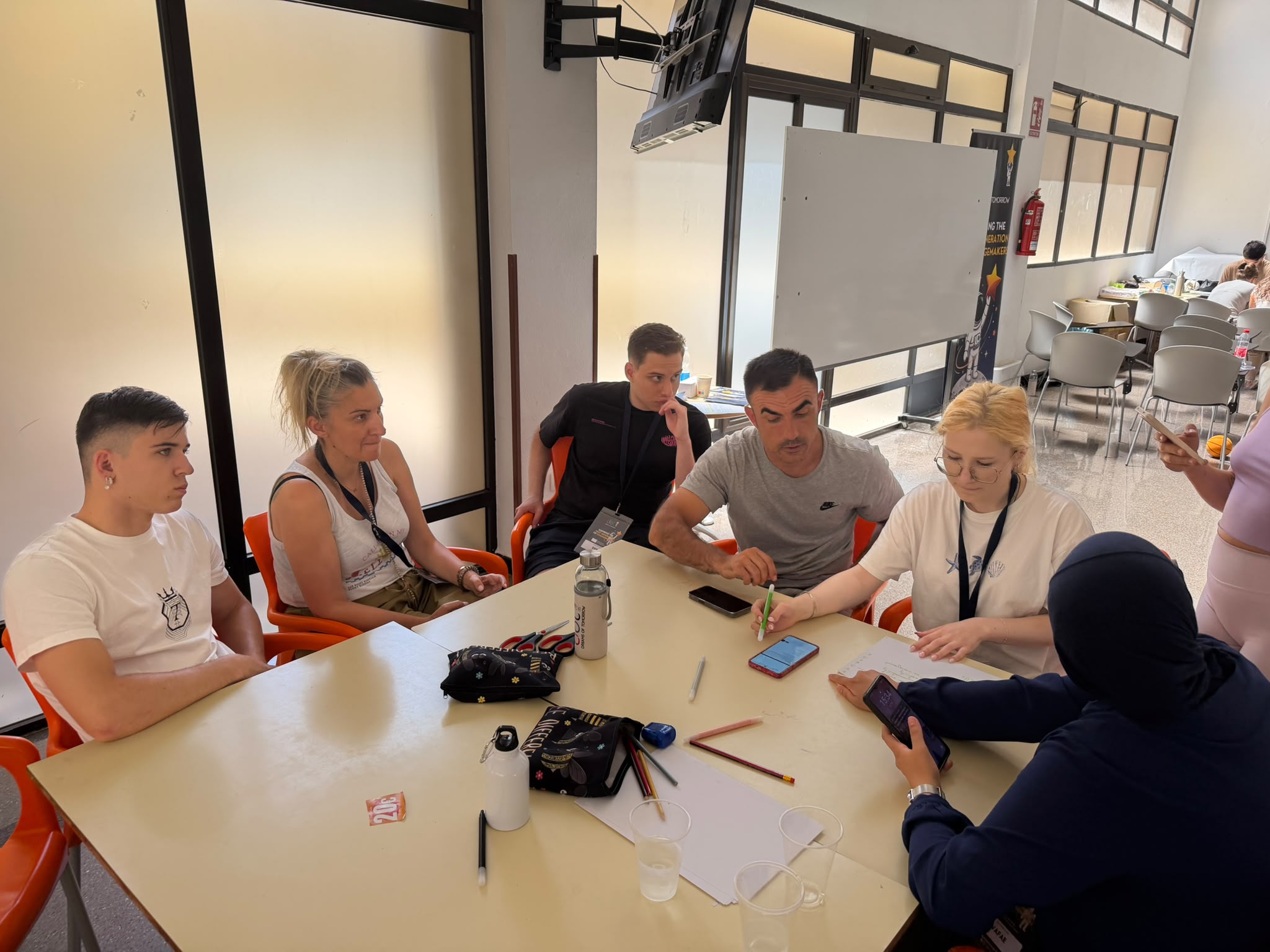
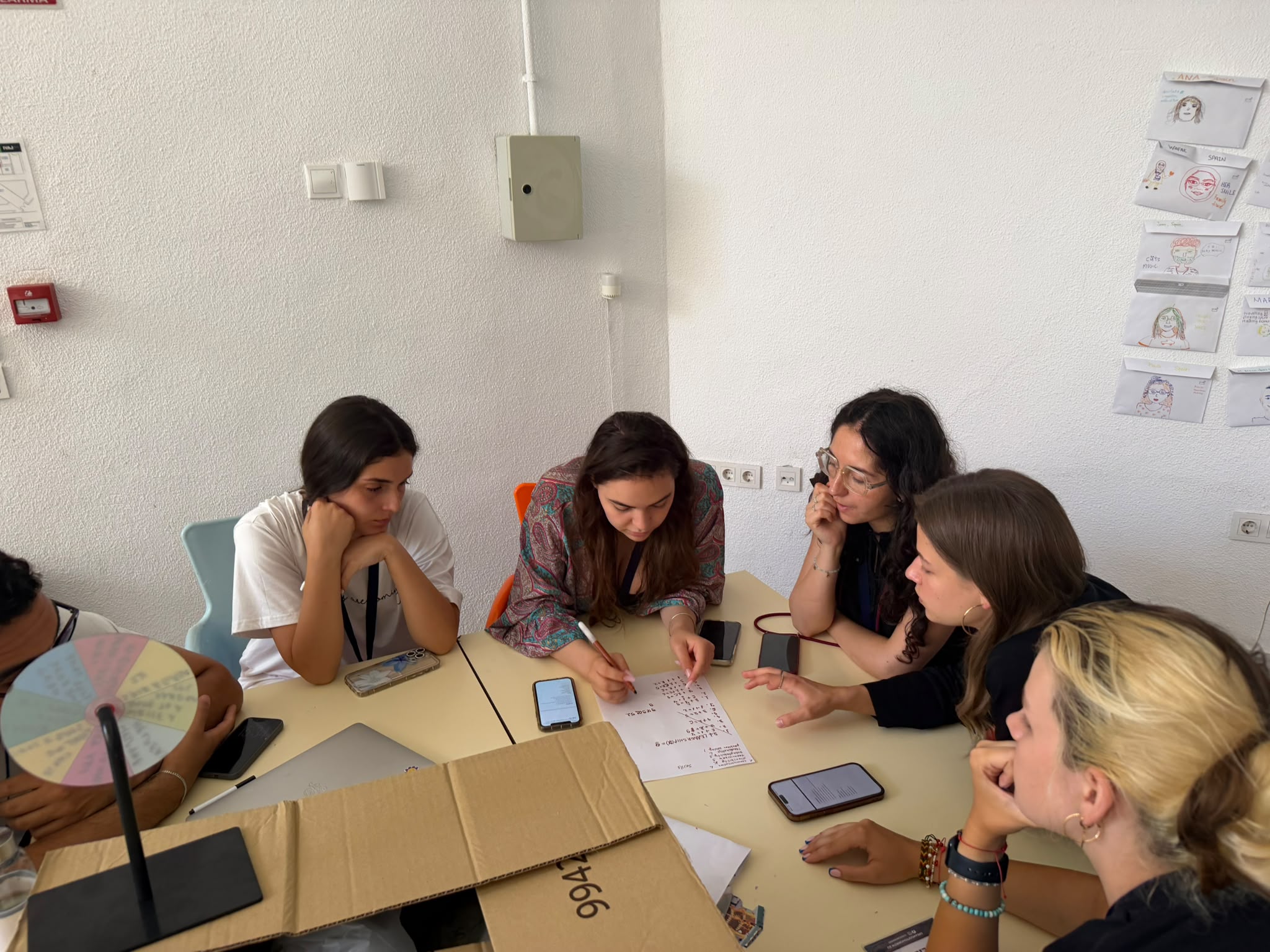
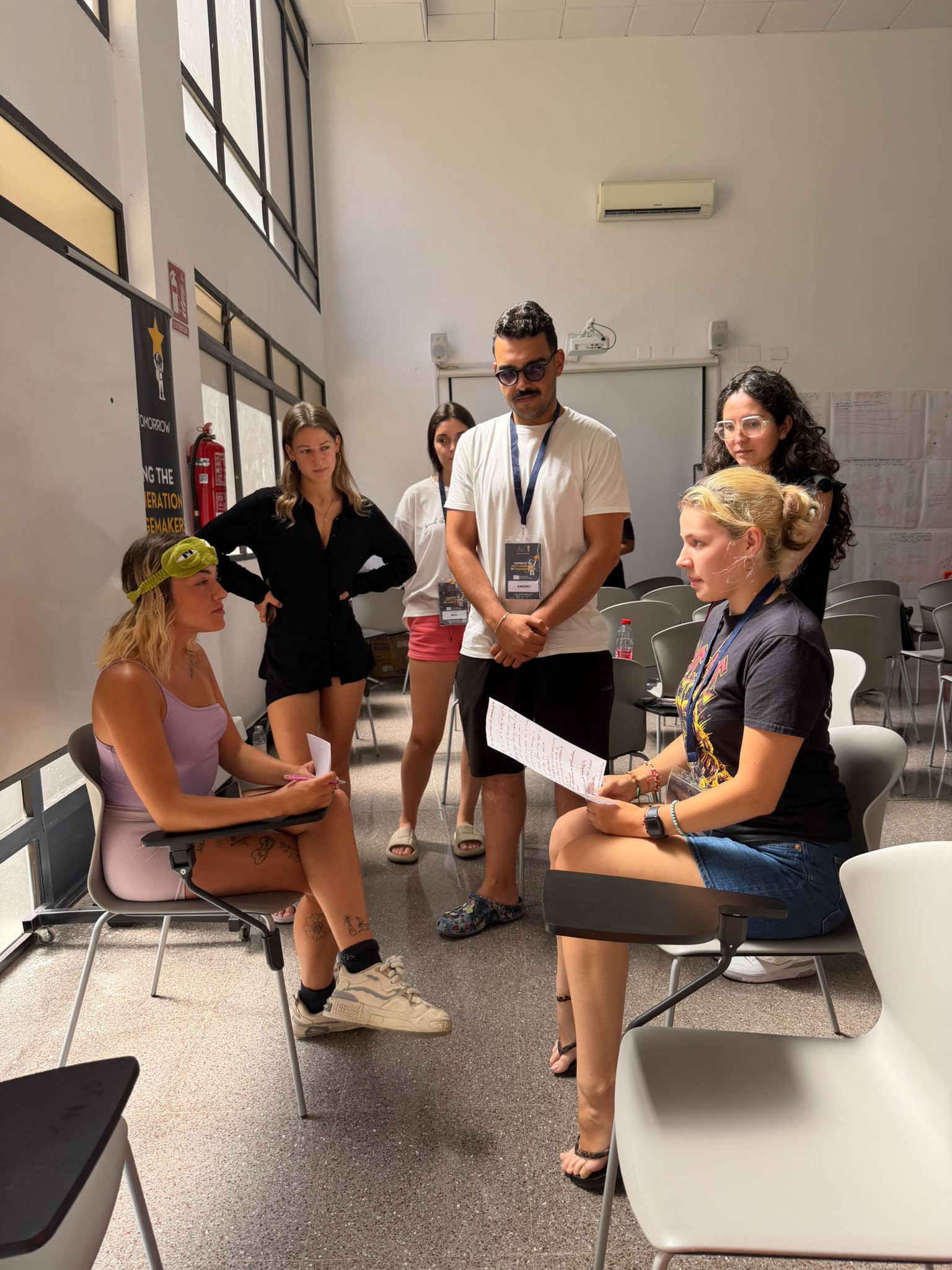
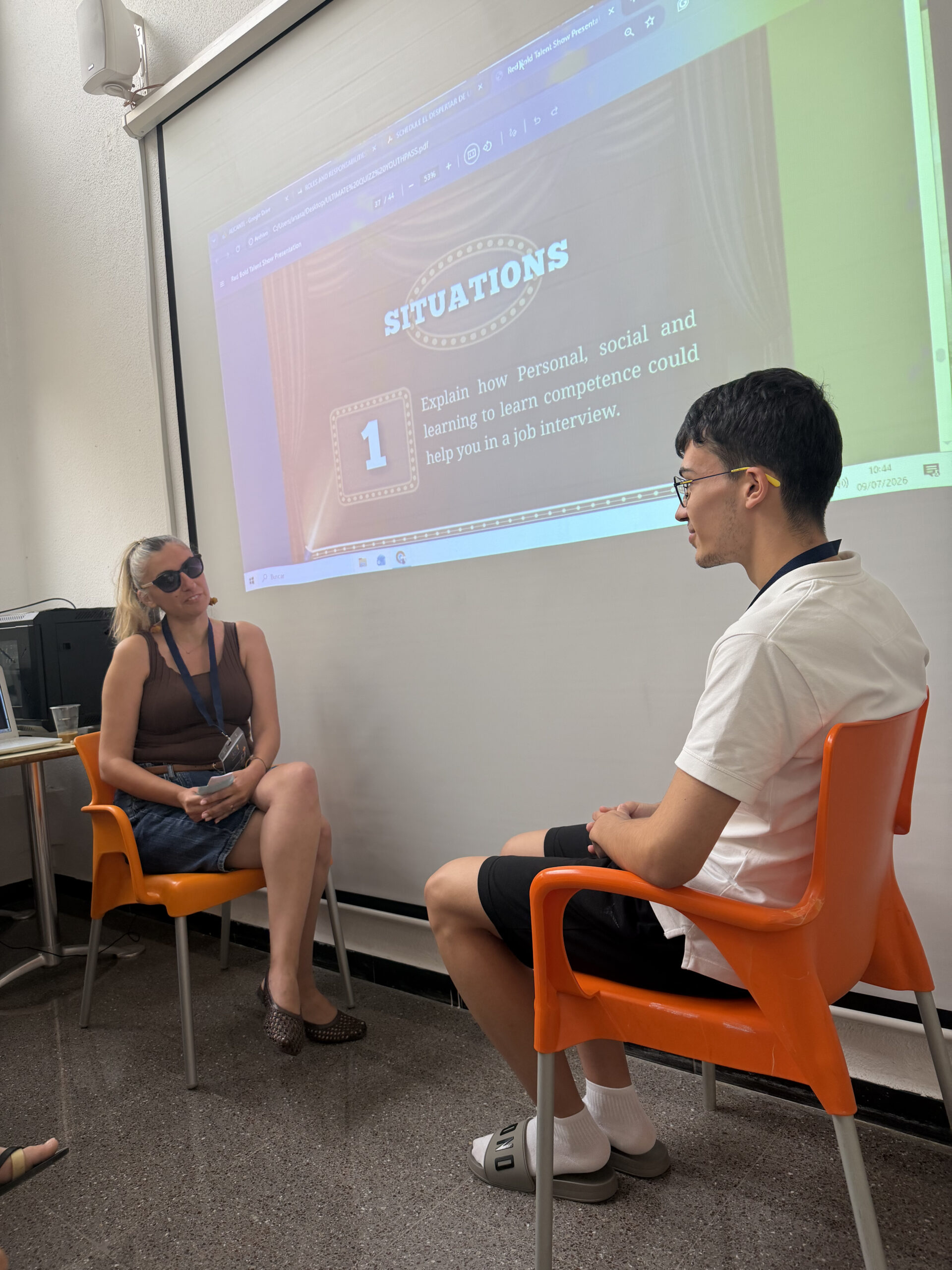
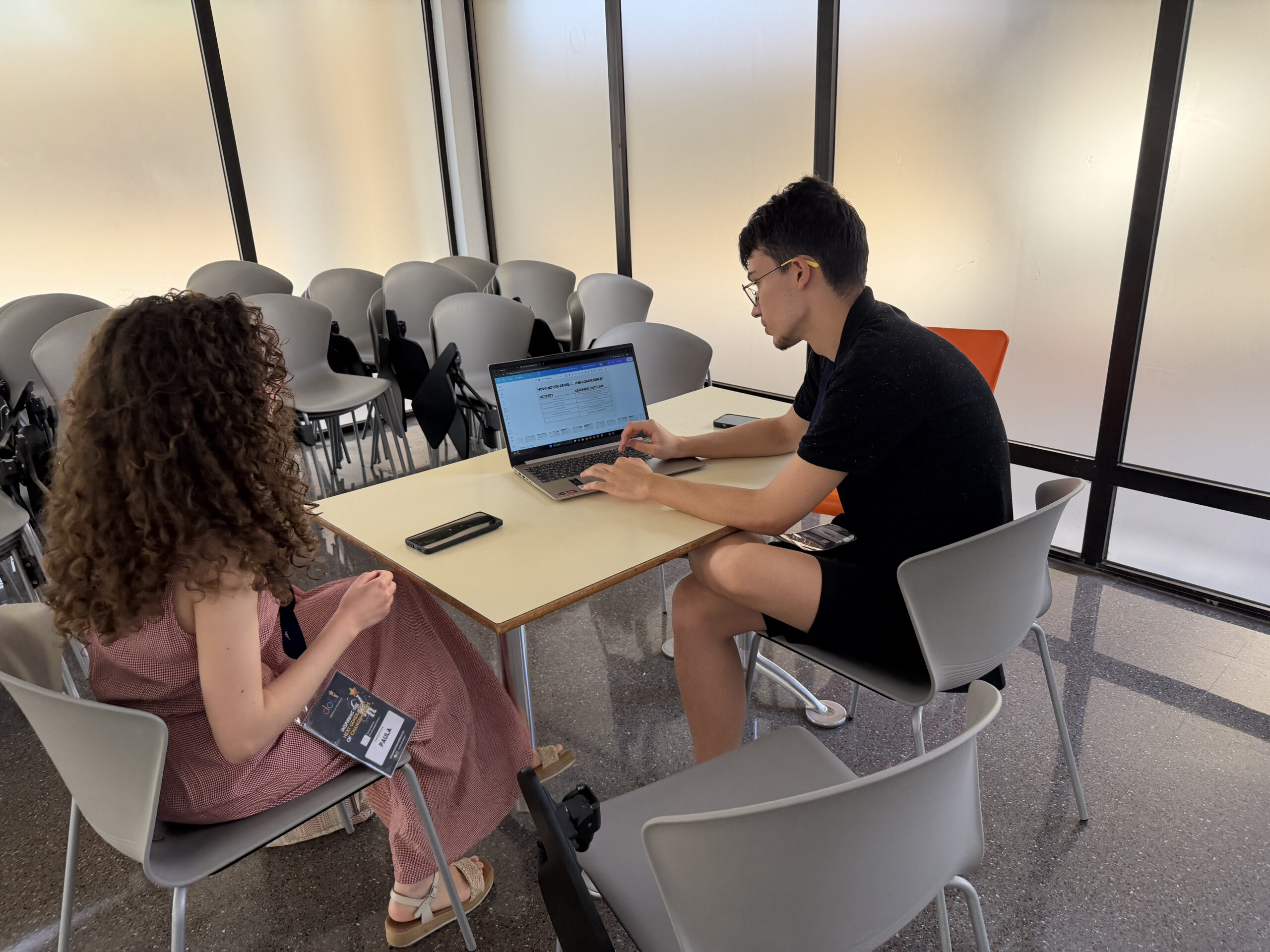
In the afternoon, the group reached one of the key moments of the whole project: the Youthpass Filling 📜. Each participant sat down with their group leader to write their own section of the certificate, going back over the eight key competences worked on during the week, identifying concrete evidence of each one in the activities they had taken part in, and translating them into language they can actually use in a CV or a job interview. It closed a cycle that had started on Day 2 with the Youthpass Ultimate Quiz and continued on Day 3 with The Puzzle of Competences.

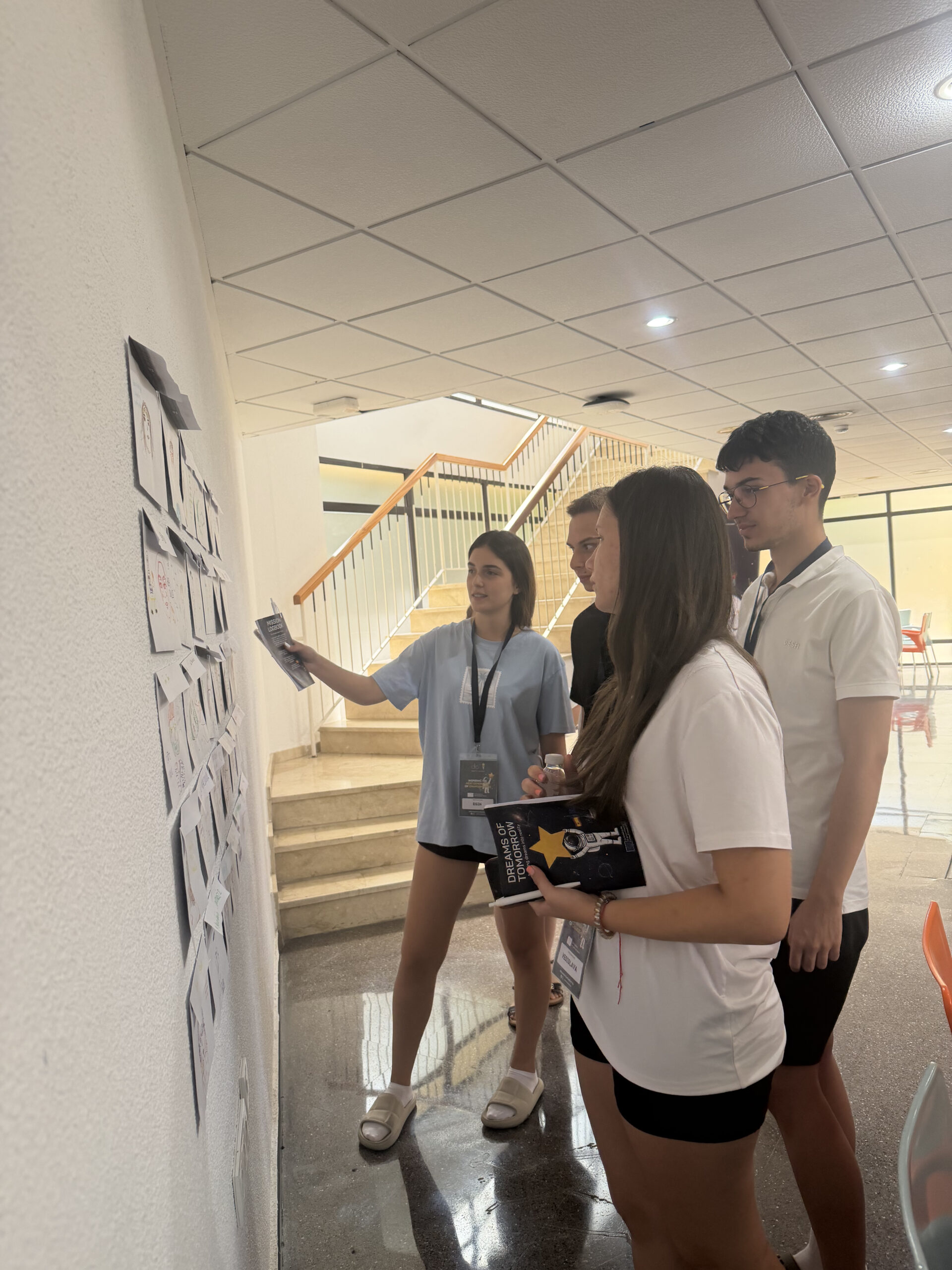
Participants then got majorly inspired during the «Erasmus+ and Other European Opportunities – Human Library» session 📚. Thematic stations were set up for the different opportunities available to young people in Europe: youth exchanges, European Solidarity Corps volunteering, training courses, learning mobility, DiscoverEU and other programmes. At each station, the facilitation team and participants with previous experience in European programmes acted as «human books», sharing their own first-hand stories and answering questions in small rotating groups. The format gave everyone direct, practical access to the information that is usually hardest to find — requirements, deadlines, where to look for projects, how to contact host organisations — and ended with a brainstorming session on how to fit these opportunities into their own paths.

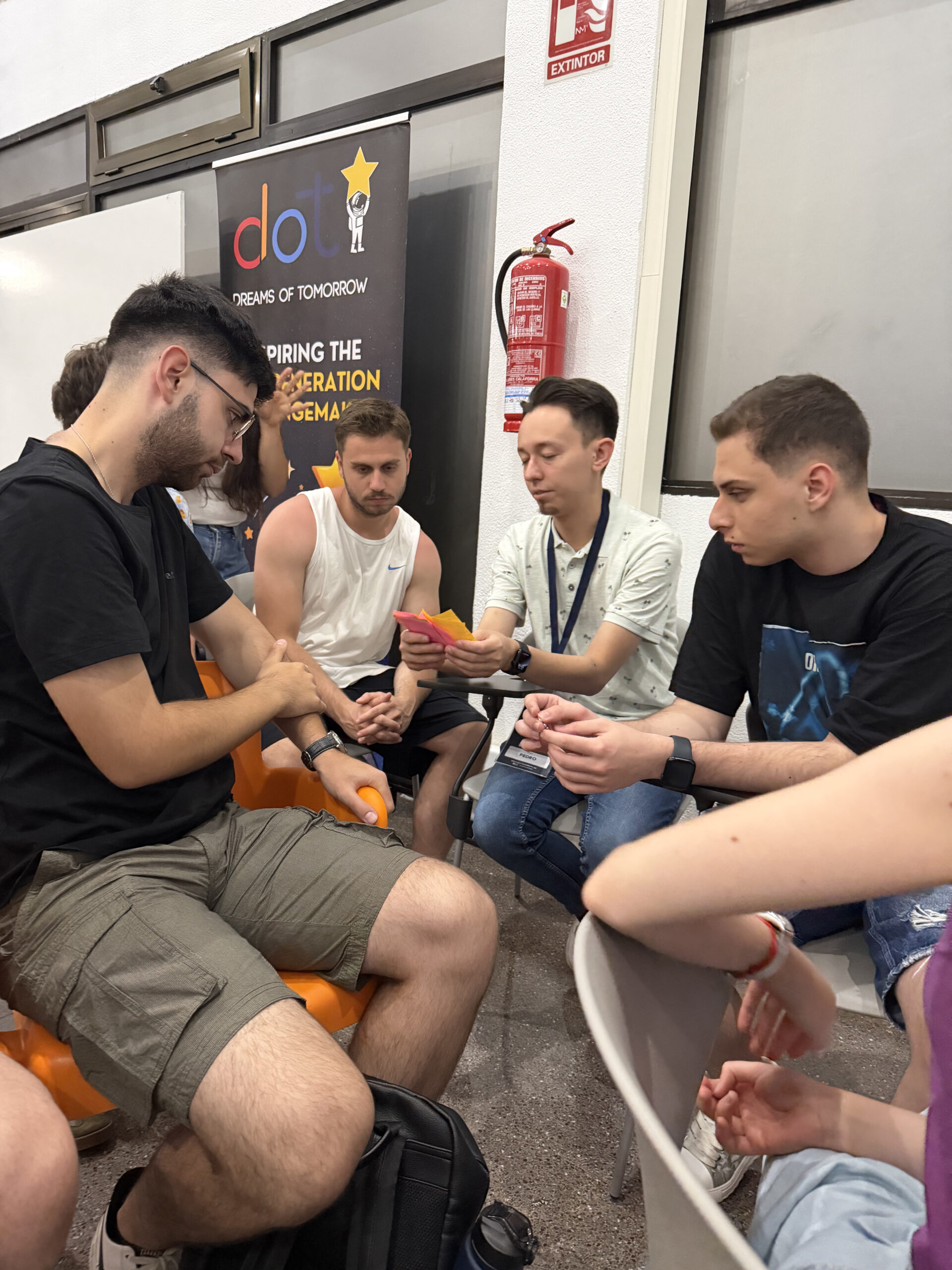
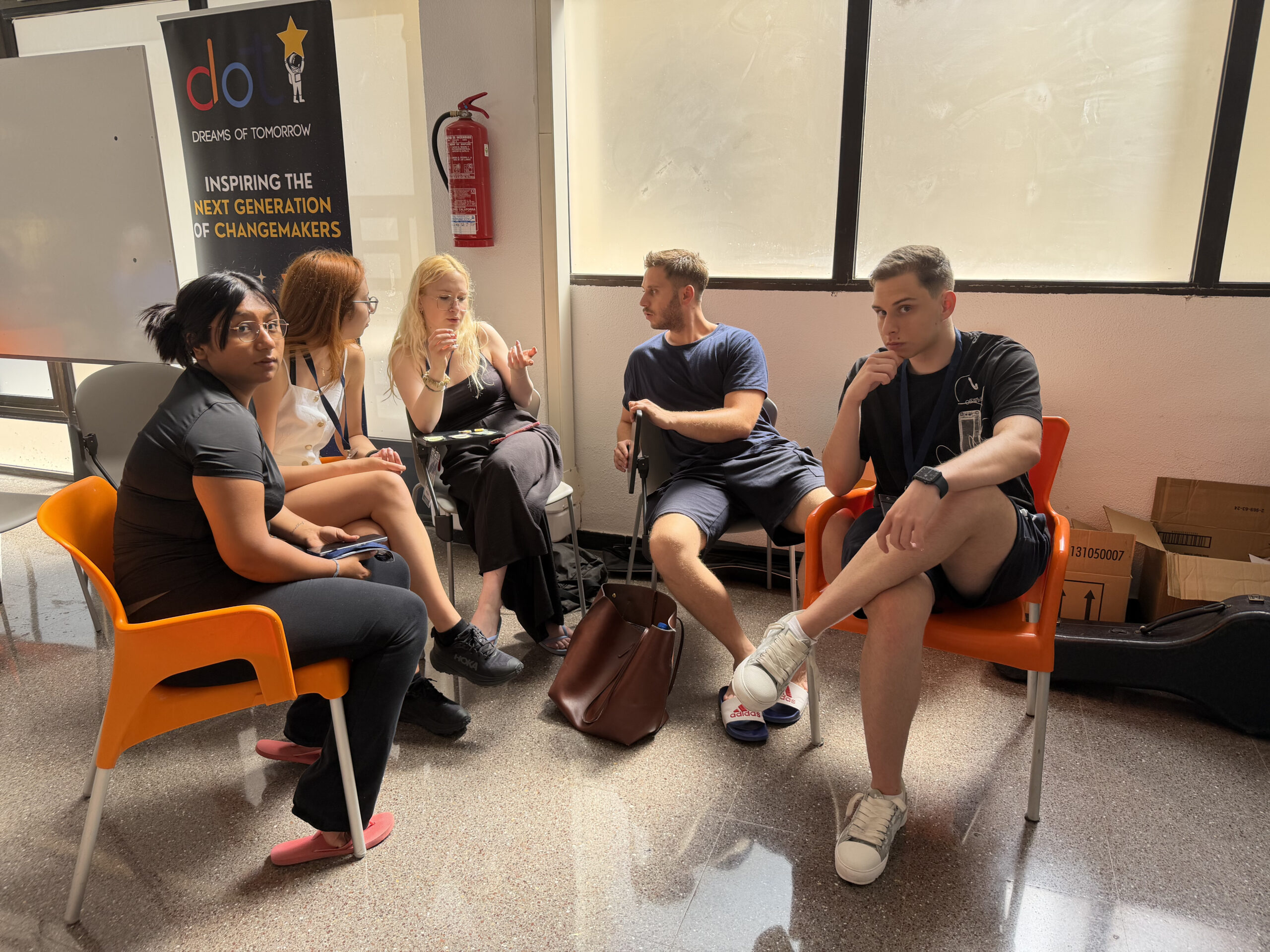
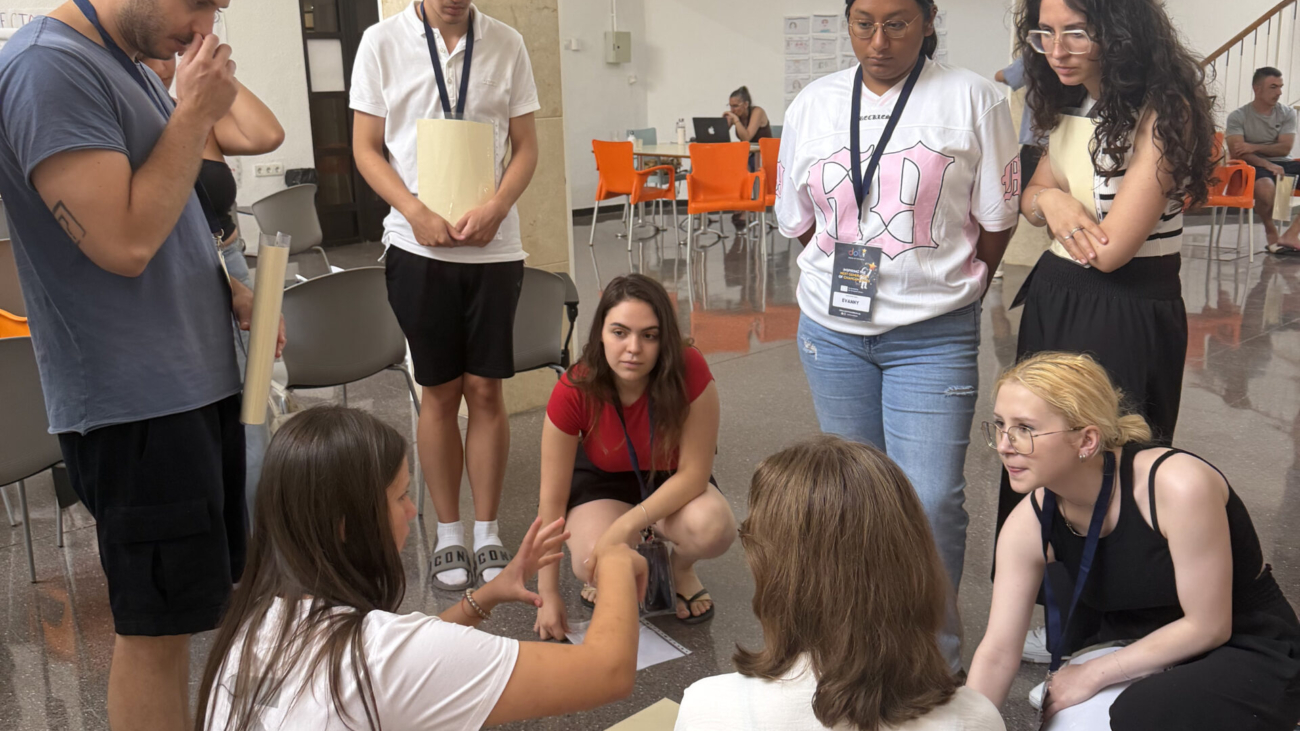
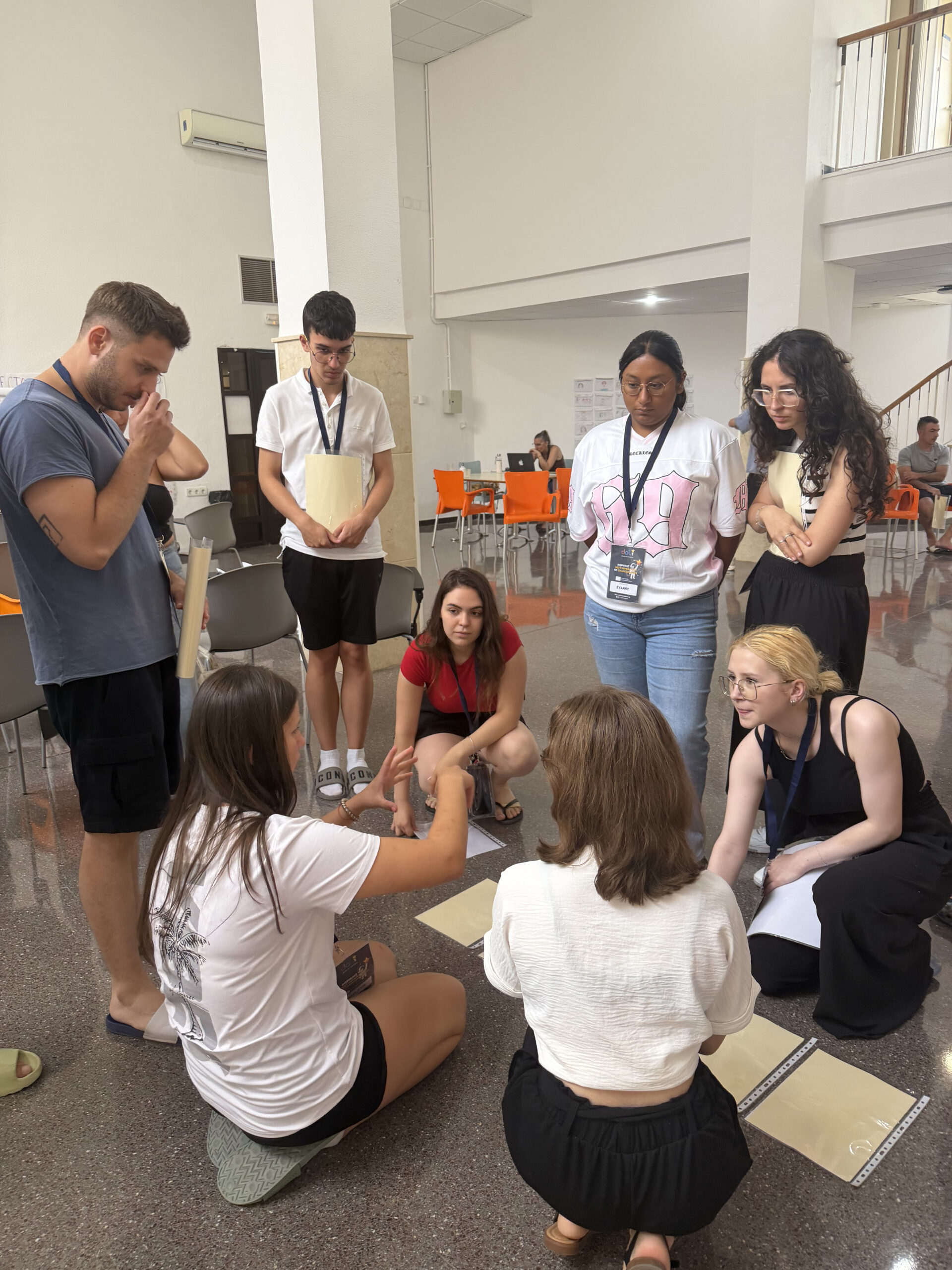
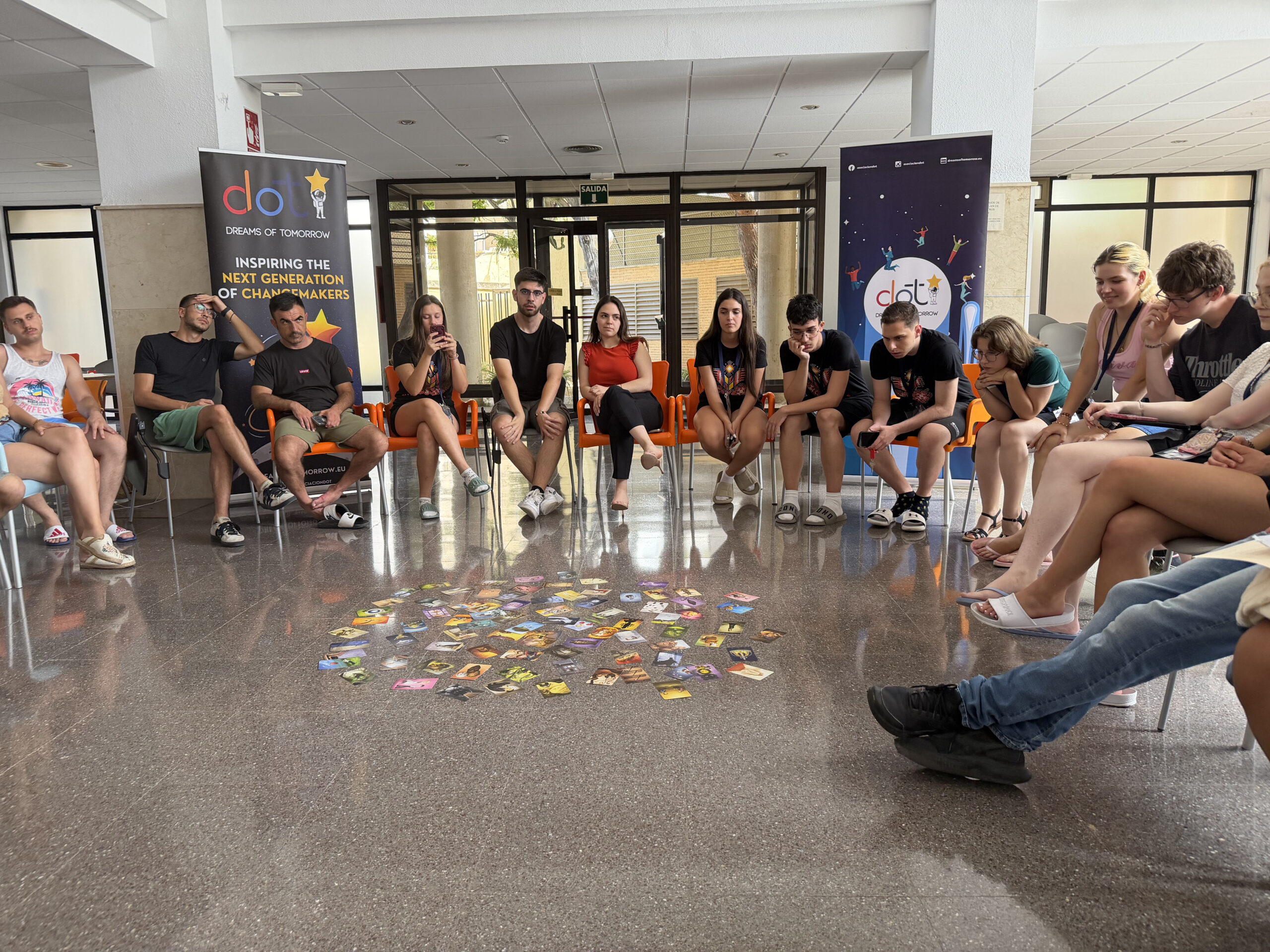
The final evaluation, «The Trip We Had», brought the week full circle. A rope was laid out on the floor representing the timeline of the exchange, and each participant placed markers on the moments that had mattered most for their learning, explaining why; seeing the whole line at once made the group collectively aware of just how much ground they had covered. Everyone then completed their individual written evaluation of the project, assessing the objectives, the methodology, the organisation, the logistics and the personal impact, and offering suggestions for improvement. To top it all off, the group shared a beautiful farewell round with Dixit cards: each of us chose a card that represented what we are taking away from this project and shared its meaning with the group, creating a truly special moment of connection — and one where images did the talking, making it easier for those with less confidence in English to express exactly what they felt.

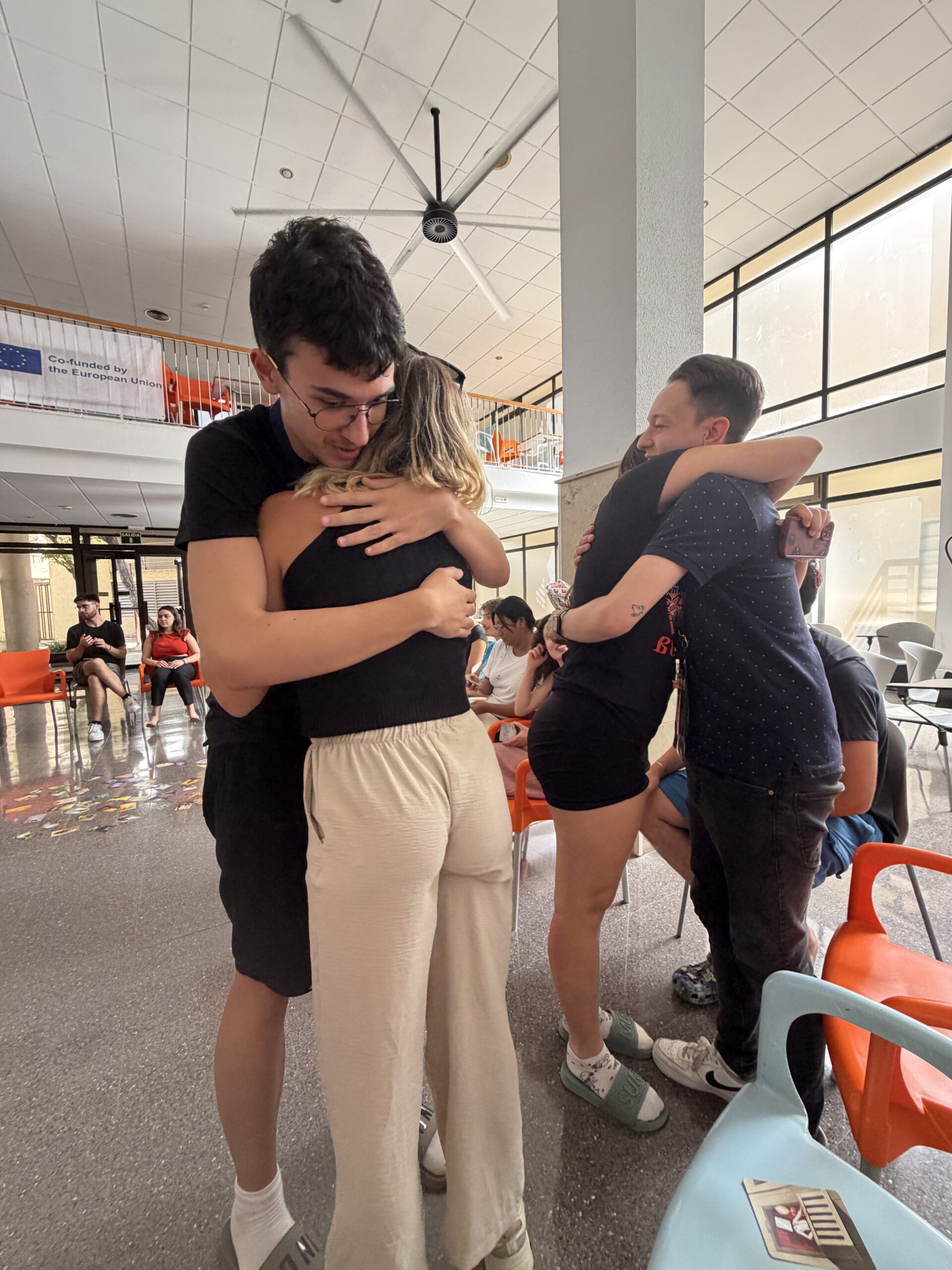
The evening was for «Goodbye, Goodvibes» 🎉, the closing gala. The secret friends assigned on the first day were finally revealed, and the anonymous letters that had been piling up on the wall of portraits all week were read out loud. Each national delegation said a few words of thanks to the group, and the Youthpass certificates — completed that same afternoon — were officially handed over, along with symbolic awards for the roles everyone had played during the week. With music, laughter and a few tears, the evening brought together everything the group had built.

Participants are heading home with their hearts full, new goals in mind, and an amazing international family.

Co-funded by the Erasmus+ Programme of the European Union.


🇪🇸 Español

Día 7 – Reconocer lo aprendido y decir adiós 💙

El séptimo y último día completo del intercambio juvenil Erasmus+ «The Awakening of a New Generation» fue la mezcla perfecta de aprendizaje y emoción: una jornada dedicada a poner nombre a todo lo que los participantes habían adquirido durante la semana, a descubrir cómo seguir adelante después del proyecto y a cerrar juntos la experiencia.

Comenzó con el energizer «Who’s the Leader?». En círculo, el grupo replicaba los movimientos de un líder oculto mientras una persona voluntaria trataba de averiguar quién dirigía realmente la secuencia: una forma lúdica de entrar en la reflexión sobre el liderazgo informal y la influencia dentro de los grupos, cerrando el trabajo sobre roles que había arrancado el primer día.

La mañana se dedicó a «My Passionate Motivational Letter» ✍️. Los participantes aprendieron a estructurar una carta de motivación eficaz y a diferenciarla del currículum: una apertura que capte la atención, una conexión explícita entre el propio perfil y las necesidades de la organización, evidencias concretas en lugar de adjetivos genéricos y un cierre proactivo. Cada persona redactó una carta dirigida a una organización o puesto real de su interés, incorporando las competencias identificadas a lo largo de la semana, y la compartió después en pequeños grupos para recibir retroalimentación estructurada de sus compañeros antes de revisarla.

Antes del almuerzo llegó «Portfolio Creation – Canva Master» 🎨. Con Canva, los participantes elaboraron su propio portafolio profesional —en formato PDF, presentación o página web—, integrando muestras de su trabajo, sus competencias, su formación y sus experiencias, incluidas las obtenidas en este intercambio. La sesión abarcó también el diseño de contenido para redes profesionales, con publicaciones para LinkedIn e Instagram que reflejaran su perfil y sus aprendizajes, trabajando la jerarquía visual, la coherencia de la marca personal y la adaptación del mensaje a cada plataforma. Por último, intercambiaron sus portafolios para evaluar entre iguales la claridad y el impacto de cada propuesta. Todos se fueron a casa con un producto propio, terminado y reutilizable.

Por la tarde, el grupo llegó a uno de los momentos clave de todo el proyecto: la cumplimentación del Youthpass 📜. Cada participante se sentó con su líder de grupo para redactar la sección del certificado que le corresponde, repasando las ocho competencias clave trabajadas durante la semana, identificando evidencias concretas de cada una en las actividades realizadas y traduciéndolas a un lenguaje que puedan utilizar de verdad en un CV o en una entrevista de trabajo. Se cerraba así un ciclo iniciado el Día 2 con el Youthpass Ultimate Quiz y continuado el Día 3 con The Puzzle of Competences.

Después llegó una sesión especialmente inspiradora: «Erasmus+ and Other European Opportunities – Human Library» 📚. Se organizaron estaciones temáticas dedicadas a las distintas oportunidades europeas para jóvenes: intercambios juveniles, voluntariado del Cuerpo Europeo de Solidaridad, cursos de formación, movilidad para el aprendizaje, DiscoverEU y otros programas. En cada estación, el equipo de facilitación y participantes con experiencia previa en programas europeos actuaron como «libros humanos», compartiendo su propia trayectoria en primera persona y respondiendo a las preguntas de los demás en grupos reducidos y rotatorios. El formato dio acceso directo y práctico a la información que suele ser más difícil de encontrar —requisitos, plazos, dónde buscar proyectos, cómo contactar con organizaciones de acogida— y concluyó con una lluvia de ideas sobre cómo encajar estas oportunidades en sus propias trayectorias.

La evaluación final, «The Trip We Had», cerró el círculo de la semana. Se dispuso en el suelo una cuerda que representaba la línea del tiempo del intercambio y cada participante colocó marcas en los momentos que más habían significado para su aprendizaje, explicando por qué; ver la línea completa de una sola vez hizo al grupo tomar conciencia colectiva del recorrido realizado. A continuación, cada persona cumplimentó su evaluación individual por escrito, valorando los objetivos, la metodología, la organización, la logística y el impacto personal, y formulando sugerencias de mejora. Como broche, el grupo compartió una preciosa ronda de despedida con cartas Dixit: cada uno eligió una imagen que representaba lo que se llevaba del proyecto y explicó su significado ante los demás, creando un momento de conexión verdaderamente especial, y uno en el que hablaron las imágenes, lo que facilitó que quienes tenían menos soltura en inglés pudieran expresar exactamente lo que sentían.

La velada fue para «Goodbye, Goodvibes» 🎉, la gala de cierre. Se revelaron por fin los amigos invisibles asignados el primer día y se leyeron en voz alta las cartas anónimas que se habían ido acumulando durante toda la semana en el mural de retratos. Cada delegación nacional dedicó unas palabras de agradecimiento al grupo y se procedió a la entrega oficial de los certificados Youthpass —cumplimentados esa misma tarde—, junto a reconocimientos simbólicos por los roles que cada uno había desempeñado durante la semana. Con música, risas y alguna lágrima, la velada reunió todo lo que el grupo había construido.

Los participantes vuelven a casa con el corazón lleno, nuevas metas en mente y una increíble familia internacional.

Cofinanciado por el Programa Erasmus+ de la Unión Europea.
day 6 (2)

The Awakening of a New Generation | Día 6

🇬🇧 English

Day 6 – Speaking Up and Building a Career 🚀

The sixth day of the Erasmus+ youth exchange «The Awakening of a New Generation» was dedicated to professional communication and active job searching: how to decide what matters most, how to talk about yourself, and how to turn a week of learning into a concrete plan.

The day opened with the energizer «Find Your Partner in the Noise» 🔊. With their eyes closed and in a deliberately noisy room, each participant had to locate their partner by repeating an assigned sound. A playful introduction to the difficulty of communicating in environments saturated with information — the central theme of the day.

The morning continued with «First Thing First» ⏳, a session on time management and decision-making. After being introduced to the Eisenhower Matrix and its four quadrants — do, schedule, delegate, delete — participants split into six groups and received the scenario «The Final Day Before the Event»: they were the organising team of an international youth event starting the next morning, with a long list of pending tasks and only three hours left. Each group classified the tasks, defined its first three actions, decided what to delegate, schedule or eliminate, and identified the main risk of poor prioritisation. Then came the twist: every team was handed an unexpected problem — the facilitator falling ill, a transport delay, a severe allergy, the loss of a room, a communication failure, a budget cut, an internal conflict — and had to rearrange its priorities fast. The final presentations and the guided reflection helped participants tell real urgency apart from simple pressure, and connect prioritisation with stress reduction, mental health and team coordination at work, in their studies, in volunteering and in Erasmus+ projects.

Before lunch, «Elevating Speech» 🎤 took the group into public speaking. The session started from an honest reflection on how hard it is to talk about oneself, to name your own strengths and to sound confident without sounding arrogant, and then established what makes a good pitch: brief, specific, human, relevant, confident and memorable. Each participant analysed their qualities, interests, experiences and goals and built a 60-second elevator pitch, choosing one of three structures — simple, storytelling, or professional, aimed at employment, internships, networking or projects. After practising in pairs and small groups with mutual feedback, everyone delivered their final pitch to the whole group, sitting in a circle. Comparing the first attempt with the last one made the progress in clarity and confidence impossible to miss, and everyone left with a finished personal speech ready to reuse.

In the afternoon came «Networking Time and Action Plan to Find a Job in Our Field» 🤝. Participants first created or revised their professional profile on LinkedIn, or on the equivalent platforms in their own countries, working on the headline, the summary, the competences identified during the week and — crucially — how to translate non-formal experiences into the language of the labour market. A real networking session followed, where they exchanged professional interests and practised how to start and sustain a work-related conversation, reusing the elevator pitch they had built that same morning. In the second part, each participant designed an individual action plan for finding a job or an internship in their sector, with specific and measurable goals — how many applications per week, which networking events, which trainings to complete — along with concrete strategies and a realistic allocation of time. Everyone finished the session with a written, measurable commitment to take home.

The day continued with «Real Case Studies of Challenging Situations» 🔍. Participants were presented with case studies of real companies and organisations facing challenges in recruitment, team management or workplace climate. In teams, they analysed each situation, identified its causes and proposed viable solutions, then defended their proposals to the rest of the group. The session gave them something they rarely get to see: the perspective from the other side of the hiring process, and a much clearer sense of what an organisation is actually looking for when it selects someone.

As every day, the group closed the working sessions by reflecting in national groups on what they had learned, while the rotating role teams took care of the daily dissemination of the project.

The evening was Movie Night 🎬: a film about cultural exchange, international coexistence and mutual learning between people from different backgrounds, followed by an open debate in which participants connected what they had seen with their own experience during the week, reflecting together on cultural diversity, prejudice and European values.

Step by step, participants are turning a week of activities into something they can use: a speech of their own, a professional profile, and a plan with dates on it.

Co-funded by the Erasmus+ Programme of the European Union.


🇪🇸 Español

Día 6 – Aprender a hablar de uno mismo y construir una carrera 🚀

El sexto día del intercambio juvenil Erasmus+ «The Awakening of a New Generation» estuvo dedicado a la comunicación profesional y a la búsqueda activa de empleo: cómo decidir qué es lo más importante, cómo hablar de uno mismo y cómo convertir una semana de aprendizaje en un plan concreto.

La jornada se abrió con el energizer «Find Your Partner in the Noise» 🔊. Con los ojos cerrados y en una sala deliberadamente ruidosa, cada participante debía localizar a su pareja repitiendo un sonido asignado. Una introducción lúdica a la dificultad de comunicarse en entornos saturados de información, tema central de la jornada.

La mañana continuó con «First Thing First» ⏳, una sesión sobre gestión del tiempo y toma de decisiones. Tras conocer la Matriz de Eisenhower y sus cuatro cuadrantes —hacer, programar, delegar, eliminar—, los participantes se dividieron en seis grupos y recibieron el escenario «The Final Day Before the Event»: formaban parte del equipo organizador de un evento juvenil internacional que empezaba a la mañana siguiente, con una larga lista de tareas pendientes y solo tres horas por delante. Cada grupo clasificó las tareas, definió sus tres primeras acciones, decidió qué delegar, programar o eliminar e identificó el principal riesgo de una mala priorización. Y entonces llegó el giro: a cada equipo se le entregó un imprevisto —la persona facilitadora enferma, un retraso del transporte, una alergia grave, la pérdida de una sala, un fallo de comunicación, un recorte presupuestario, un conflicto interno— y tuvo que reordenar sus prioridades con rapidez. Las presentaciones finales y la reflexión guiada les ayudaron a distinguir la urgencia real de la simple presión, y a conectar la priorización con la reducción del estrés, la salud mental y la coordinación de equipos en el trabajo, los estudios, el voluntariado y los proyectos Erasmus+.

Antes del almuerzo, «Elevating Speech» 🎤 llevó al grupo al terreno de la oratoria. La sesión partió de una reflexión honesta sobre lo difícil que es hablar de uno mismo, identificar las propias fortalezas y transmitir seguridad sin resultar arrogante, y después estableció qué hace bueno a un pitch: breve, específico, humano, relevante, seguro y memorable. Cada participante analizó sus cualidades, intereses, experiencias y objetivos y construyó su elevator pitch de 60 segundos, eligiendo una de tres estructuras: simple, storytelling o professional, esta última orientada a empleo, prácticas, networking o proyectos. Tras practicar en parejas y en grupos pequeños con retroalimentación mutua, cada persona presentó su pitch definitivo ante todo el grupo, en círculo. Comparar el primer intento con el último hizo imposible no ver la evolución en claridad y seguridad, y todos se marcharon con un discurso propio ya cerrado y listo para reutilizar.

Por la tarde llegó «Networking Time and Action Plan to Find a Job in Our Field» 🤝. Los participantes crearon o revisaron primero su perfil profesional en LinkedIn, o en las plataformas equivalentes de sus países, trabajando el titular, el extracto, las competencias identificadas durante la semana y, sobre todo, cómo traducir las experiencias no formales al lenguaje del mercado laboral. Después se desarrolló una dinámica real de networking en la que intercambiaron intereses profesionales y practicaron cómo iniciar y sostener una conversación de carácter laboral, reutilizando el elevator pitch construido esa misma mañana. En la segunda parte, cada participante diseñó un plan de acción individual para la búsqueda de empleo o prácticas en su sector, con metas específicas y medibles —cuántas candidaturas por semana, qué eventos de networking, qué formaciones completar—, además de estrategias concretas y una asignación realista de tiempo. Todos terminaron la sesión con un compromiso escrito y medible para llevarse a casa.

La jornada continuó con «Real Case Studies of Challenging Situations» 🔍. Se presentaron a los participantes estudios de caso de empresas y organizaciones reales que enfrentaban retos de selección de personal, gestión de equipos o clima laboral. Por equipos, analizaron cada situación, identificaron sus causas y propusieron soluciones viables, defendiéndolas después ante el resto del grupo. La sesión les dio algo que rara vez tienen ocasión de ver: la perspectiva del otro lado del proceso de contratación, y una idea mucho más clara de qué busca realmente una organización cuando selecciona a alguien.

Como cada día, el grupo cerró las sesiones de trabajo con la reflexión en grupos nacionales sobre los aprendizajes de la jornada, mientras los equipos de roles rotativos se encargaban de la difusión diaria del proyecto.

La velada fue la Movie Night 🎬: una película sobre el intercambio cultural, la convivencia internacional y el aprendizaje mutuo entre personas de distintos orígenes, seguida de un debate abierto en el que los participantes vincularon lo que habían visto con su propia experiencia durante la semana, reflexionando juntos sobre la diversidad cultural, los prejuicios y los valores europeos.

Paso a paso, los participantes están convirtiendo una semana de actividades en algo utilizable: un discurso propio, un perfil profesional y un plan con fechas.

Cofinanciado por el Programa Erasmus+ de la Unión Europea.
day-5-dreamsoftomorrow (6)

The Awakening of a New Generation | Día 5

🇬🇧 English

Day 5 – Developing an Entrepreneurial Mindset 💡🌍

The fifth day of the Erasmus+ youth exchange «The Awakening of a New Generation» was dedicated to entrepreneurship, financial literacy, and personal organisation. Through a series of interactive workshops and collaborative activities, participants explored the knowledge, attitudes, and skills needed to transform ideas into opportunities while preparing themselves for future personal and professional challenges.

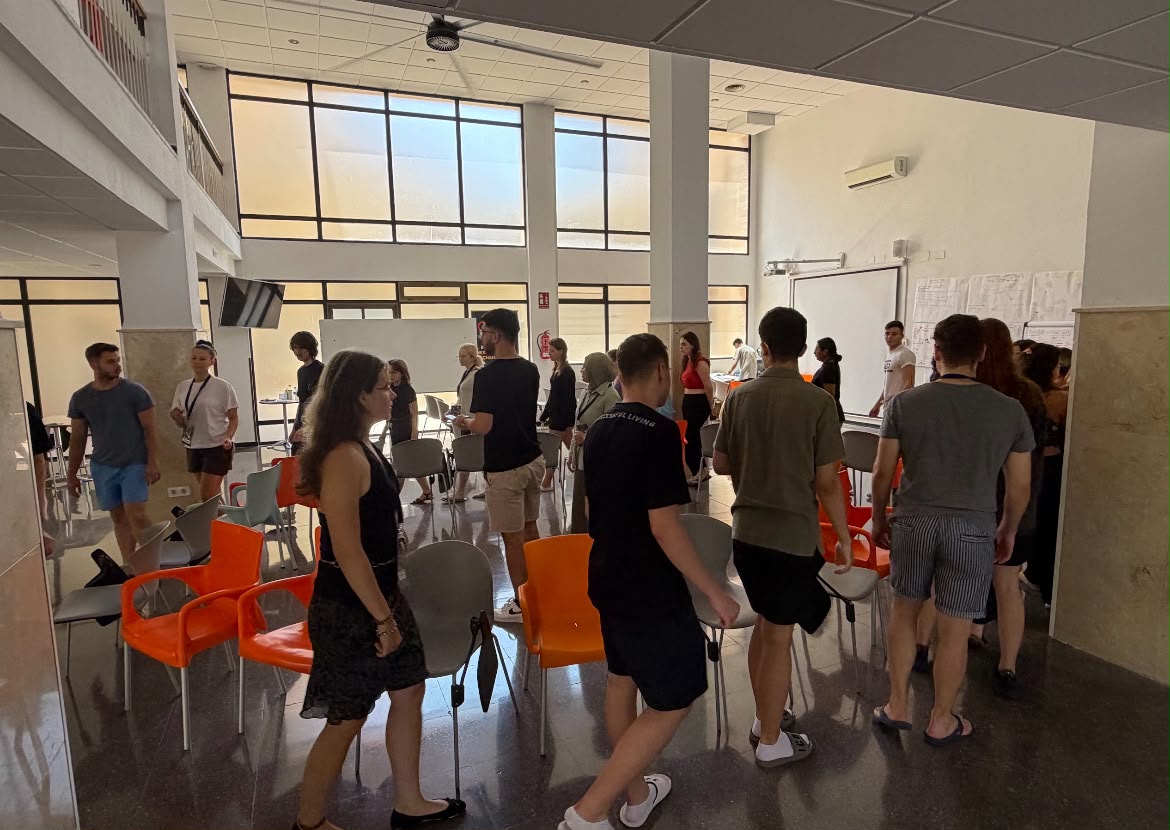
The day started with the «Human Machine» energizer, in which each team built a working machine out of their own bodies, every person becoming a moving, sounding part connected to the others — a physical metaphor for teamwork and for how every role matters inside an organisation.

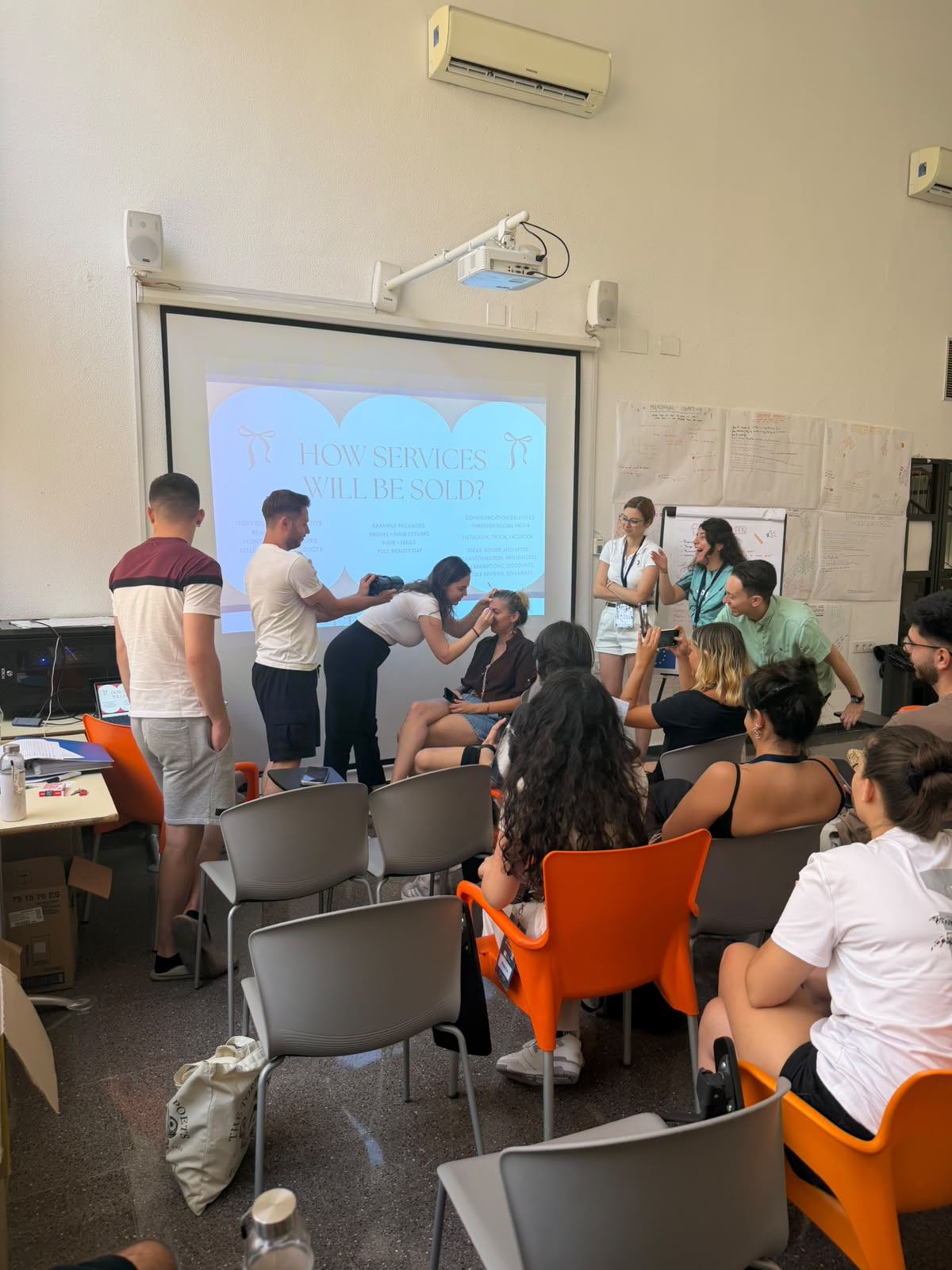
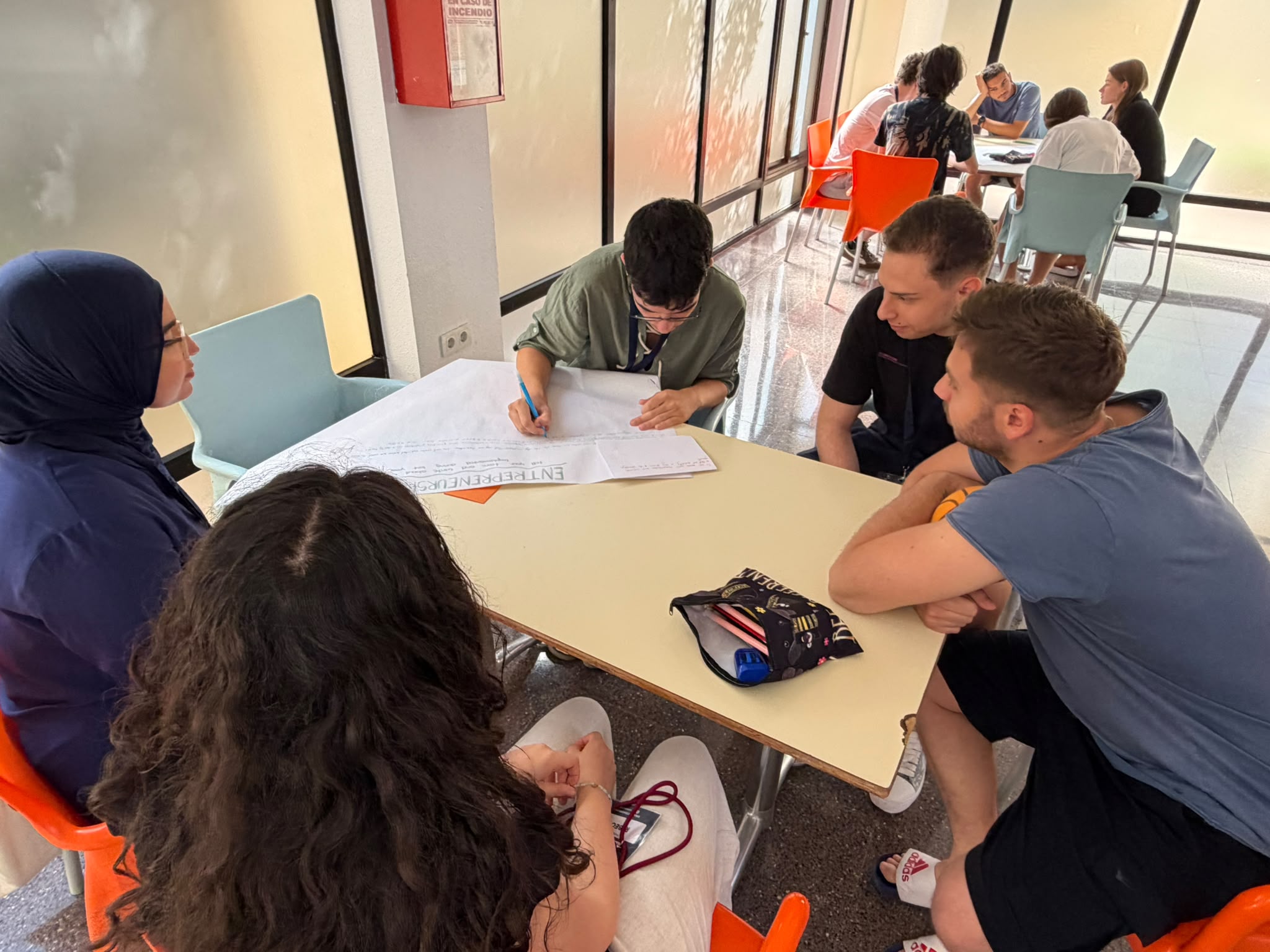
The morning was then devoted to «Selling the Pen» 💼, a business simulation in the style of Shark Tank. Working in mixed international groups, participants chose a sector of interest — technology, sustainability, health, culture — and built a business proposal around four pillars: the product or service, the target audience, the business model and the marketing strategy. They prepared their presentations with professional digital tools such as Canva and video formats, working under real time pressure. In the second part, each team pitched its idea to the rest of the group and to the facilitation team, who acted as an investment committee, asked critical questions and decided whether or not to «buy» the proposal. Participants practised public speaking, defending a project with arguments, and handling objections.

The morning closed with «Stories of Resilience». Sitting in a circle, those who wished to shared a significant personal challenge and how they had overcome it, focusing on the lessons learned and the competences they had developed along the way. The conversation that followed identified common patterns of resilience and made explicit how valuable that competence is in the world of work — all in a climate of trust, respect and confidentiality.

In the afternoon, «My Perfect Day» invited participants to design the structure of their ideal day, exploring six families of digital tools: habit building (Habitica, Finch), productivity (Todoist, Notion), visual calendars (Structured, Google Calendar), focus management (Forest, Headspace), wellbeing tracking (Sleep Cycle) and reflection (Daylio, Google Keep). Everyone set up recurring tasks, automatic reminders and synchronisation between apps, and each person committed to three concrete things: one habit to start, one digital distraction to reduce, and one personal boundary that would be non-negotiable.

This was followed by «Budgeting My Life» 💰, a practical session on financial literacy. Each team received one of ten fictional financial profiles — a first job, a student with limited support, a freelancer — with its income, fixed costs and goals, and had to plan a budget. A «Budget Market» then opened, where teams decided strategically what to do with whatever was left. Finally, the facilitation team threw in an unexpected event: a medical expense, a broken laptop, an unforeseen extra income. Every team had to rebuild its budget on the spot and justify the changes, discovering how much financial awareness contributes to independence and long-term stability — and how much adaptability it takes when plans fall apart.

The last session of the day was «Save the Egg!!» 🥚. With nothing but paper, straws, tape and balloons, teams had to build a device capable of protecting an egg from a fall — prototyping, trial and error, time management and task sharing, with a result that could be verified on the spot. It continued with «Think Out of the Box», a set of riddles and lateral-thinking problems that forced participants to question their own starting assumptions, reinforcing critical and creative thinking and tolerance for uncertainty.

As every day, the group closed the working sessions by reflecting in national groups on what they had learned, while the rotating role teams took care of the daily dissemination of the project.

The evening belonged to the Intercultural Night of Lithuania and North Macedonia 🇱🇹🇲🇰, with traditional music and dances, popular games, typical food tasting and traditional costumes, along with an introduction to the socio-economic context of both countries and to the work of their organisations, with particular attention to youth employment in rural areas. With this session, all six participating countries had now presented their culture to the group.

Throughout the day, participants exchanged ideas, shared experiences from their different countries, and learned from one another in an open and collaborative environment. The combination of international teamwork and non-formal education once again demonstrated how diversity becomes one of the greatest strengths of Erasmus+ projects.

Every activity helped participants strengthen essential competences such as initiative, creativity, communication, problem-solving, cooperation, and self-confidence — skills that will support them in their future careers and everyday lives.

Co-funded by the Erasmus+ Programme of the European Union.


🇪🇸 Español

Día 5 – Desarrollando una mentalidad emprendedora 💡🌍

El quinto día del intercambio juvenil Erasmus+ «The Awakening of a New Generation» estuvo dedicado al emprendimiento, la educación financiera y la organización personal. A través de diferentes talleres interactivos y actividades colaborativas, los participantes profundizaron en las competencias necesarias para transformar ideas en oportunidades y prepararse para afrontar con éxito los retos de su futuro personal y profesional.

La jornada arrancó con el energizer «Human Machine», en el que cada equipo construyó con sus propios cuerpos una máquina en funcionamiento: cada persona era una pieza con su movimiento y su sonido, engranada con las demás. Una metáfora física del trabajo en equipo y de cómo cada función cuenta dentro de una organización.

La mañana se dedicó después a «Selling the Pen» 💼, una simulación de emprendimiento al estilo Shark Tank. Trabajando en grupos internacionales, los participantes eligieron un sector de interés —tecnología, sostenibilidad, salud, cultura— y construyeron una propuesta de negocio en torno a cuatro pilares: el producto o servicio, el público objetivo, el modelo de negocio y la estrategia de marketing. Prepararon sus presentaciones con herramientas digitales profesionales como Canva y formatos de vídeo, trabajando con presión real de tiempo. En la segunda parte, cada equipo presentó su idea ante el resto del grupo y ante el equipo de facilitación, que actuó como comité de inversión, formuló preguntas críticas y decidió si «compraba» o no la propuesta. Los participantes entrenaron la oratoria, la defensa argumentada de un proyecto y la gestión de objeciones.

La mañana se cerró con «Stories of Resilience». Sentados en círculo, quienes quisieron compartieron un desafío personal significativo y cómo lo habían superado, centrándose en las lecciones aprendidas y en las competencias que habían desarrollado en el proceso. El diálogo posterior identificó patrones comunes de resiliencia y puso de manifiesto lo valiosa que es esa competencia en el mundo laboral, todo ello en un clima de confianza, respeto y confidencialidad.

Por la tarde, «My Perfect Day» invitó a los participantes a diseñar la estructura de su día ideal explorando seis familias de herramientas digitales: construcción de hábitos (Habitica, Finch), productividad (Todoist, Notion), calendarios visuales (Structured, Google Calendar), gestión del enfoque (Forest, Headspace), monitoreo del bienestar (Sleep Cycle) y reflexión (Daylio, Google Keep). Todos configuraron tareas recurrentes, recordatorios automáticos y sincronización entre aplicaciones, y cada persona se comprometió con tres cosas concretas: un hábito que iniciar, una distracción digital que reducir y un límite personal innegociable.

A continuación llegó «Budgeting My Life» 💰, una sesión práctica de educación financiera. Cada equipo recibió uno de los diez perfiles financieros ficticios —un primer empleo, un estudiante con apoyo limitado, un trabajador autónomo— con sus ingresos, gastos fijos y metas, y tuvo que planificar un presupuesto. Después se abrió un «Budget Market», donde los equipos decidieron estratégicamente qué hacer con el remanente. Por último, el equipo de facilitación introdujo un imprevisto: un gasto médico, un portátil averiado, un ingreso extra inesperado. Cada equipo tuvo que rehacer su presupuesto en el momento y justificar los cambios, descubriendo cuánto contribuye una buena planificación financiera a la autonomía y a la estabilidad a largo plazo, y cuánta capacidad de adaptación hace falta cuando los planes se rompen.

La última sesión del día fue «Save the Egg!!» 🥚. Con solo papel, pajitas, cinta adhesiva y globos, los equipos tuvieron que construir un dispositivo capaz de proteger un huevo en una caída: prototipado, ensayo y error, gestión del tiempo y reparto de tareas, con un resultado verificable en el momento. La sesión continuó con «Think Out of the Box», una serie de acertijos y problemas de pensamiento lateral que obligaban a cuestionar los propios supuestos de partida, reforzando el pensamiento crítico y creativo y la tolerancia a la incertidumbre.

Como cada día, el grupo cerró las sesiones de trabajo con la reflexión en grupos nacionales sobre los aprendizajes de la jornada, mientras los equipos de roles rotativos se encargaban de la difusión diaria del proyecto.

La velada fue para la Noche Intercultural de Lituania y Macedonia del Norte 🇱🇹🇲🇰, con música y danzas tradicionales, juegos populares, degustación de productos típicos y vestimenta tradicional, junto con una presentación del contexto socioeconómico de ambos países y del trabajo de sus organizaciones, con especial atención a la realidad del empleo juvenil en zonas rurales. Con esta sesión, los seis países participantes habían presentado ya su cultura al grupo.

A lo largo de toda la jornada, los participantes compartieron experiencias, intercambiaron ideas y aprendieron de las diferentes realidades de los países representados. El trabajo en equipos internacionales y el uso de metodologías de educación no formal volvieron a demostrar que la diversidad cultural es una de las mayores fortalezas de los proyectos Erasmus+.

Cada una de las actividades contribuyó al desarrollo de competencias fundamentales como la iniciativa, la creatividad, la comunicación, la resolución de problemas, la cooperación y la confianza en uno mismo, habilidades que serán de gran utilidad tanto en su vida profesional como personal.

Cofinanciado por el Programa Erasmus+ de la Unión Europea.
day 4-dreams-of-tomorrow (3)

The Awakening of a New Generation | Día 4

🇬🇧 English

🎩 Day 4 — Exploring Perspectives: Values, Negotiation and the Six Thinking Hats

As part of our Erasmus+ youth exchange «The Awakening of a New Generation» in Alicante, participants took part in an engaging afternoon focused on developing critical thinking, problem-solving, and collaborative decision-making skills through innovative non-formal education methods.

The day’s work began with a Values Auction 💰. Six teams were given a limited fictional budget and had to bid, in real time, for cards representing professional values and competences — Leadership, Empathy, Transparency, Discipline and many others. Deciding what to spend on, when to hold back and when to compete against another team required fast collective decision-making and careful management of limited resources. Once the auction closed, each team debated what those competences are really worth in today’s labour market and presented a final pitch explaining how the «professional profile» they had just bought would strengthen their employability.

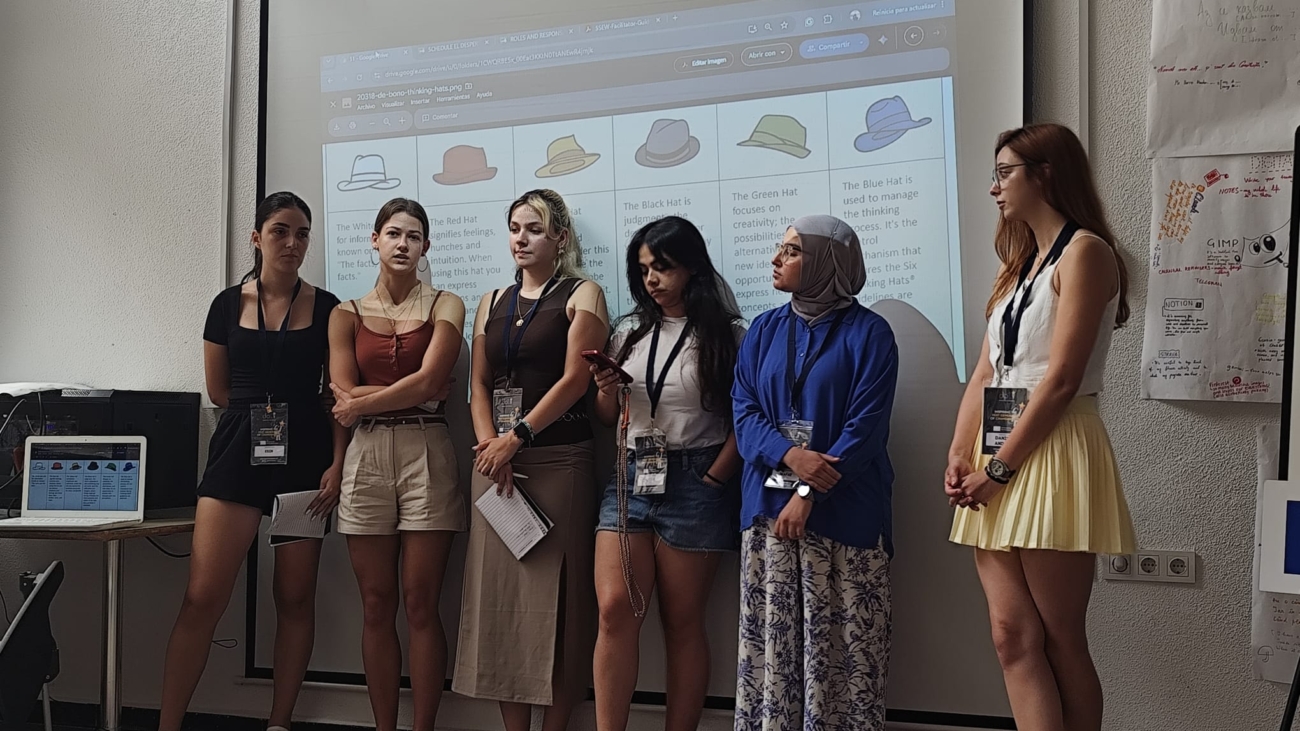
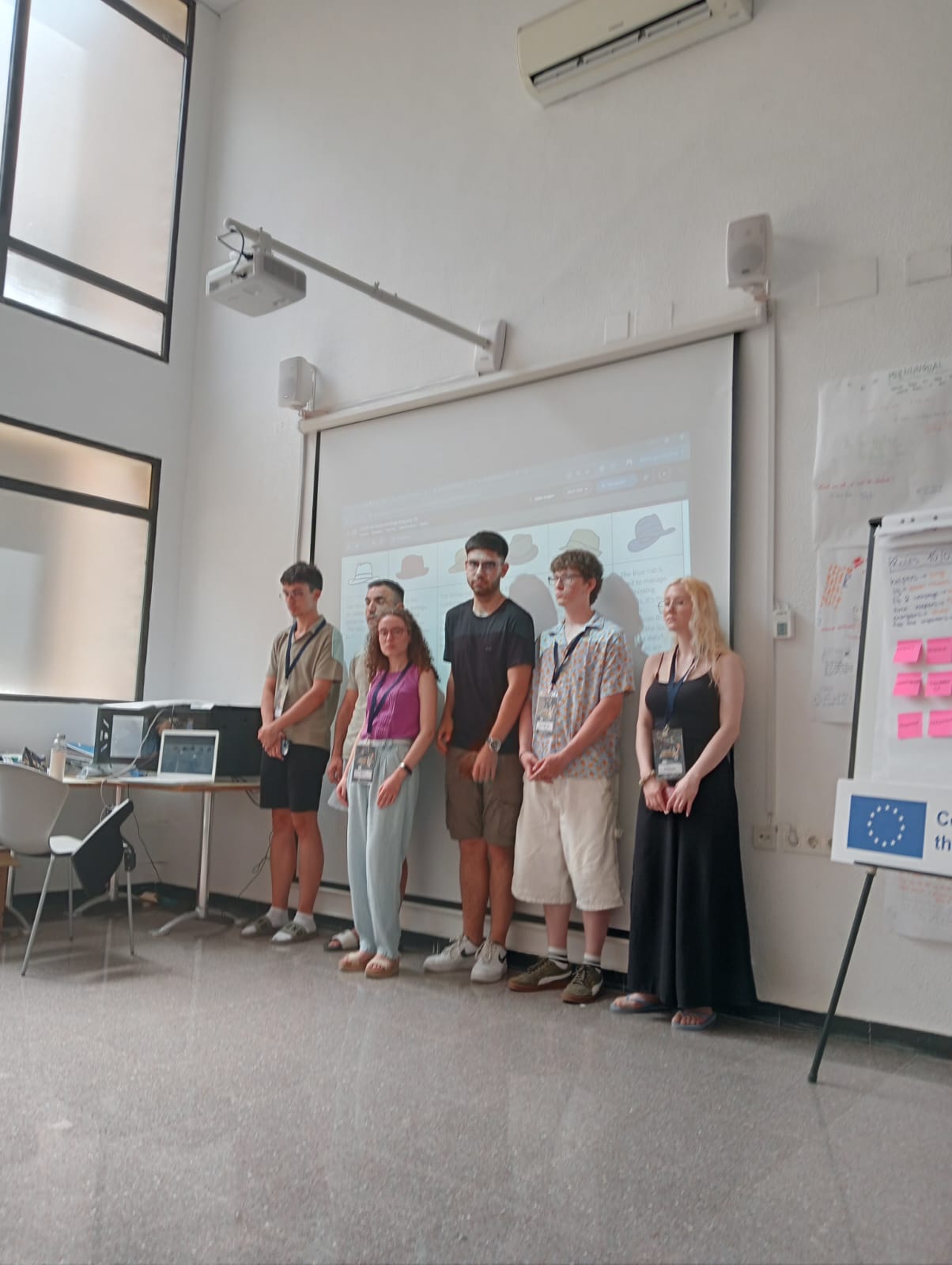
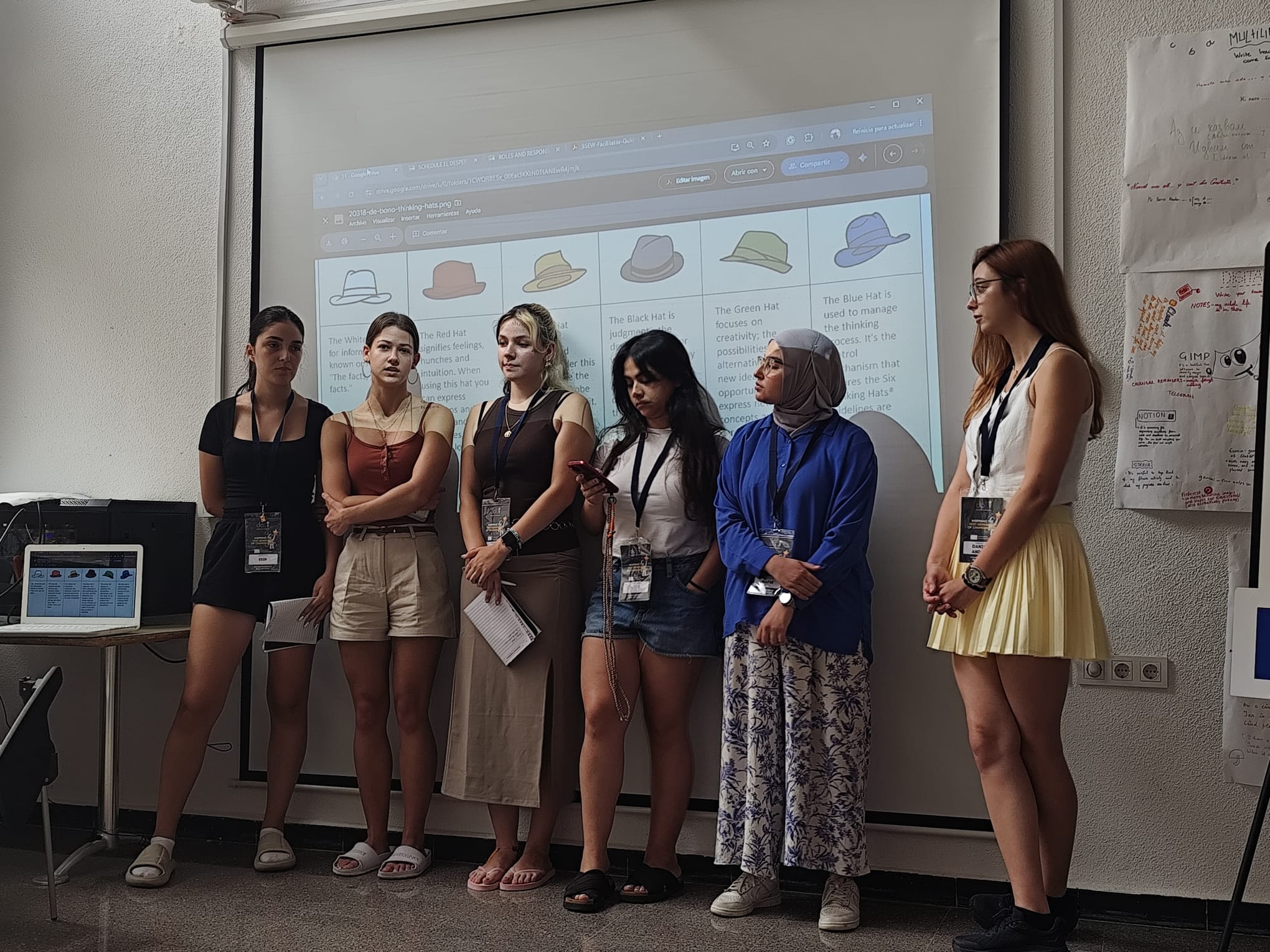
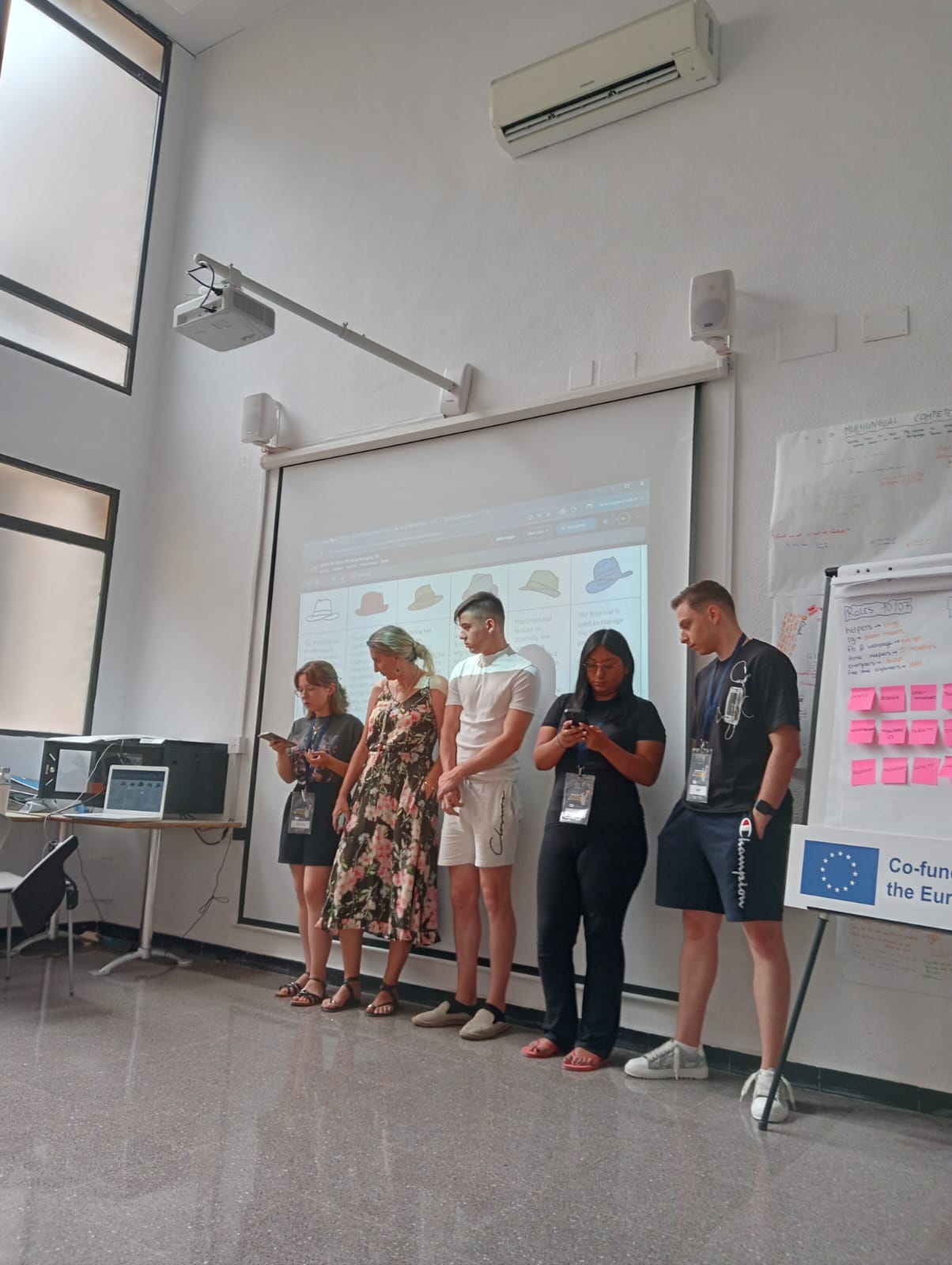
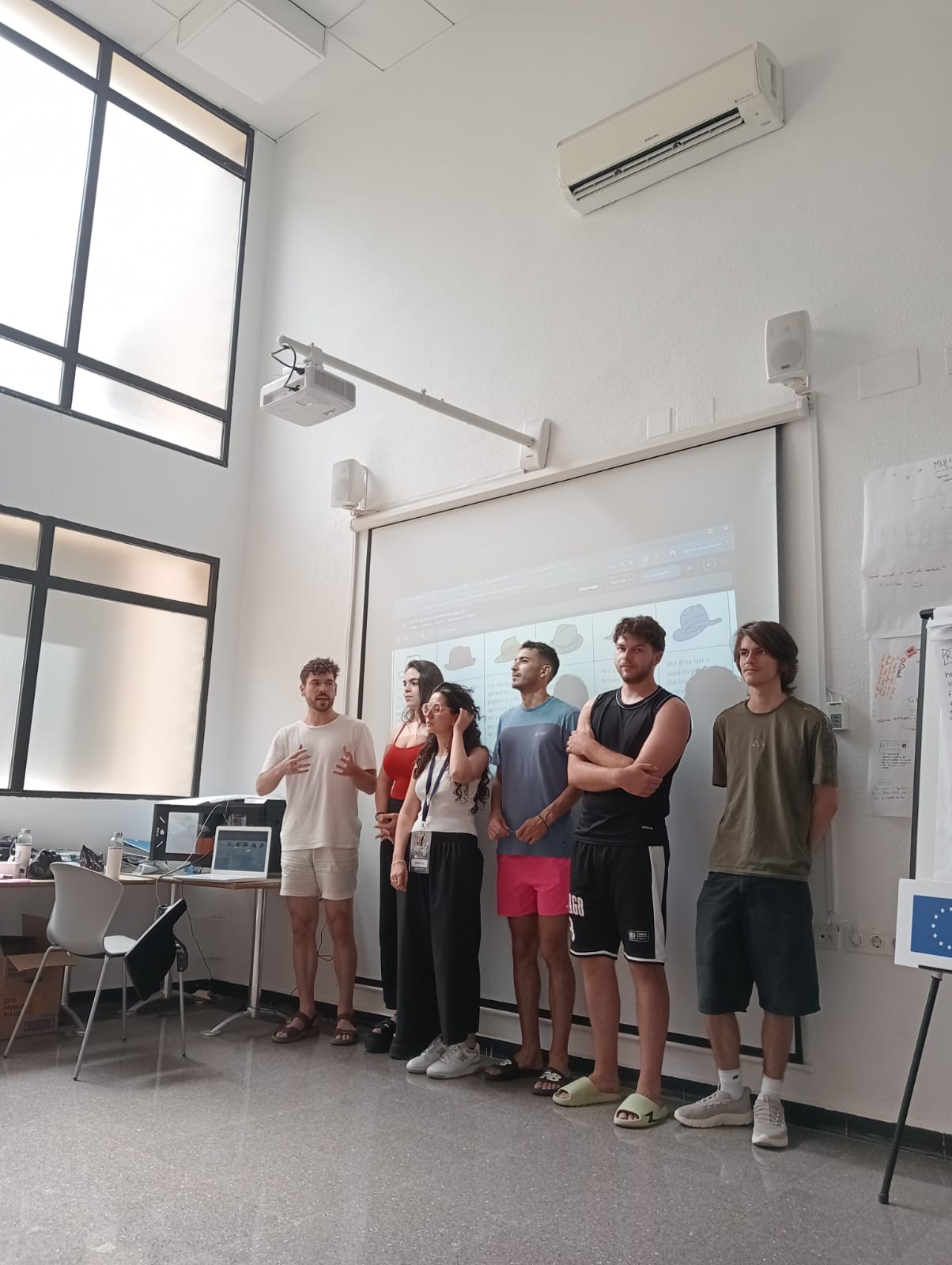
After the coffee break, participants were introduced to Edward de Bono’s renowned Six Thinking Hats methodology. Each coloured hat represents a different way of thinking: objective facts (White), emotions and intuition (Red), critical judgment (Black), optimism and opportunities (Yellow), creativity and innovation (Green), and organisation and process management (Blue).

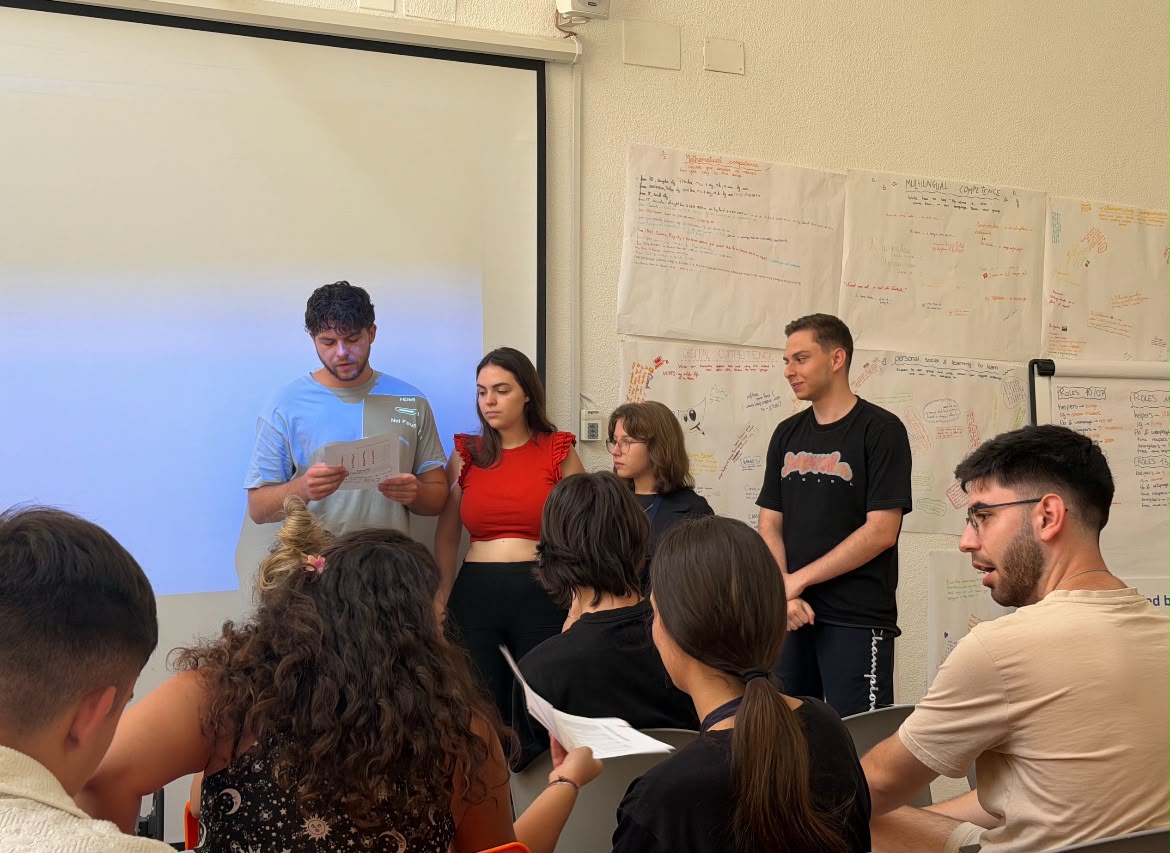
Working in international teams, participants analysed a real-life situation — a conflict within a work team — through each of these perspectives, discovering how changing the way we think can completely transform how a challenge is understood and solved. Only when all the perspectives were put together did the full picture appear. The exercise encouraged everyone to look beyond their first impressions, to practise assertive communication in difficult situations, to validate points of view they did not share, and to appreciate the value of diverse thinking when working as a team — a tool they can transfer to project management, intercultural dialogue and conflict resolution at work.

Both activities created an open and interactive learning environment where participants exchanged ideas, reflected on their own attitudes, and strengthened essential soft skills such as critical thinking, adaptability, teamwork, creativity, negotiation and effective communication. These competences are fundamental for personal development, active citizenship, and future employability.

As every day, the group closed the working sessions by reflecting in national groups on what they had learned, while the rotating role teams took care of the daily dissemination of the project.

The evening was dedicated to the Intercultural Night of Italy and Spain 🇮🇹🇪🇸, with traditional music and dances, typical food, and an introduction to both regions of origin — rural Sardinia and the Region of Murcia / Valencian Community — and to the work their organisations do with young people from rural areas and with fewer opportunities.

Through experiences like these, young people continue to grow not only as individuals but also as members of an international community built on cooperation, respect, and mutual learning. It is inspiring to see participants embracing every opportunity to learn from one another and to challenge themselves through non-formal education.

Co-funded by the Erasmus+ Programme of the European Union.


🇪🇸 Español

🎩 Día 4 — Explorando diferentes perspectivas: valores, negociación y los Seis Sombreros para Pensar

Como parte de nuestro intercambio juvenil Erasmus+ «The Awakening of a New Generation», celebrado en Alicante, los participantes disfrutaron de una tarde dedicada al desarrollo del pensamiento crítico, la resolución de problemas y la toma de decisiones colaborativa mediante metodologías de educación no formal.

La jornada de trabajo comenzó con una subasta de valores 💰. Seis equipos recibieron un presupuesto ficticio limitado y tuvieron que pujar, en tiempo real, por tarjetas que representaban valores y competencias profesionales: Leadership, Empathy, Transparency, Discipline y muchas otras. Decidir en qué gastar, cuándo contenerse y cuándo competir contra otro equipo exigió tomar decisiones colectivas con rapidez y gestionar con cuidado unos recursos limitados. Cerrada la subasta, cada equipo debatió cuánto valen realmente esas competencias en el mercado laboral actual y presentó un pitch final explicando cómo el «perfil profesional» que acababa de adquirir reforzaba su empleabilidad.

Tras la pausa para el café, los participantes conocieron el reconocido método de los Seis Sombreros para Pensar, desarrollado por Edward de Bono. Cada sombrero representa una forma diferente de analizar una situación: los hechos objetivos (blanco), las emociones e intuición (rojo), el pensamiento crítico (negro), el optimismo y las oportunidades (amarillo), la creatividad y las nuevas ideas (verde), y la organización del proceso (azul).

Trabajando en equipos internacionales, los participantes analizaron una situación real —un conflicto dentro de un equipo de trabajo— desde cada una de estas perspectivas, comprobando cómo cambiar el enfoque permite comprender mejor un problema y encontrar soluciones más completas. Solo al poner en común todas las miradas apareció el problema completo. La actividad les ayudó a mirar más allá de la primera impresión, a practicar la comunicación asertiva en situaciones difíciles, a validar puntos de vista que no compartían y a valorar la diversidad de pensamiento dentro de un equipo: una herramienta transferible a la gestión de proyectos, al diálogo intercultural y a la resolución de conflictos laborales.

Ambas actividades favorecieron un entorno de aprendizaje participativo e intercultural, donde los jóvenes intercambiaron ideas, reflexionaron sobre sus propias actitudes y fortalecieron competencias transversales fundamentales como el pensamiento crítico, la creatividad, la adaptabilidad, el trabajo en equipo, la negociación, la comunicación eficaz y la capacidad para resolver problemas. Todas ellas son habilidades esenciales para el desarrollo personal, la ciudadanía activa y la futura empleabilidad.

Como cada día, el grupo cerró las sesiones de trabajo con la reflexión en grupos nacionales sobre los aprendizajes de la jornada, mientras los equipos de roles rotativos se encargaban de la difusión diaria del proyecto.

La velada se dedicó a la Noche Intercultural de Italia y España 🇮🇹🇪🇸, con música y danzas tradicionales, gastronomía típica y una presentación de ambos territorios de origen —la Cerdeña rural y la Región de Murcia / Comunidad Valenciana— y del trabajo que sus organizaciones desarrollan con jóvenes de zonas rurales y con menos oportunidades.

Experiencias como esta demuestran el enorme potencial de la educación no formal para impulsar el crecimiento de la juventud, reforzar la cooperación internacional y crear espacios de aprendizaje donde cada participante puede descubrir nuevas capacidades, ganar confianza y aprender de las experiencias de los demás.

Cofinanciado por el Programa Erasmus+ de la Unión Europea.
dia3-dreams-of-tomorrow (14)

The Awakening of a New Generation | Día 3

🇬🇧 English

Day 3 at the Erasmus+ Youth Exchange «The Awakening of a New Generation» 🌍

The third day of the Erasmus+ youth exchange «The Awakening of a New Generation», organised by Dreams of Tomorrow, focused on developing key competences, strengthening teamwork, and encouraging participants to reflect on their personal and professional growth. Young people from Romania, Bulgaria, Lithuania, North Macedonia, Italy, and Spain continued learning together through a variety of non-formal education activities designed to improve employability and foster international cooperation.

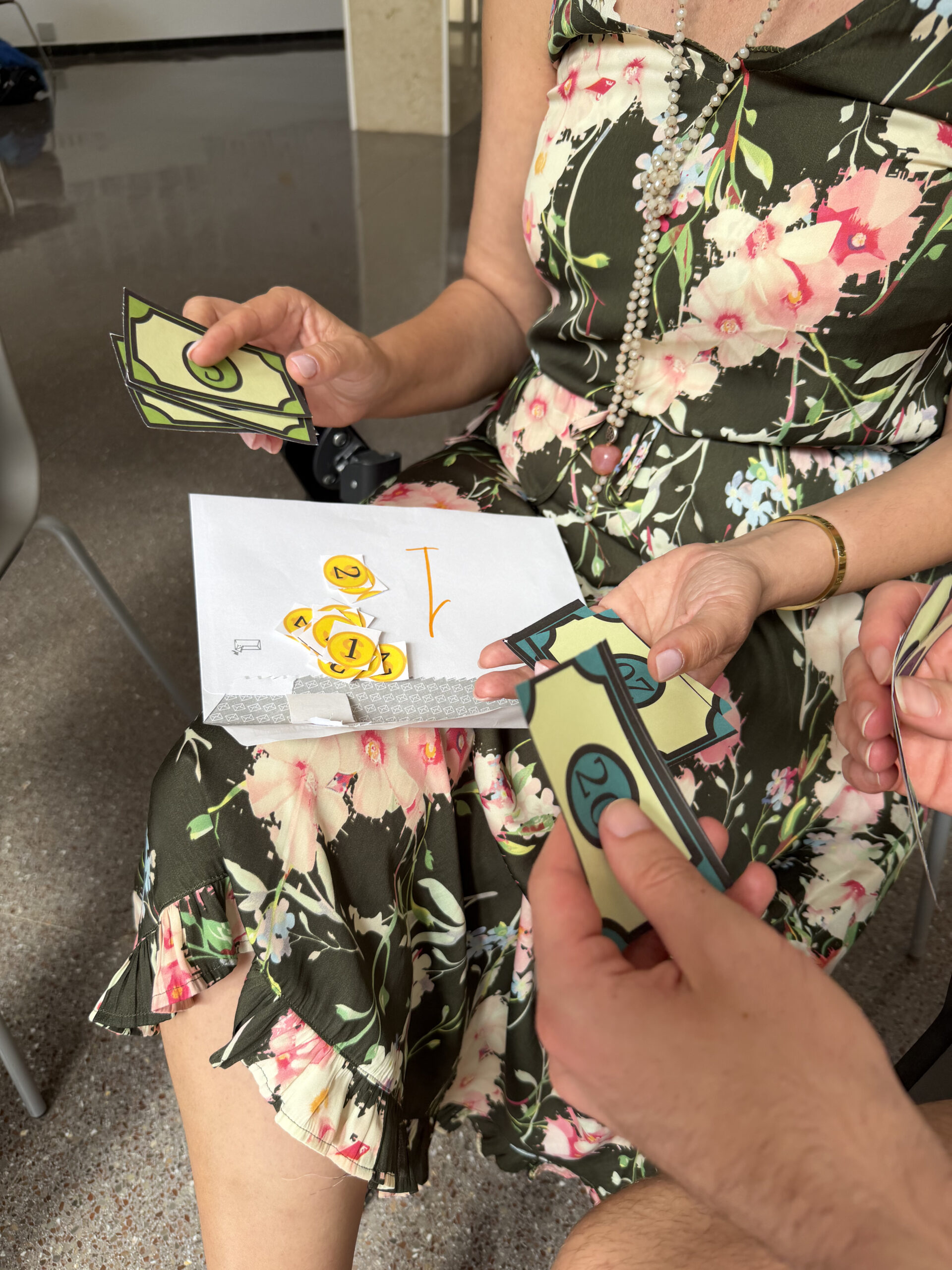
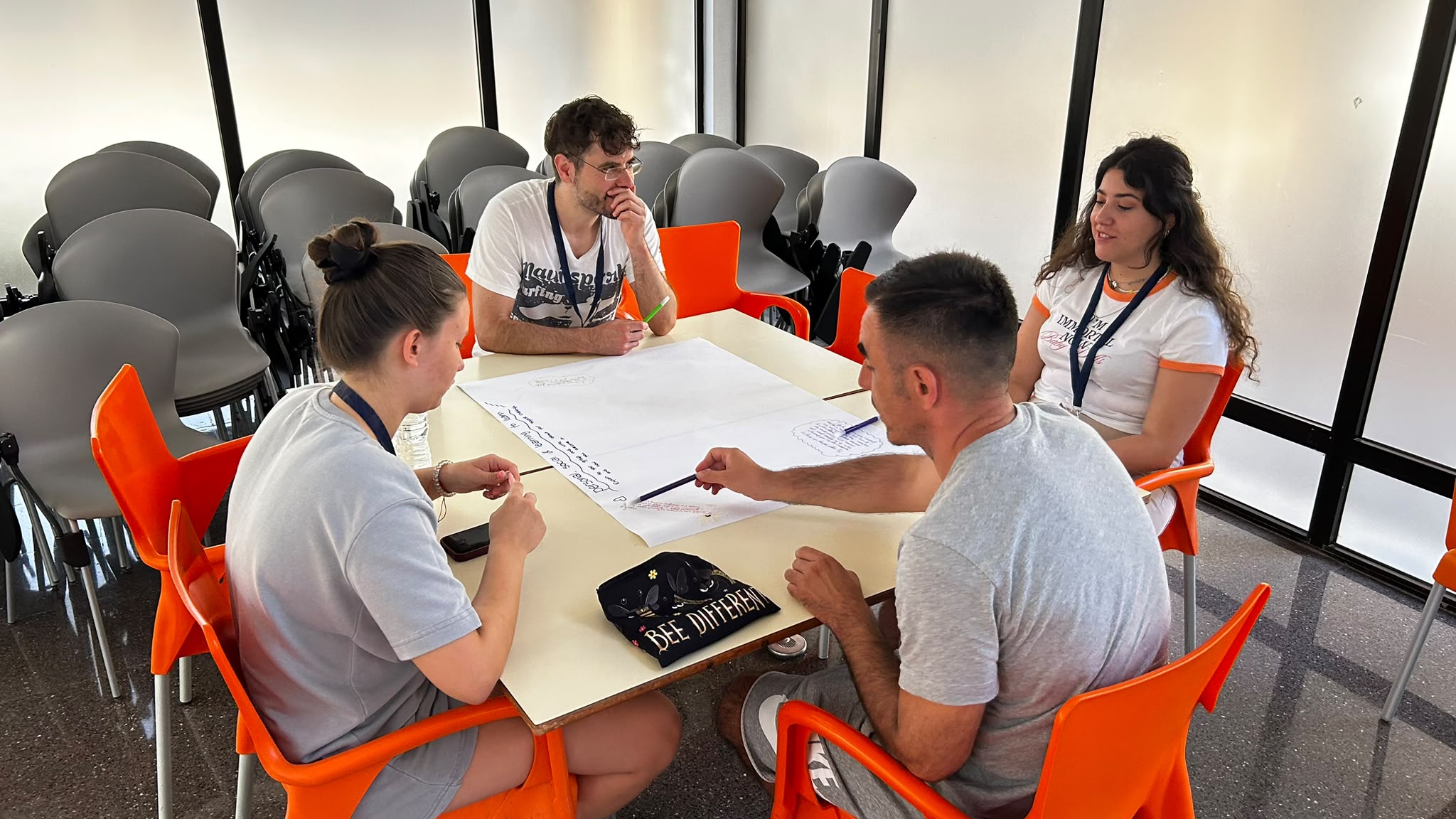
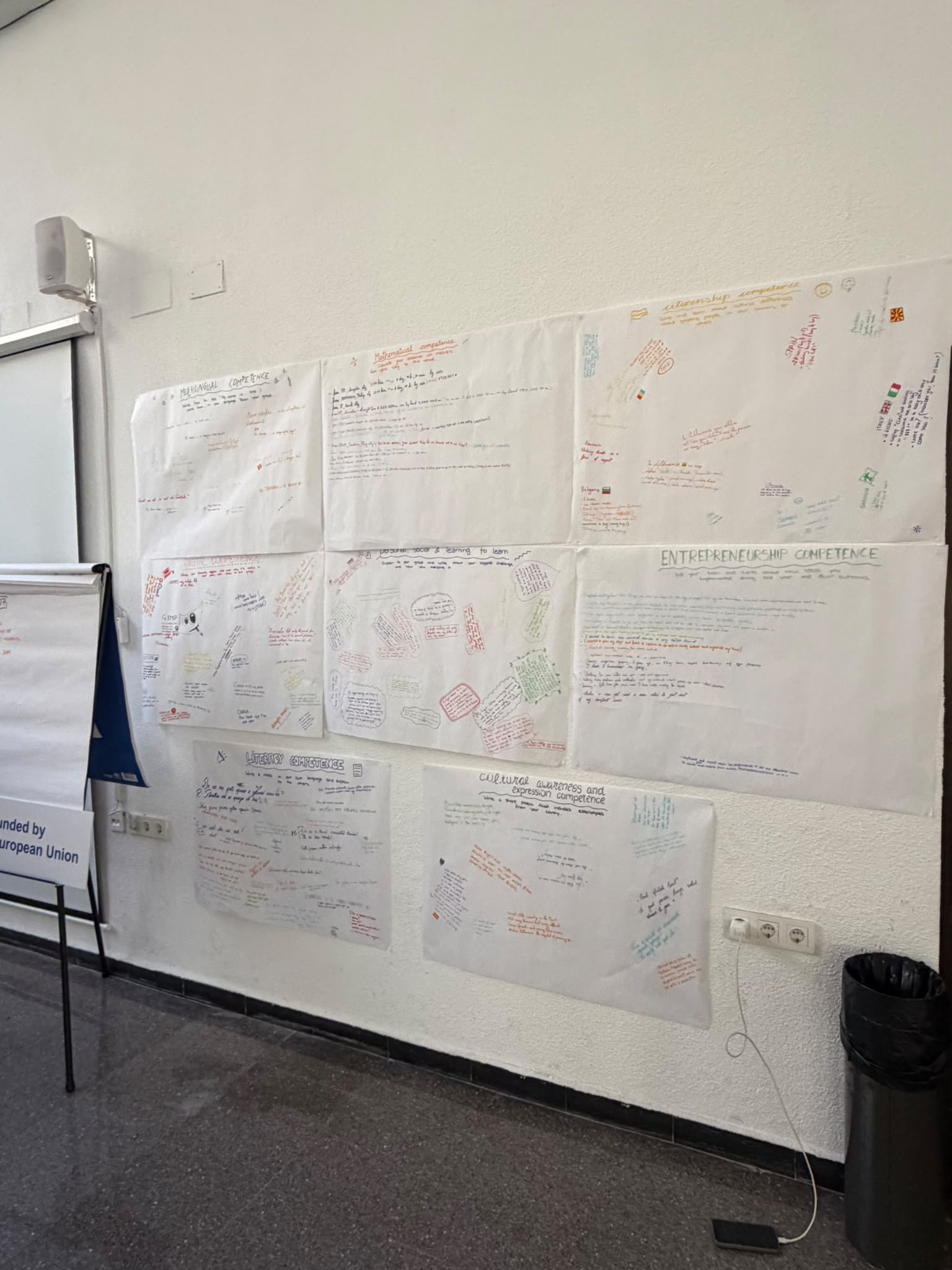
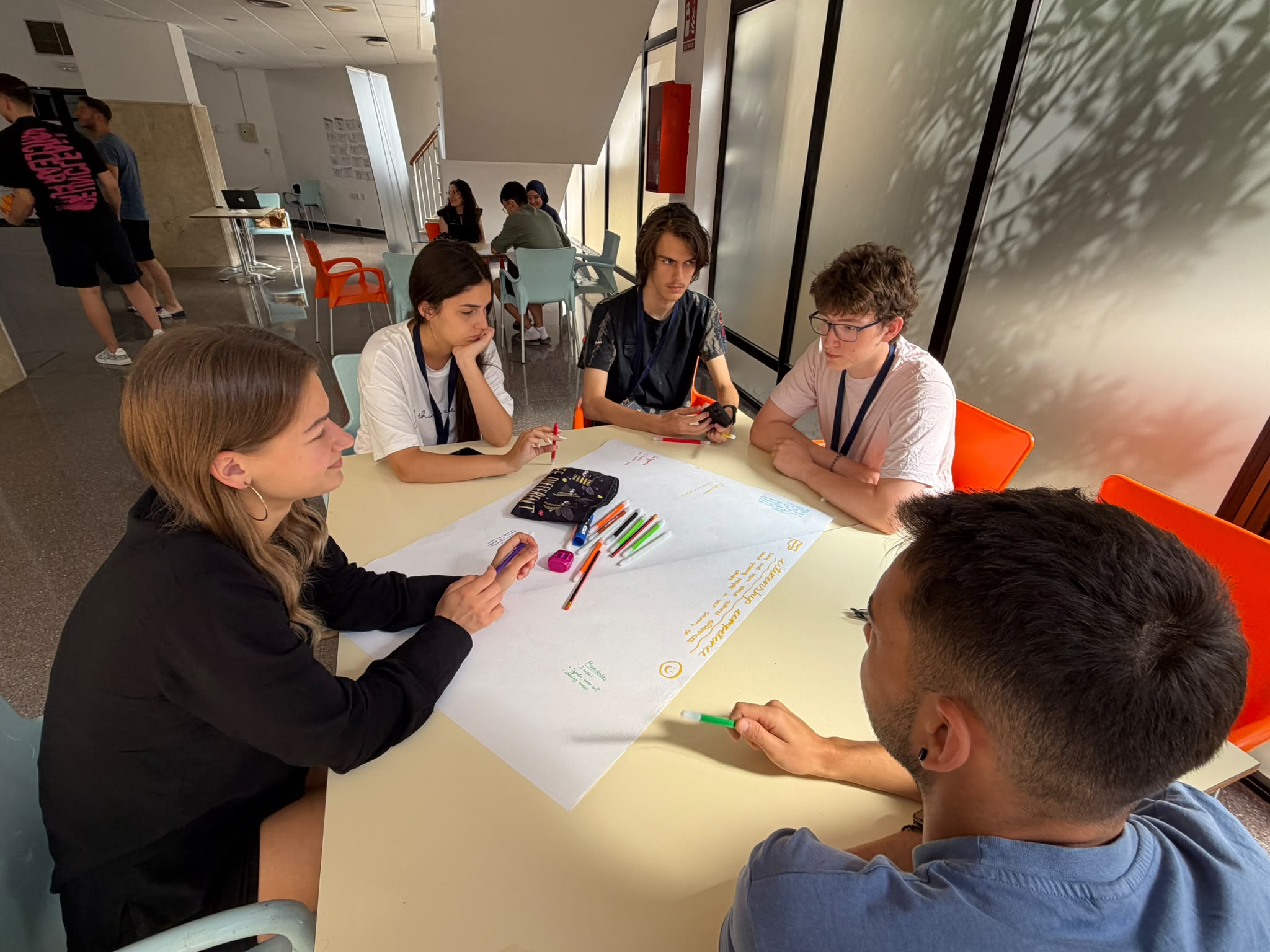
The day began with «The Wall Between Us», an energizer that encouraged communication, cooperation, and active participation. Participants then took part in «Youthpass – The Puzzle of Competences»: eight stations, one for each of the key competences promoted by the Youthpass certificate, with groups rotating every ten minutes and writing on flipcharts how they already use each competence in their everyday life and how they could develop it further. The activity made informal learning visible — young people realised they are already applying valuable competences without knowing how to name them.

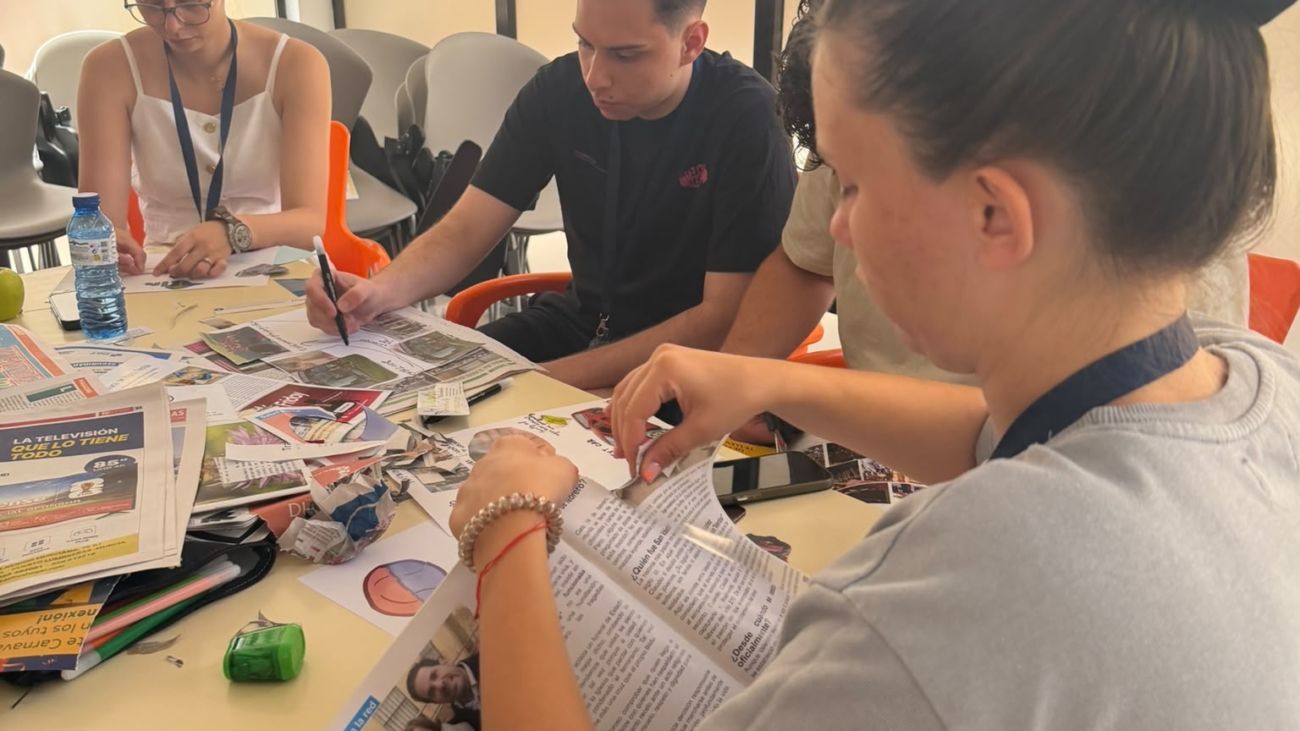
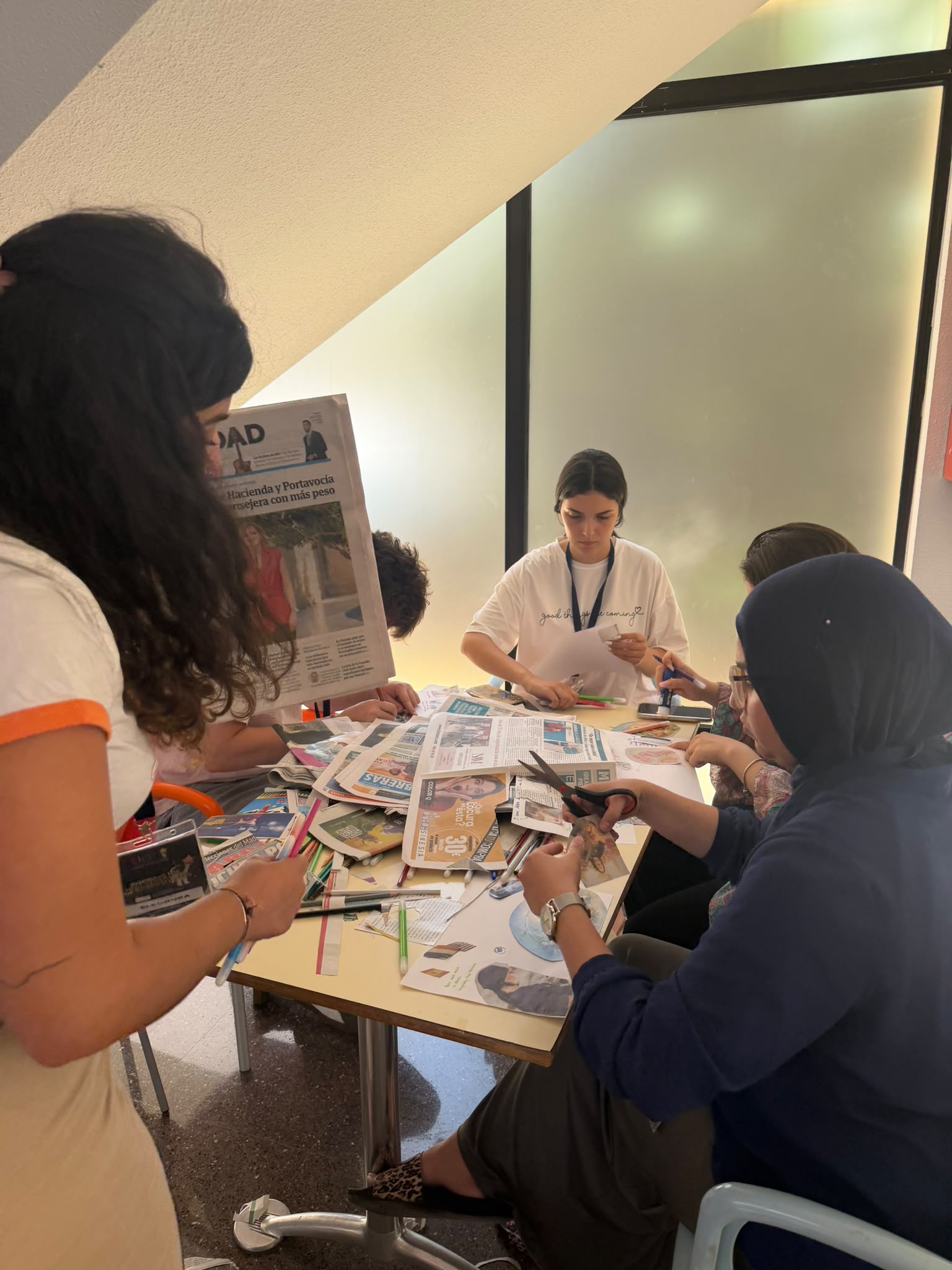
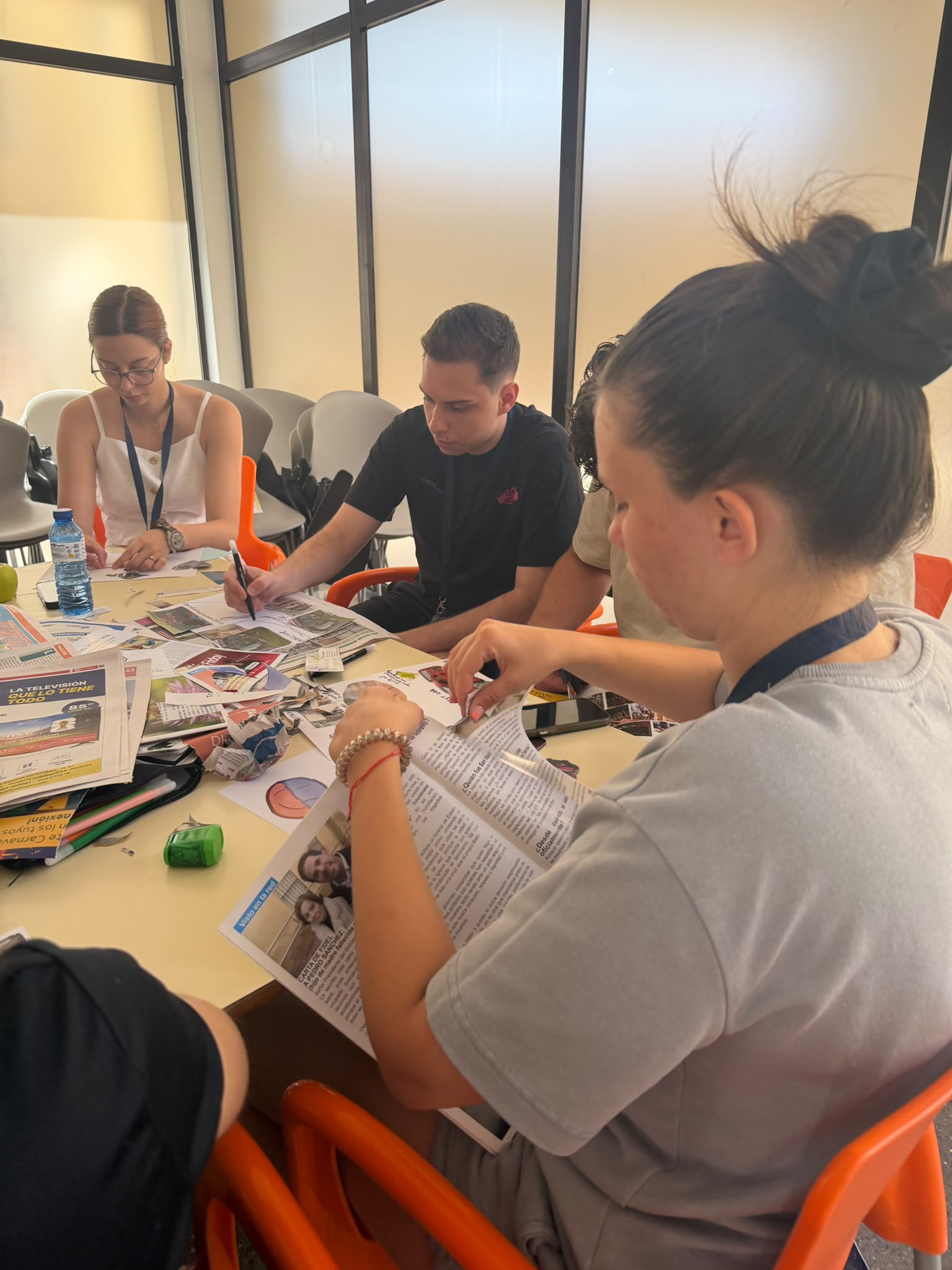
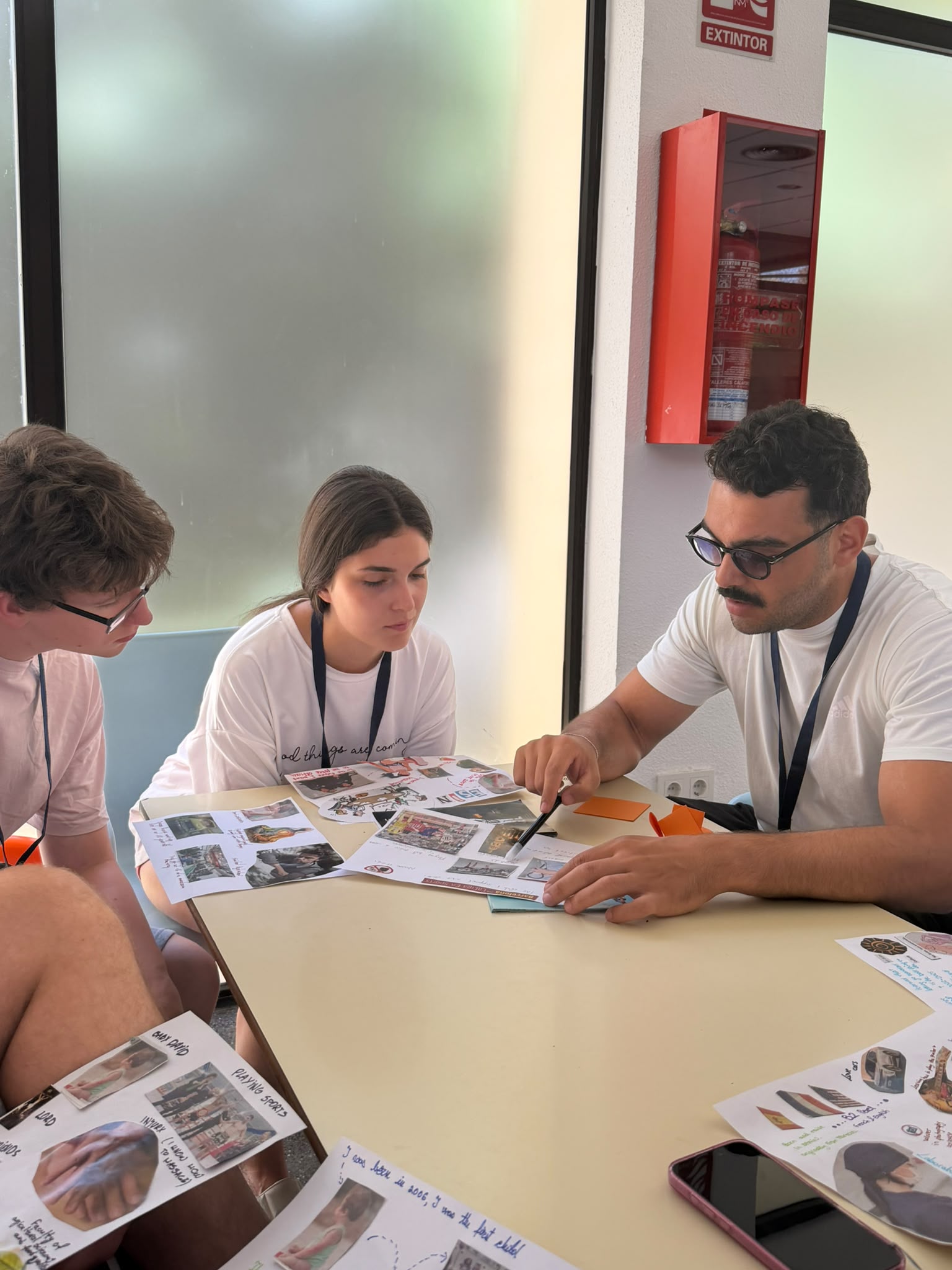
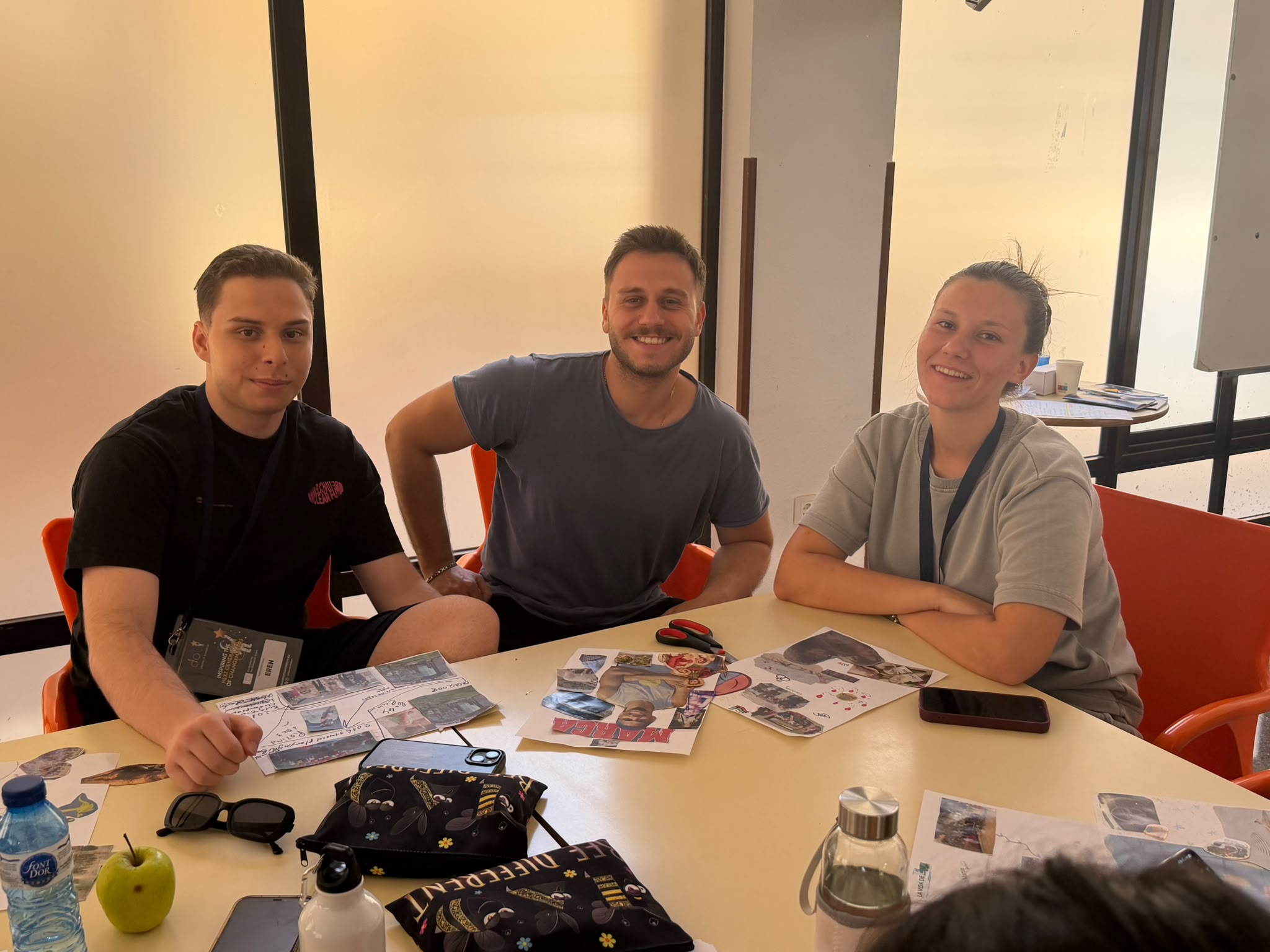
One of the most meaningful moments of the day was «The Story of My Life». Each participant created a collage of their life journey, cutting out images and words from magazines and newspapers to represent their greatest achievements, their fears, their weaknesses and the obstacles they have overcome, linking them to the eight key competences explored that morning. The collages were then shared in pairs, in a space of active listening and confidentiality, allowing participants to reinterpret personal difficulties as a source of competences such as resilience, adaptability and initiative.

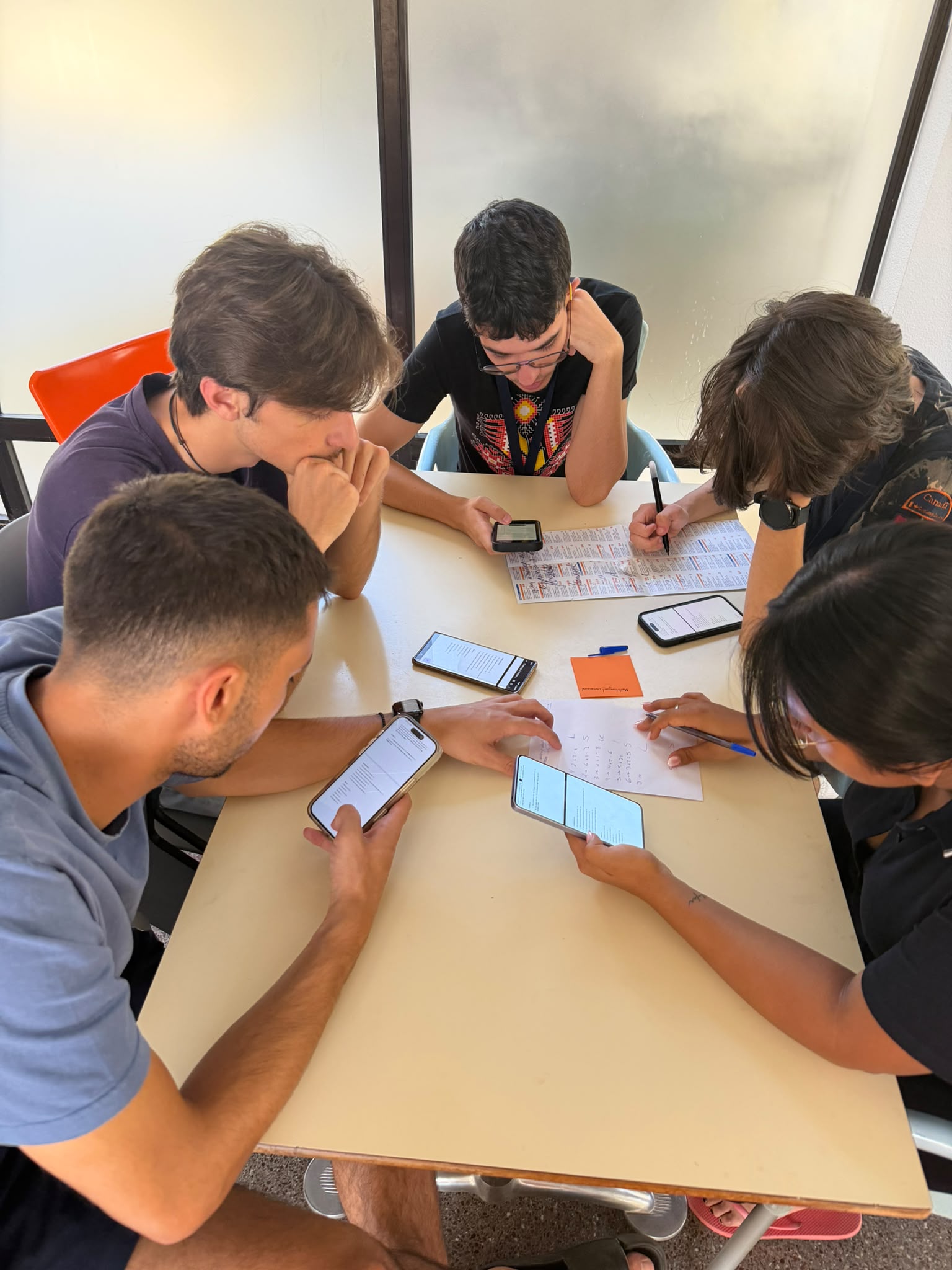
During the afternoon, participants put their teamwork and problem-solving abilities into practice through the «Employability Escape Room», solving six consecutive challenges that simulated a full job-seeking process until they cracked the final phrase, «READY TO SIGN THE CONTRACT». The challenges covered identifying transversal competences, critically analysing job offers, auditing common CV mistakes, writing a motivation message in no more than 120 words, an express job interview under pressure, and learning to recognise labour rights and the red flags of abusive job offers.

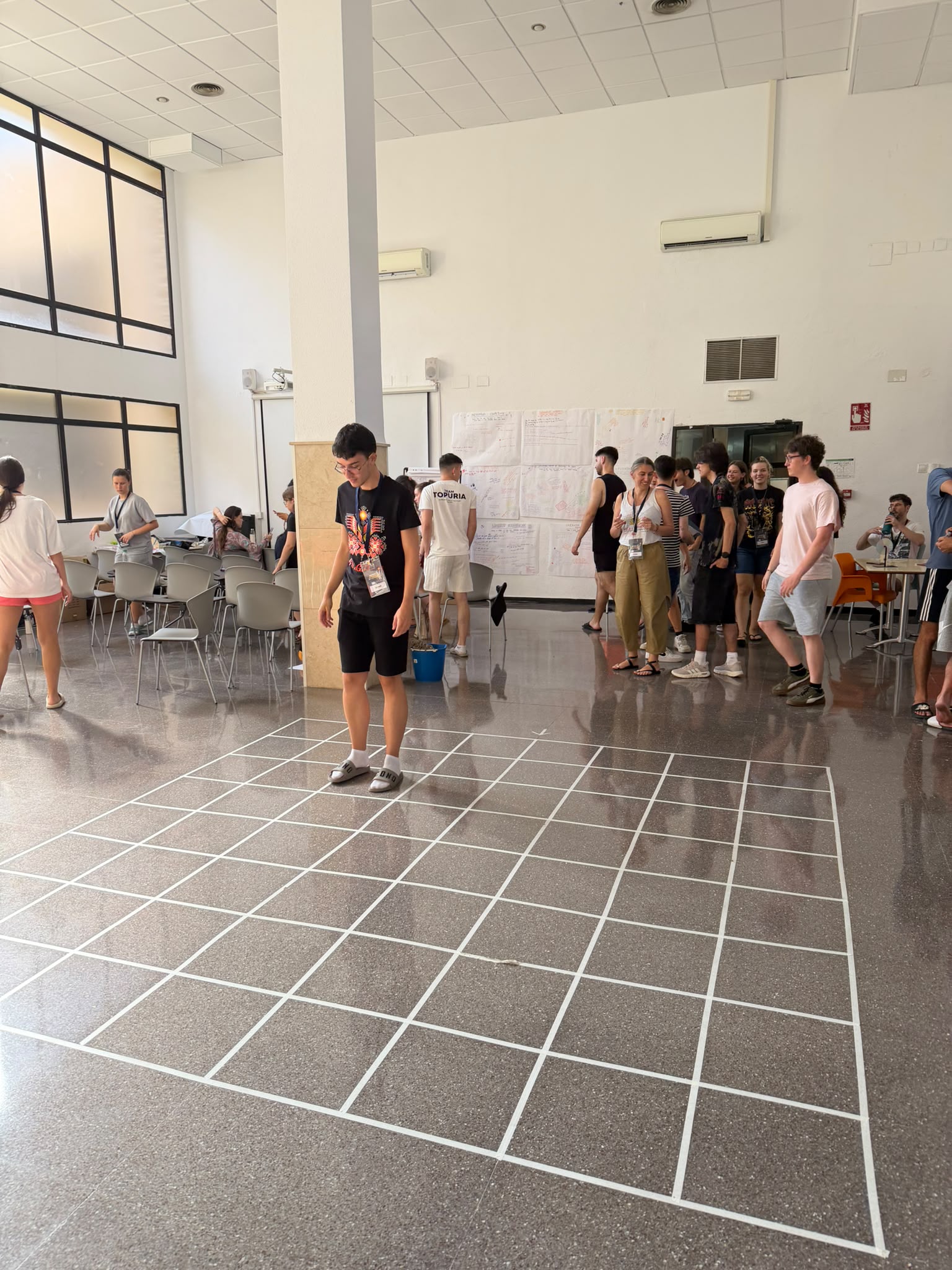
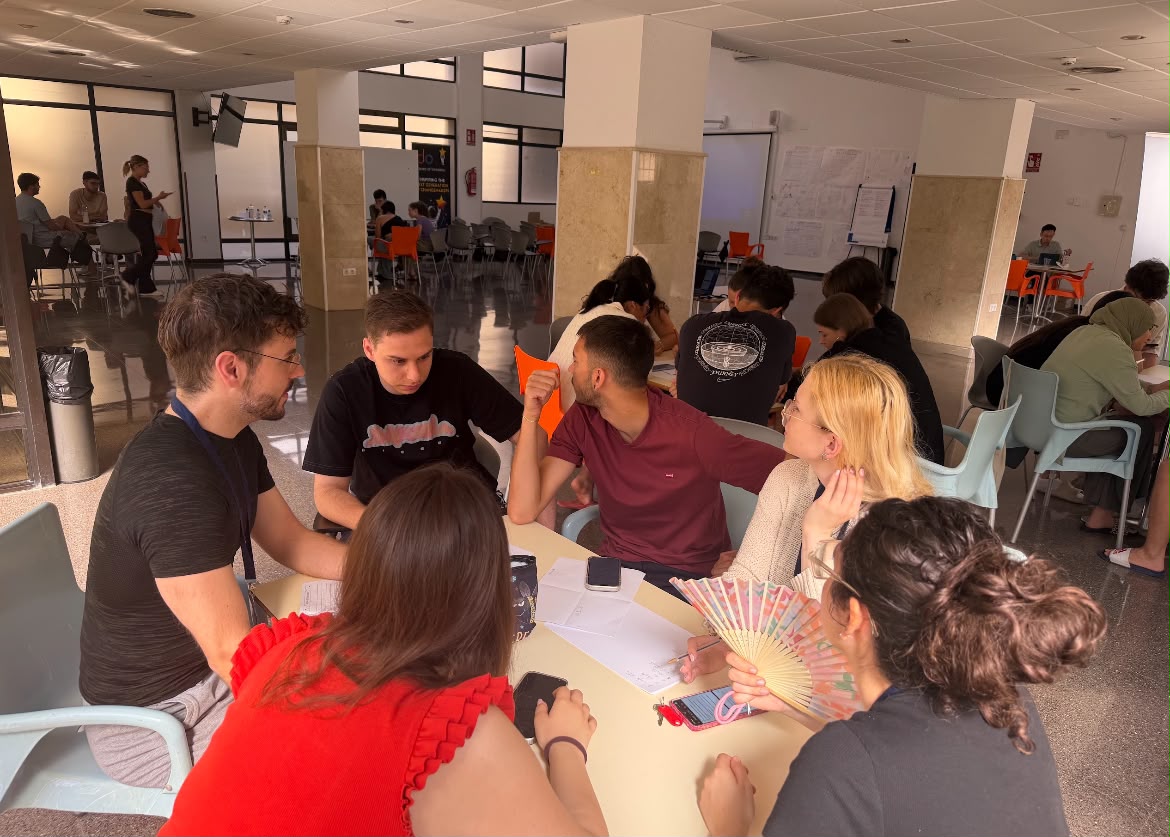
The day continued with «The Labyrinth», an activity focused on trust, communication, leadership and collaboration. Two teams worked in separate rooms on an 8×8 grid drawn on the floor, searching for a hidden path. Only one person could enter at a time, and whoever stepped on a wrong square had to come out and explain what they had learned to the rest of the team. Drawing or taking notes was not allowed, so the group had to build a collective mental map using precise verbal instructions alone — every participant played an essential role in achieving the group’s objective. It was followed by «Broken Phone», where each team passed a professional message down a chain to then analyse how much it had been distorted, and why clarity, confirmation and active listening matter so much in multicultural working environments.

The day concluded with a reflection session in national groups, during which participants evaluated what they had learned, shared their experiences, and discussed how these new competences could be applied in their personal, educational, and professional lives. They also carried out the daily dissemination activities to share the project’s impact with a wider audience.

Each day of the exchange continues to strengthen participants’ confidence, intercultural understanding, and ability to work effectively in international teams, creating friendships and experiences that will last far beyond the project itself. 🚀🌍

Co-funded by the Erasmus+ Programme of the European Union.


🇪🇸 Español

Día 3 del Intercambio Juvenil Erasmus+ «The Awakening of a New Generation» 🌍

El tercer día del intercambio juvenil Erasmus+ «The Awakening of a New Generation», organizado por Dreams of Tomorrow, estuvo dedicado al desarrollo de competencias clave, al fortalecimiento del trabajo en equipo y a la reflexión sobre el crecimiento personal y profesional de los participantes. Jóvenes procedentes de Rumanía, Bulgaria, Lituania, Macedonia del Norte, Italia y España continuaron compartiendo experiencias a través de actividades de educación no formal orientadas a mejorar su empleabilidad y fomentar la cooperación internacional.

La jornada comenzó con «The Wall Between Us», una dinámica de activación diseñada para favorecer la comunicación, la cooperación y la participación activa del grupo. A continuación, los participantes realizaron «Youthpass – The Puzzle of Competences»: ocho estaciones, una por cada competencia clave reconocida en el certificado Youthpass, con los grupos rotando cada diez minutos y escribiendo en un flipchart cómo utilizan ya cada competencia en su vida cotidiana y cómo podrían desarrollarla más. La dinámica hizo visible el aprendizaje informal: los jóvenes tomaron conciencia de que ya aplican competencias valiosas sin saber nombrarlas.

Uno de los momentos más significativos del día fue «The Story of My Life». Cada participante elaboró un collage de su trayectoria vital, recortando imágenes y palabras de revistas y periódicos para representar sus mayores logros, sus miedos, sus debilidades y los obstáculos superados, y vinculándolos con las ocho competencias clave trabajadas esa misma mañana. Los collages se compartieron después en parejas, en un espacio de escucha activa y confidencialidad, lo que permitió reinterpretar las dificultades personales como fuente de competencias como la resiliencia, la adaptabilidad y la iniciativa.

Durante la tarde, los participantes pusieron en práctica sus capacidades de trabajo en equipo y resolución de problemas mediante el «Employability Escape Room», resolviendo seis retos consecutivos que simulaban un proceso completo de inserción laboral hasta descifrar la frase final «READY TO SIGN THE CONTRACT». Los retos abarcaron la identificación de competencias transversales, el análisis crítico de ofertas de empleo, la auditoría de errores frecuentes en currículums, la redacción de un mensaje de motivación de máximo 120 palabras, una entrevista de trabajo express bajo presión y el reconocimiento de los derechos laborales y de las señales de alarma de las ofertas abusivas.

La jornada continuó con «The Labyrinth», una actividad centrada en la confianza, la comunicación, el liderazgo y la colaboración. Dos equipos trabajaron en salas separadas sobre una cuadrícula de 8×8 dibujada en el suelo, buscando un camino oculto. El acceso era estrictamente individual y, al pisar una casilla incorrecta, la persona debía salir y explicar verbalmente al resto del equipo lo aprendido. Estaba prohibido dibujar o tomar notas, así que el grupo tuvo que construir un mapa mental colectivo únicamente con instrucciones verbales precisas: cada persona desempeñó un papel fundamental para alcanzar el objetivo común. Después llegó «Broken Phone», en la que cada equipo transmitía en cadena un mensaje profesional para analizar luego cuánto se había distorsionado, y por qué la claridad, la confirmación y la escucha activa son tan importantes en entornos de trabajo multiculturales.

La jornada concluyó con la sesión de reflexión en grupos nacionales, en la que los participantes analizaron los aprendizajes adquiridos, compartieron sus experiencias y debatieron cómo aplicar estas nuevas competencias en su vida personal, educativa y profesional. Además, llevaron a cabo las tareas diarias de difusión para dar a conocer el impacto y los resultados del proyecto a un público más amplio.

Cada día del intercambio continúa reforzando la confianza de los participantes, su comprensión intercultural y su capacidad para trabajar de manera eficaz en equipos internacionales, creando amistades y experiencias que perdurarán mucho más allá de la finalización del proyecto. 🚀🌍

Cofinanciado por el Programa Erasmus+ de la Unión Europea.
IMG_8502

The Awakening of a New Generation | Día 2

🇬🇧 English

Day 2 in Alicante 🌞🌍

Another day full of learning and collaboration! We started with the «Zombie, Run!» energizer 🧟 — the only way to catch someone was to say their name correctly, so by the end we all knew each other’s names.

Then came the Youthpass Ultimate Quiz 🏆: in eight teams we competed on the Youthpass and the European key competences, and each team had to act out a real-life situation showing one of them. We discovered that the Youthpass is not just paperwork, but a tool to recognise and present the competences we gain in youth exchanges — and we will be filling in our own at the end of the week.

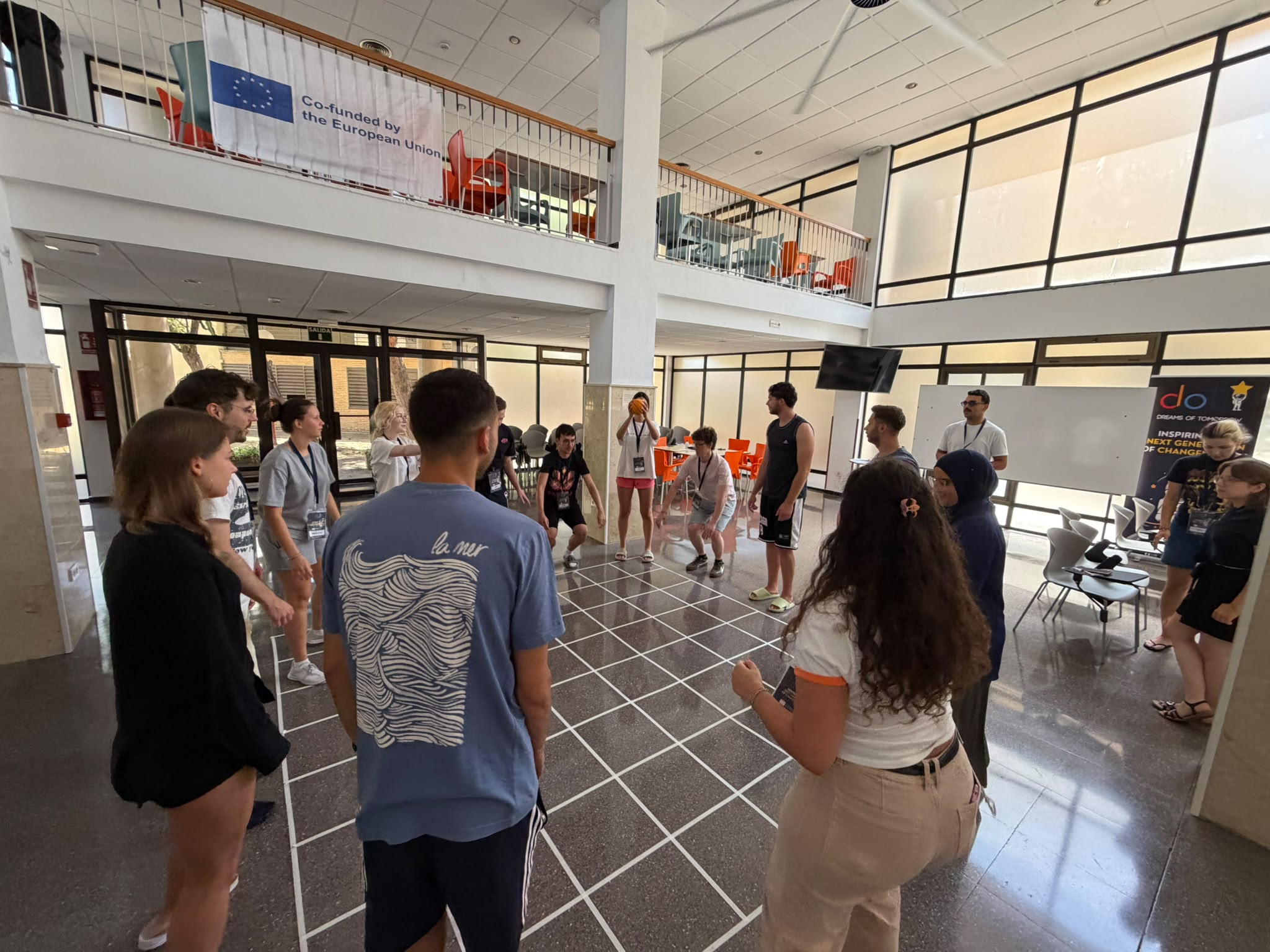
Before lunch we played «Zoom and Re-Zoom» 🖼️, based on the illustrated books by Istvan Banyai. Each of us got one image from a sequence and nobody could show theirs to the others, so the only way to put them in the right order was to describe them out loud. It took patience and a lot of active listening in a multilingual group, and it made us realise how, in any team, each person only holds one piece of the information.

In the afternoon we worked on «Your Personality, Your CV» 📄, building or redesigning our CVs with Europass and Canva, learning how to structure them, which keywords to use and how to give value to non-formal experiences like volunteering or Erasmus+ projects. Then we reviewed our own CVs using AI (ChatGPT and Gemini), which gave us a score and suggestions for improvement — a great way to learn that AI is a tool to support our work and help us learn, not to replace it.

Later we took part in «My SWOT Analysis» 🔎, reflecting on our strengths, weaknesses, opportunities and threats as future professionals. The best part came afterwards: we left the analyses on the tables and walked around reading each other’s and adding comments, so everyone discovered strengths they had not seen in themselves and opportunities that others could see in their profile.

We closed the working day reflecting in our national groups, and then celebrated our first Intercultural Night, with Bulgaria and Romania 🇧🇬🇷🇴 — traditional dances, music, costumes, food tasting and a lot to learn about both countries and the organisations behind them. Slideshows and quizzes were banned on purpose, so both groups had to come up with much more creative and participatory ways of presenting their culture!

Step by step, we continue building new skills, confidence, and unforgettable international friendships! 💙🇲🇰🇧🇬🇷🇴🇱🇹🇮🇹🇪🇸


🇪🇸 Español

Día 2 en Alicante 🌞🌍

¡Otro día lleno de aprendizaje y colaboración! Empezamos con el energizer «Zombie, Run!» 🧟: la única forma de capturar a alguien era decir bien su nombre, así que al final de la dinámica ya nos conocíamos todos.

Después llegó el Youthpass Ultimate Quiz 🏆: en ocho equipos competimos con preguntas sobre el Youthpass y las competencias clave europeas, y cada equipo tuvo que representar una situación real que reflejara una de ellas. Descubrimos que el Youthpass no es un simple trámite, sino una herramienta para reconocer y presentar las competencias que adquirimos en los intercambios juveniles, y que rellenaremos el nuestro al final de la semana.
Antes del almuerzo jugamos a «Zoom and Re-Zoom» 🖼️, basada en los libros ilustrados de Istvan Banyai. Cada uno recibió una imagen de una secuencia y nadie podía mostrar la suya al resto, así que la única forma de ordenarlas era describirlas en voz alta. Hizo falta paciencia y mucha escucha activa en un grupo multilingüe, y nos hizo darnos cuenta de que, en cualquier equipo, cada persona tiene solo una parte de la información.
Por la tarde trabajamos en «Your Personality, Your CV» 📄, elaborando o rediseñando nuestros currículums con Europass y Canva, aprendiendo a estructurarlos, qué palabras clave utilizar y cómo poner en valor experiencias no formales como el voluntariado o los proyectos Erasmus+. Después evaluamos nuestros propios CV con inteligencia artificial (ChatGPT y Gemini), que nos dio una puntuación y recomendaciones de mejora: una buena forma de aprender que la IA es una herramienta de apoyo y aprendizaje, no un sustituto de nuestro trabajo.

Más tarde participamos en «My SWOT Analysis» 🔎, reflexionando sobre nuestras fortalezas, debilidades, oportunidades y amenazas como futuros profesionales. Lo mejor vino después: dejamos los análisis sobre las mesas y fuimos rotando para leer los de los demás y añadir comentarios, así que todos descubrimos fortalezas que no habíamos visto en nosotros mismos y oportunidades que otros sí veían en nuestro perfil.

Cerramos la jornada de trabajo con la reflexión en nuestros grupos nacionales y celebramos nuestra primera Noche Intercultural, con Bulgaria y Rumanía 🇧🇬🇷🇴: danzas tradicionales, música, vestimenta típica, degustación gastronómica y mucho que aprender sobre ambos países y las organizaciones que hay detrás. Las presentaciones de diapositivas y los quizzes estaban prohibidos a propósito, así que los dos grupos tuvieron que buscar formas mucho más creativas y participativas de presentar su cultura.

Paso a paso, seguimos desarrollando nuevas habilidades, ganando confianza y creando amistades internacionales inolvidables. 💙🇲🇰🇧🇬🇷🇴🇱🇹🇮🇹🇪🇸

day-1-dreams-of-tomorrow (4)

The Awakening of a New Generation | Día 1

🇬🇧 English

Day 1 of our project 🇪🇸

Today started with energizers and icebreaker games — «The Wind Blows», «My Name and My What?» and «Sending the Good Vibes» — that helped us learn each other’s names and get to know each other better.

After a coffee break, we went through the project objectives, the Erasmus+ framework and the schedule for the next few days, and divided into teams with different daily responsibilities: Helpers, Community Managers, Copywriters, Time Keepers, Energizers and Free Time Organizers. We also launched our Secret Friend 🎭: we drew each other’s portraits and hung them on the wall, so anyone could leave anonymous letters all week long.

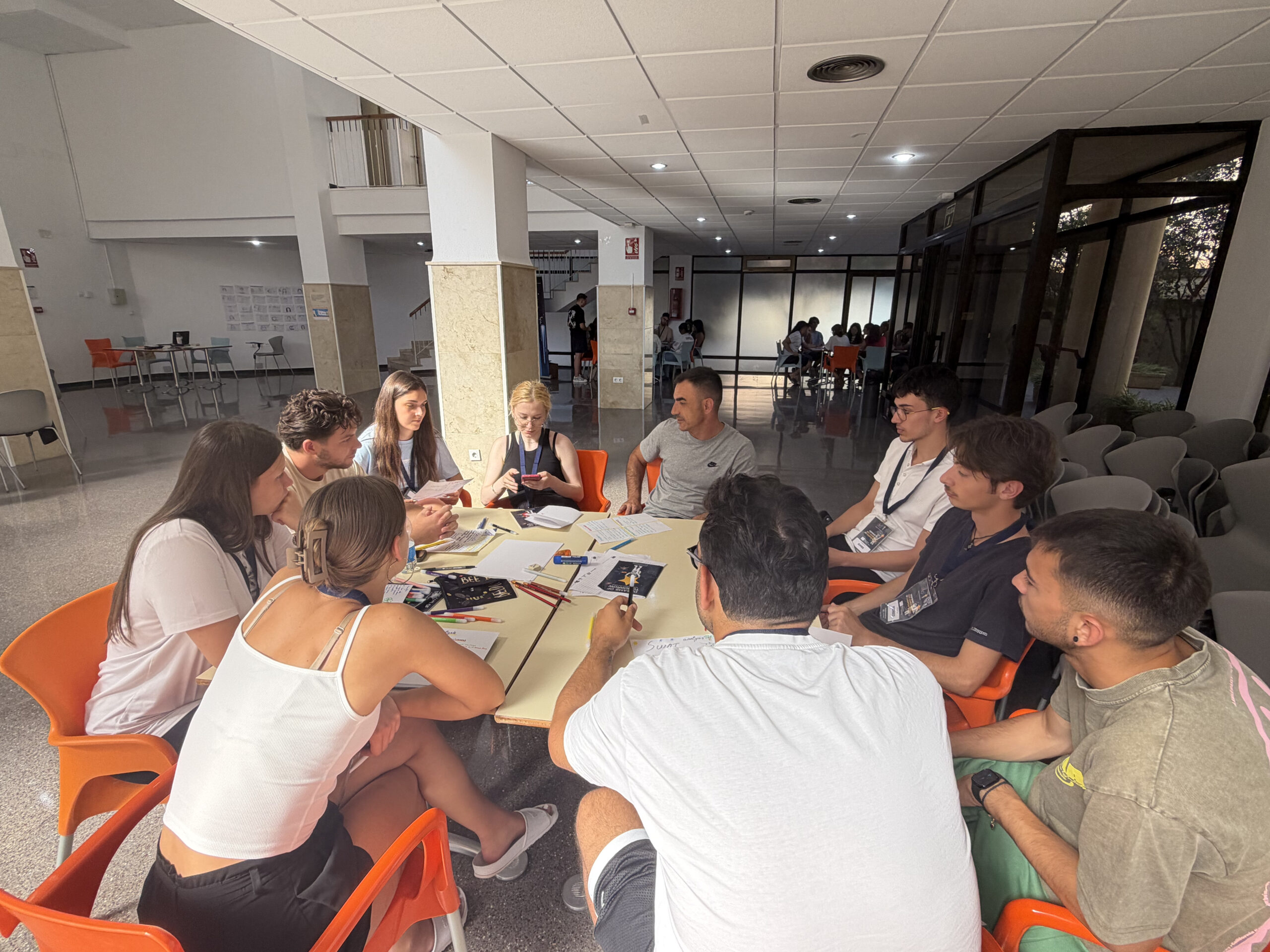
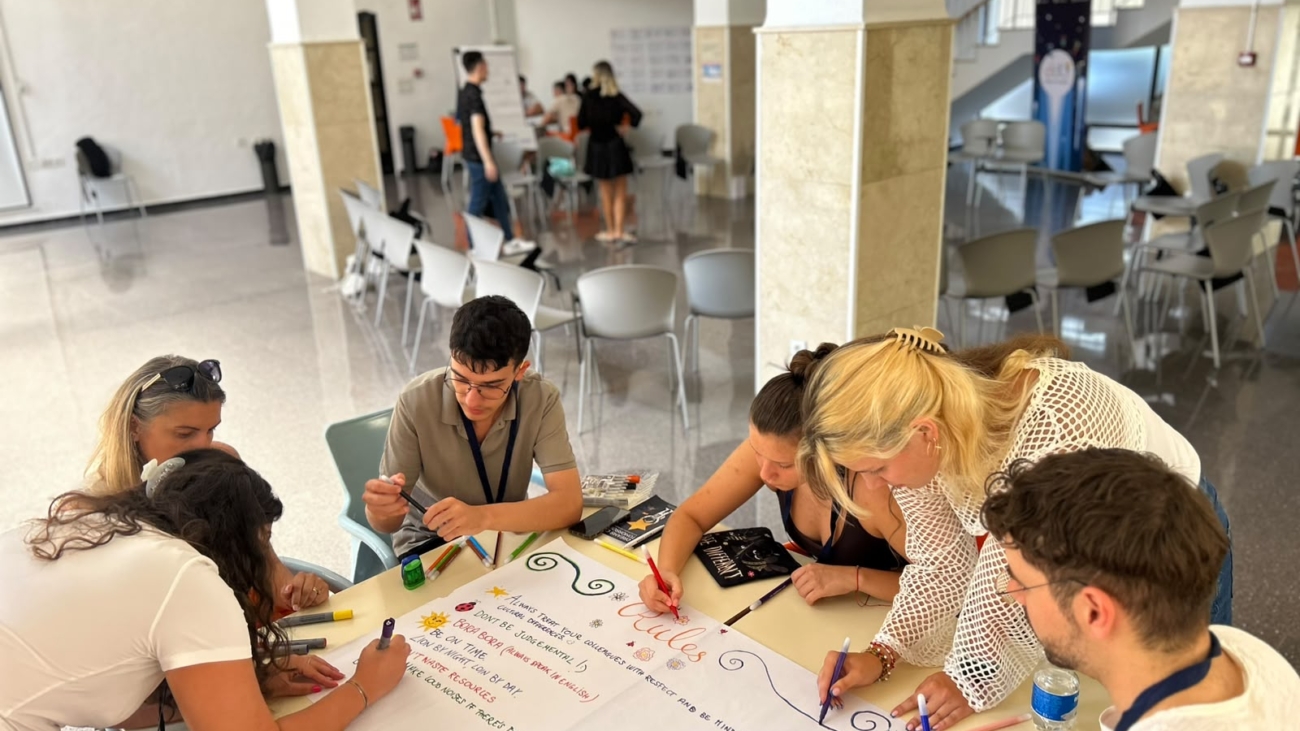
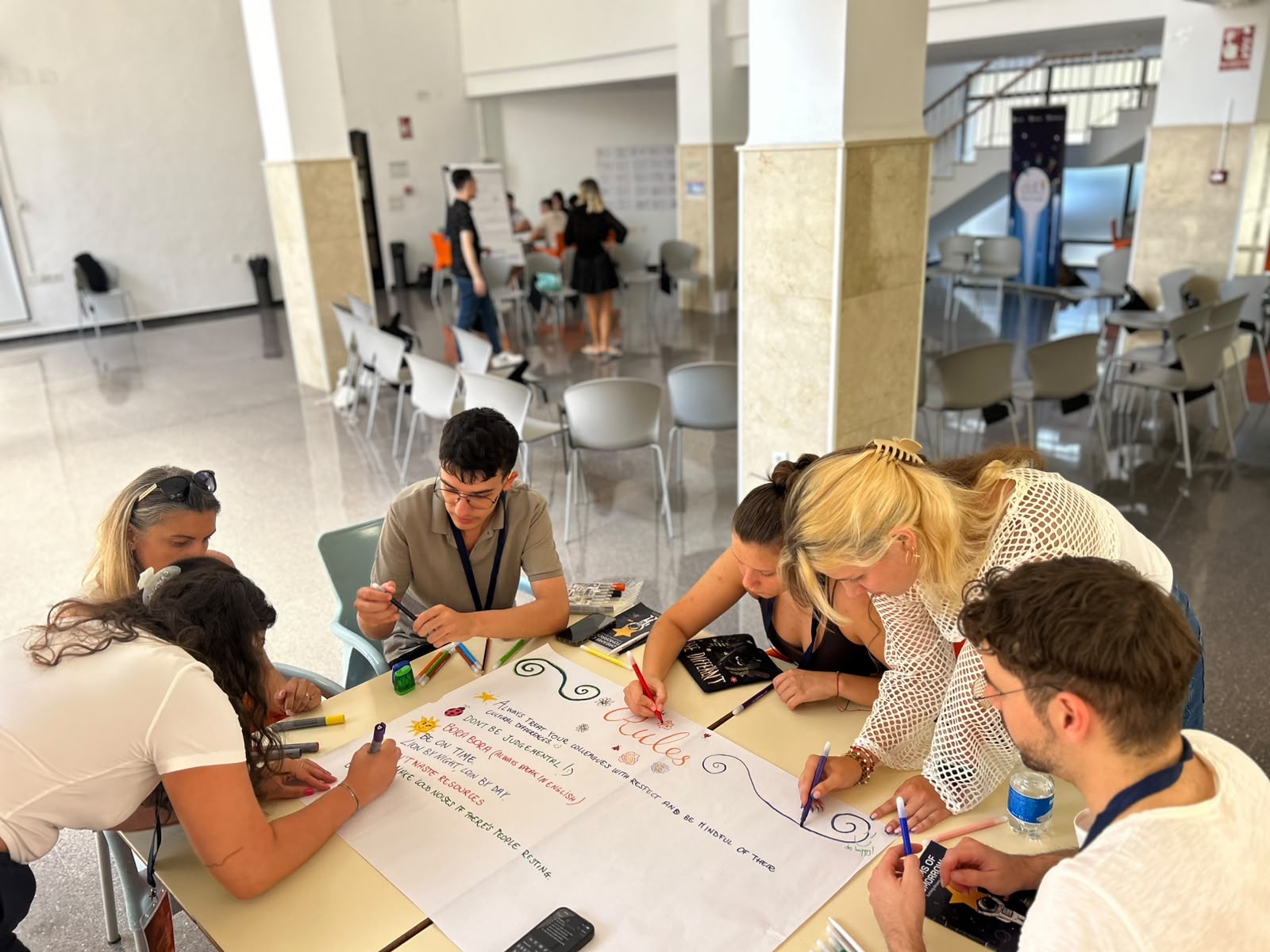
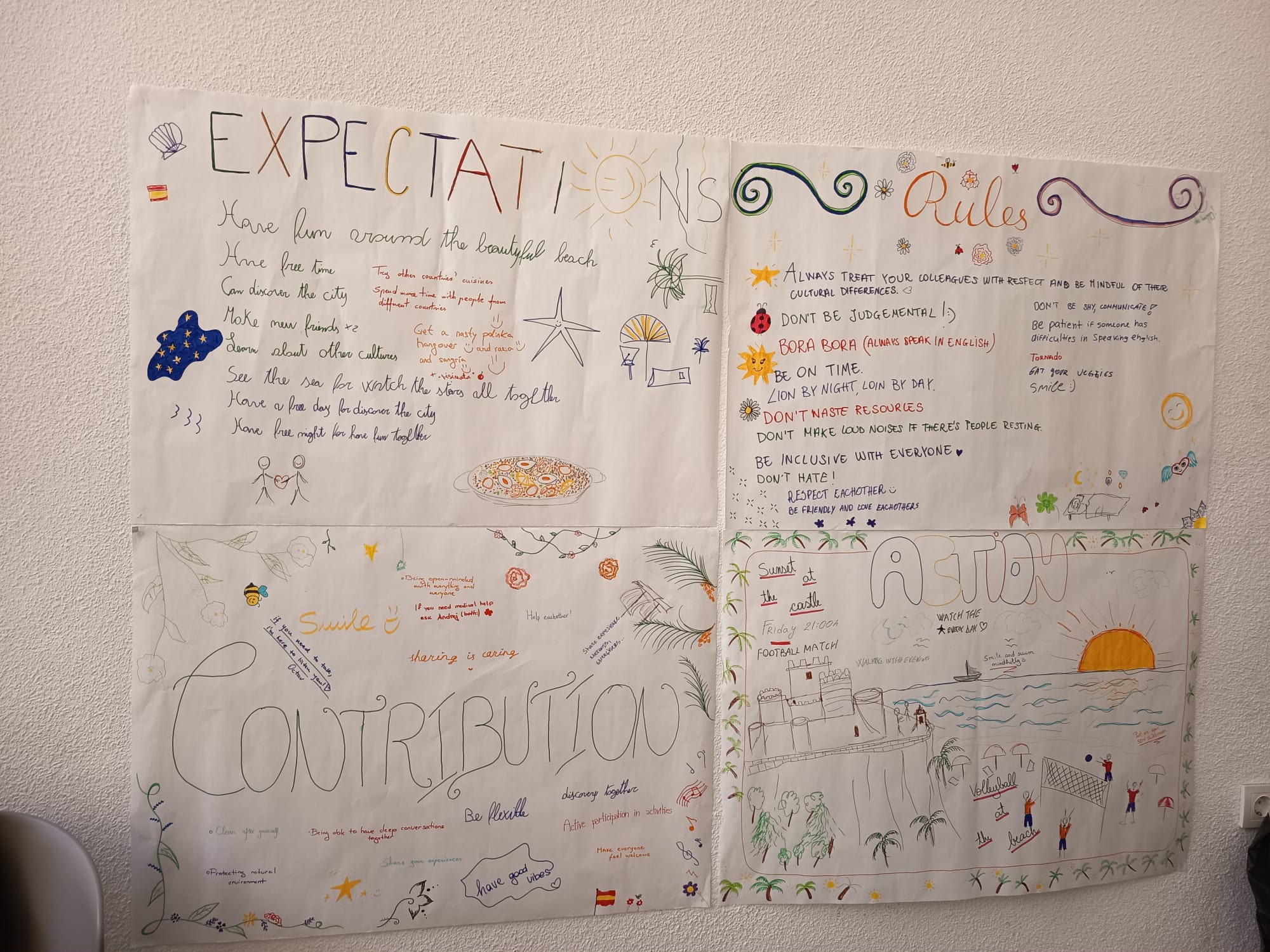
After lunch, we worked together on one big mural about our rules, expectations, actions and contributions to the project 📝, rotating between four stations and building on what the group before us had written. It stayed on the wall all week as our group agreement.

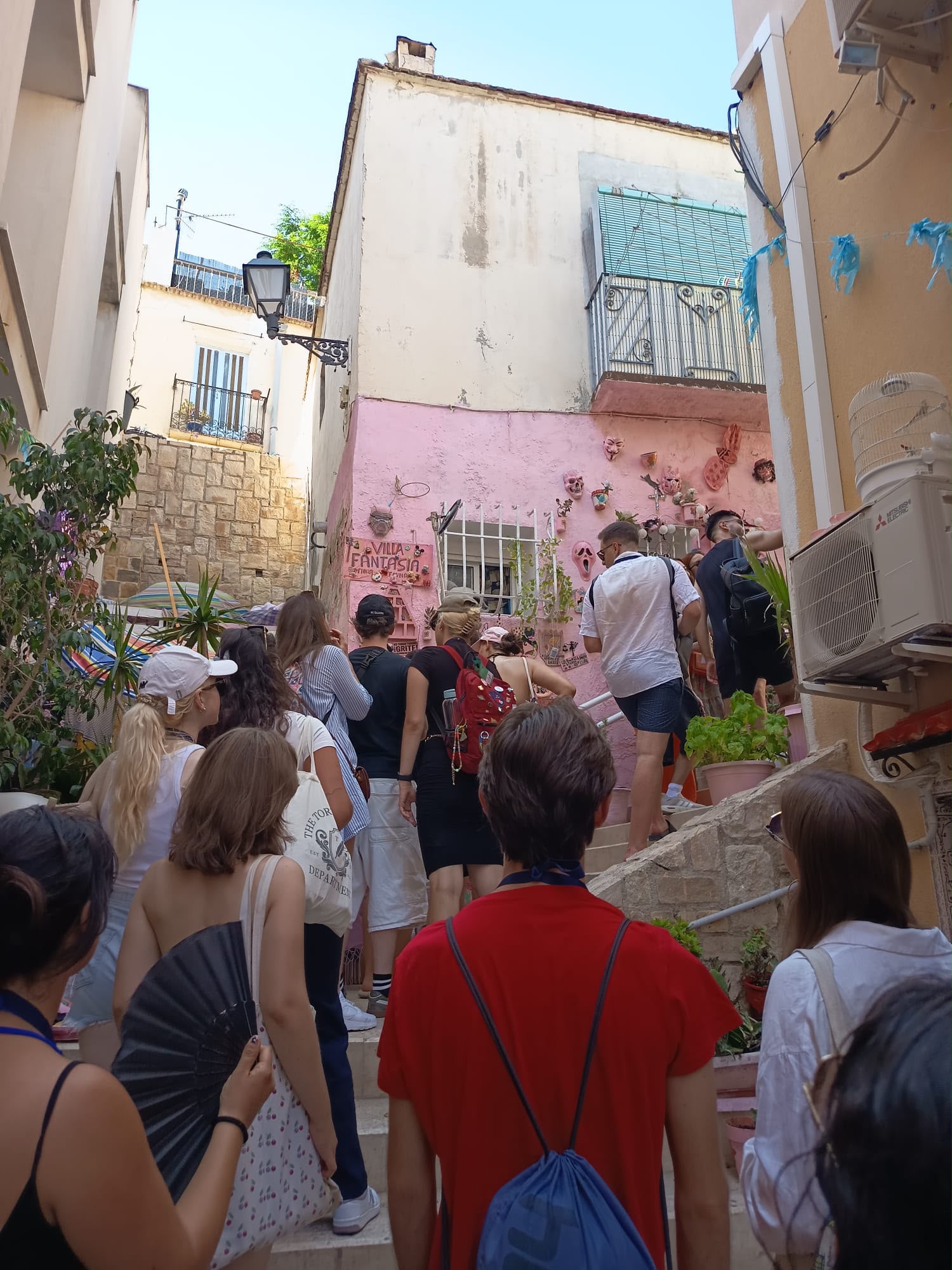
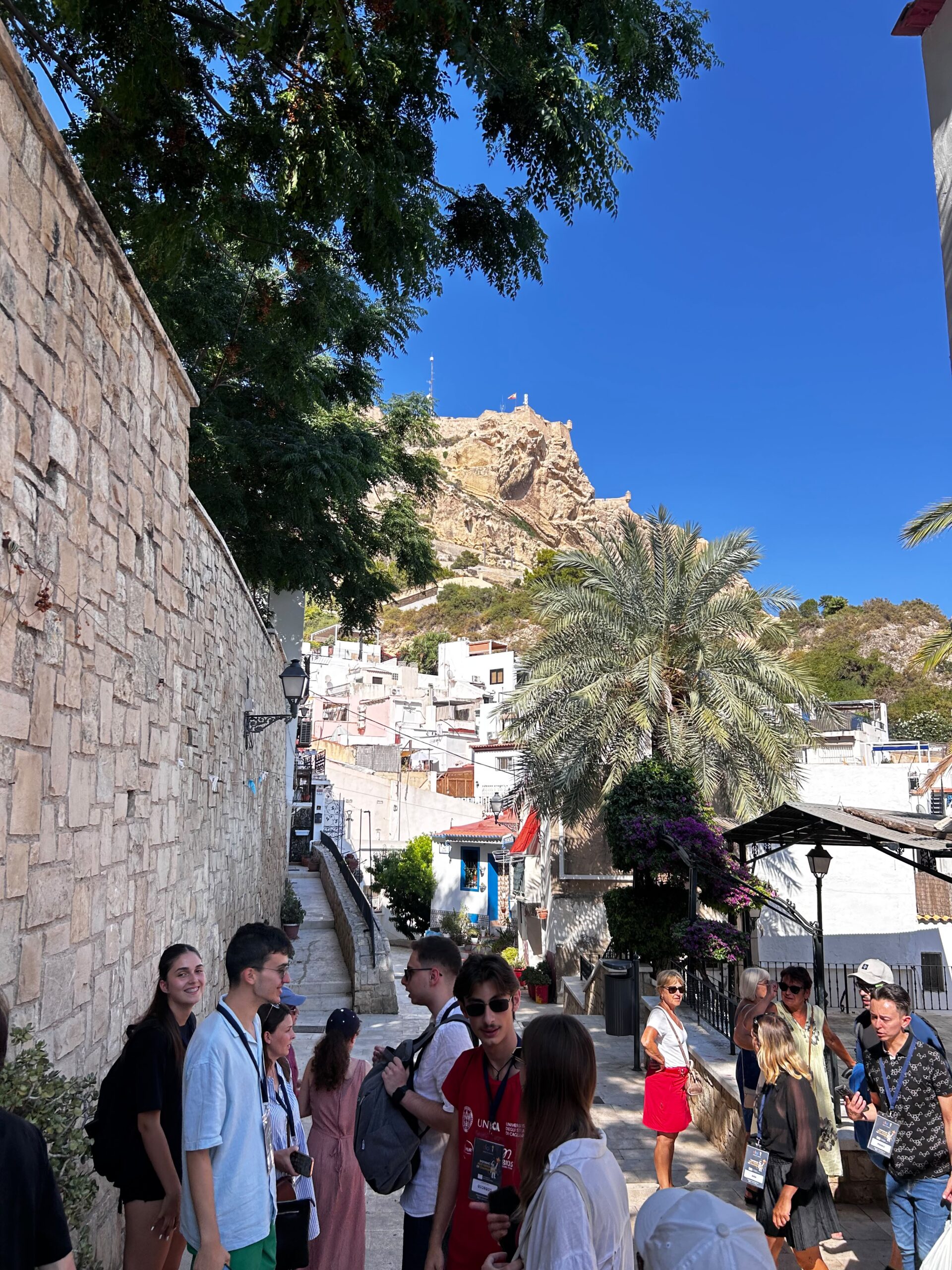
Later, we took part in Mission Impossible in the City 🔍. In international teams we explored Alicante, solved challenges and proved we had been to each location with creative photos and videos. We also interviewed local people about youth employability — which skills matter most today and what difficulties young people face — and their answers gave us a lot to think about for the days ahead.

The route ended at the beach, where we had some time to relax together. Back at the hostel we reflected on the day in our national groups, had dinner, and closed with a Talents Show where everyone shared something they are good at: music, dance, poetry, sport.

It was another great day full of teamwork, fun, and new friendships! ☀️🌊🤝


🇪🇸 Español

Día 1 de nuestro proyecto 🇪🇸

Hoy comenzamos con dinámicas de activación e icebreakers —»The Wind Blows», «My Name and My What?» y «Sending the Good Vibes»— que nos ayudaron a aprender los nombres de todos y a conocernos mejor.

Después de la pausa para el café, repasamos los objetivos del proyecto, el marco Erasmus+ y el programa de los próximos días, y nos dividimos en equipos con diferentes responsabilidades diarias: Helpers, Community Managers, Copywriters, Time Keepers, Energizers y Free Time Organizers. También pusimos en marcha nuestro Amigo Invisible 🎭: dibujamos entre todos los retratos de cada uno y los colgamos en la pared, para que cualquiera pudiera dejar cartas anónimas durante toda la semana.

Tras el almuerzo, trabajamos juntos en un gran mural sobre las normas del proyecto, nuestras expectativas, las acciones y las contribuciones de cada uno 📝, rotando entre cuatro estaciones y añadiendo cosas a lo que había escrito el grupo anterior. El mural se quedó en la pared toda la semana como nuestro acuerdo de grupo.

Más tarde participamos en Mission Impossible in the City 🔍. En equipos internacionales recorrimos Alicante, resolvimos retos y demostramos nuestro paso por cada lugar con fotografías y vídeos creativos. Además, entrevistamos a personas locales sobre el empleo juvenil —qué habilidades son hoy más importantes y qué dificultades encuentran los jóvenes— y sus respuestas nos dieron mucho en lo que pensar para los días siguientes.

El recorrido terminó en la playa, donde tuvimos un rato para relajarnos juntos. De vuelta en el albergue reflexionamos sobre la jornada en nuestros grupos nacionales, cenamos y cerramos el día con un Talents Show en el que cada uno compartió algo que sabe hacer bien: música, danza, poesía, deporte.

¡Fue otro gran día lleno de trabajo en equipo, diversión y nuevas amistades! ☀️🌊🤝